

Dental Veneers & Laminates in Bhopal
Custom-crafted porcelain and composite veneers to correct chips, gaps, stains, and minor misalignment — planned with Digital Smile Design for predictable, natural results.
- What are dental veneers and laminates?
- What is the difference between porcelain and composite veneers?
- Can veneers fix crooked teeth without braces?
- Do dental veneers damage your natural teeth?
- Are dental veneers permanent and how long do they last?
- Which is better for Indian teeth — composite or porcelain veneers?
- How is a veneers smile planned with Digital Smile Design?
- Frequently Asked Questions
What are dental veneers and laminates?
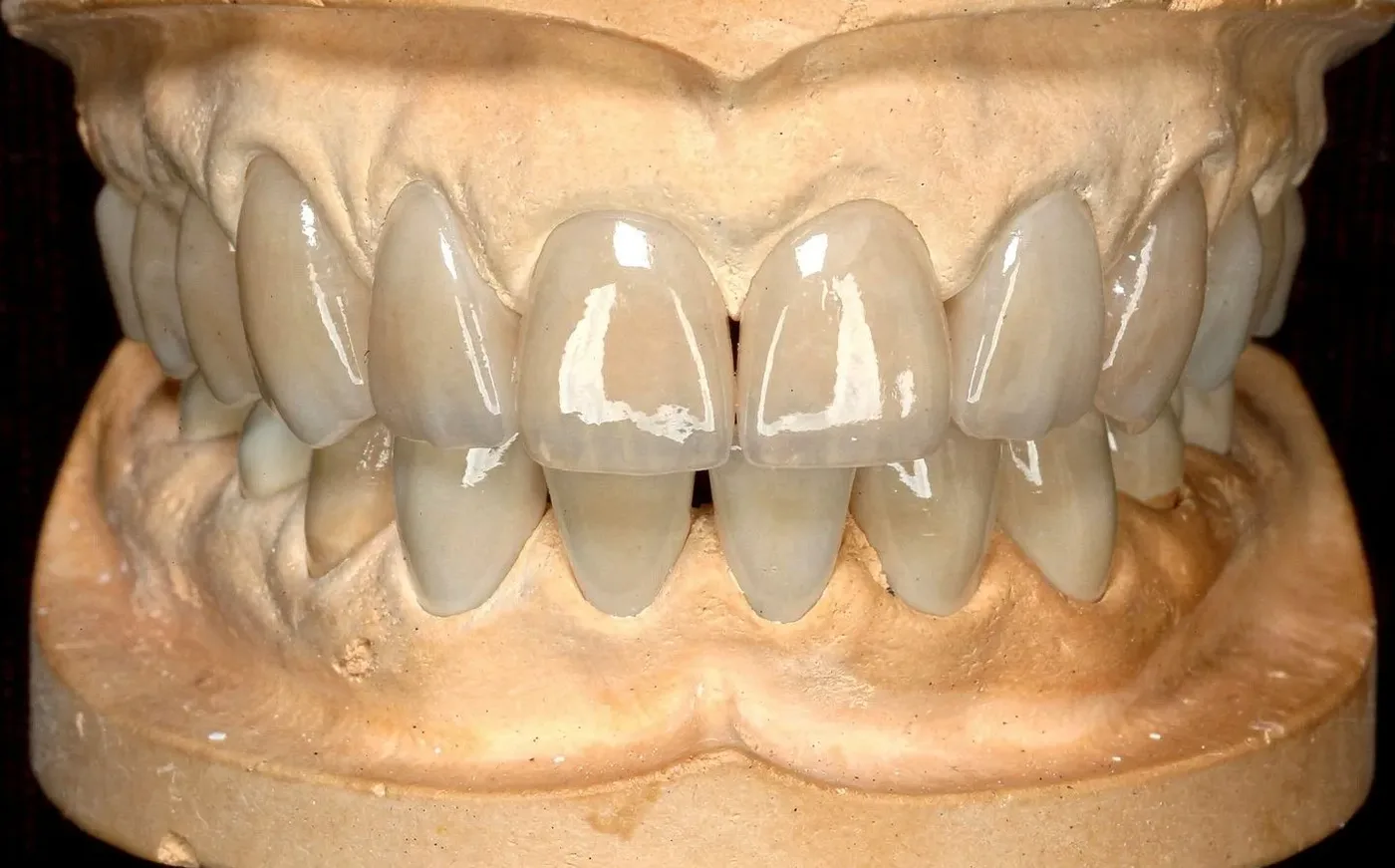
Dental veneers are thin, custom-made shells bonded to the front surface of teeth to correct chips, cracks, gaps, stains, and minor misalignment. They come in two types — porcelain, made in a dental lab and highly durable and stain-resistant, or composite resin, sculpted directly on the tooth in a single visit. Laminates are an ultra-thin porcelain version requiring minimal or no enamel removal.
Dental veneers are thin, custom-made shells bonded to the front surface of teeth to improve their appearance. They correct chips, cracks, gaps, stains, and minor misalignment in a few visits. Veneers come in two types: porcelain (made in a dental lab, highly durable and stain-resistant) and composite resin (sculpted directly on the tooth in a single visit).
Laminates are an ultra-thin version of porcelain veneers that require minimal or no enamel removal, preserving more of your natural tooth.
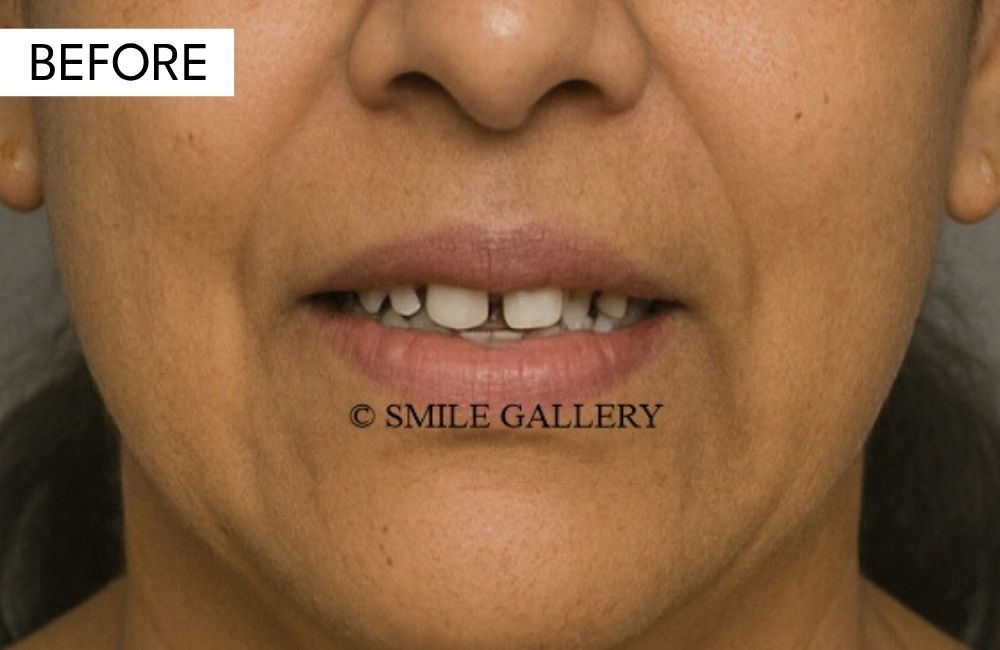
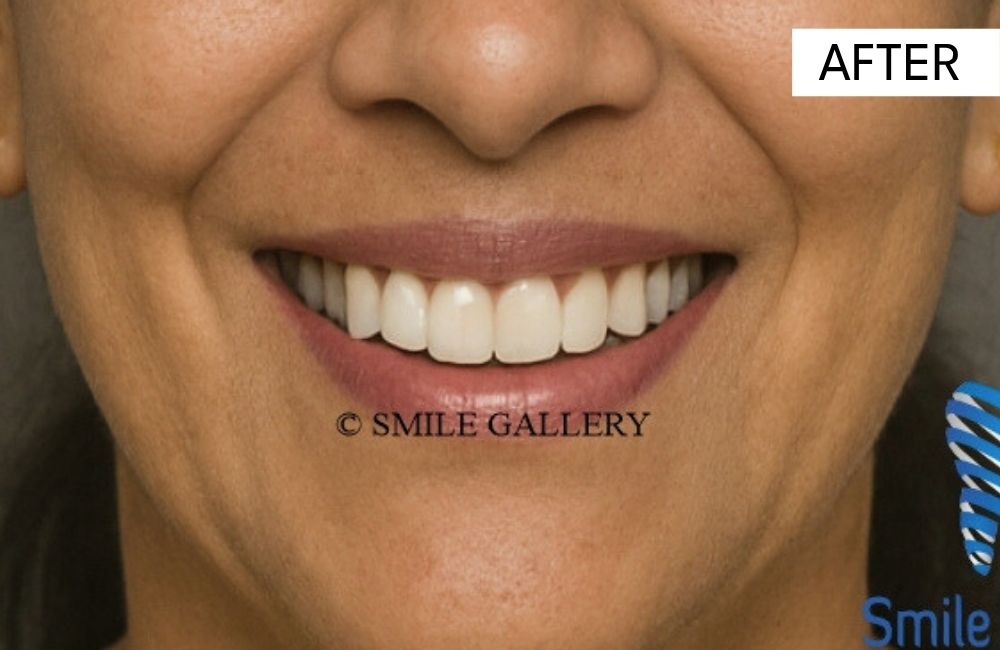
People seek veneers when they want to fix the appearance of front teeth affected by chipping, permanent staining (from tetracycline or fluorosis), noticeable gaps, or mild crowding that makes the smile look uneven. If your concern is primarily cosmetic and your teeth are otherwise healthy, veneers offer a faster alternative to braces or full-coverage cosmetic dental treatment.
At Smile Gallery, every veneer case starts with a Digital Smile Design (DSD) consultation. Dr. Saurabh photographs and scans your teeth using an intraoral scanner, designs the veneers digitally so you can preview your new smile on screen, and prepares the teeth under dental loupes for maximum precision and conservation of healthy enamel.
What is the difference between porcelain and composite veneers?
Porcelain veneers are custom-fabricated in a dental lab, last 10 to 15 years, resist staining better, and give the most natural-looking result, but require a thin layer of enamel removal. Composite veneers are sculpted directly on the tooth in one visit, last 5 to 7 years, and are more prone to chipping and discolouration, though they typically need little to no enamel removal. Porcelain suits a full smile makeover; composite suits quick single-tooth fixes.
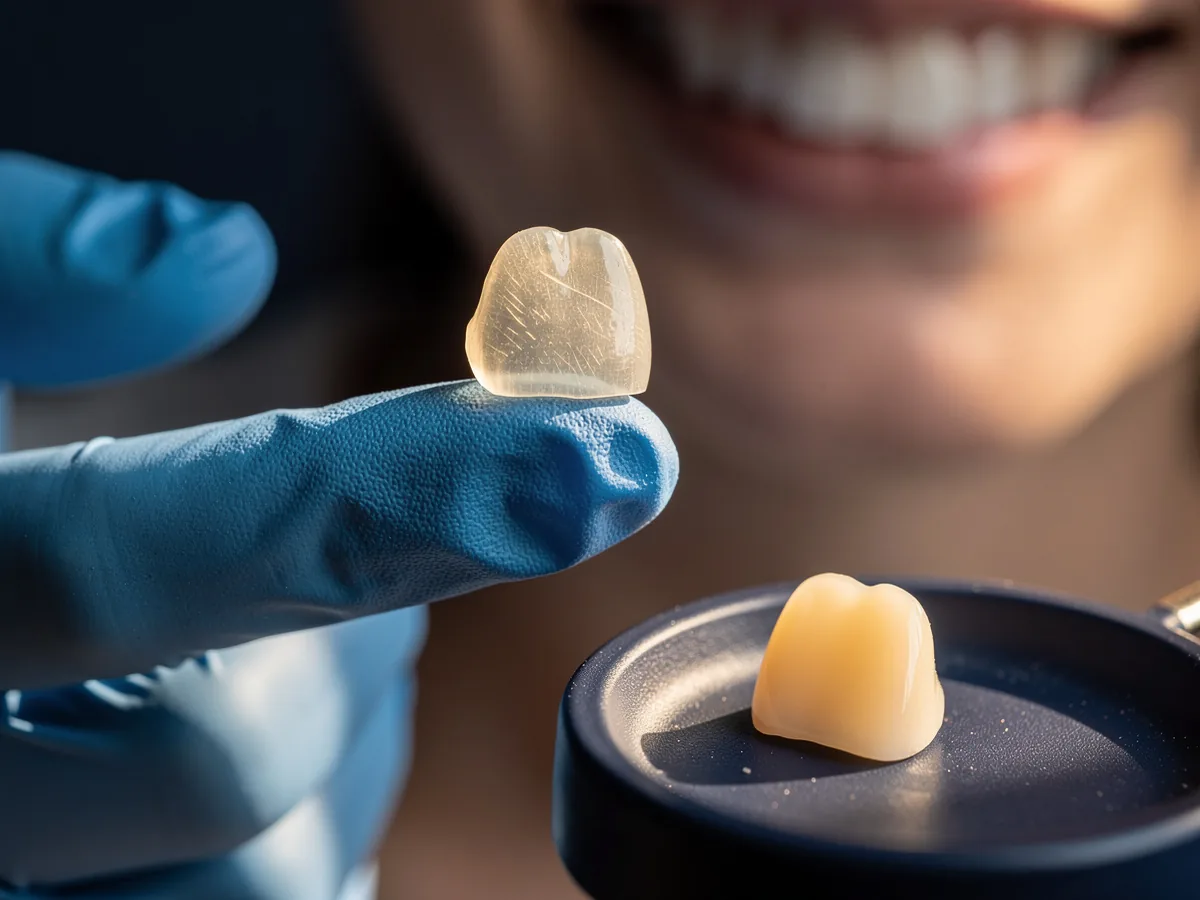
Porcelain veneers are custom-fabricated in a dental lab, last 10 to 15 years, resist staining better, and provide the most natural-looking result. Composite veneers are applied and sculpted directly on the tooth in one visit, cost less, and last 5 to 7 years but are more prone to chipping and discolouration.
Porcelain requires a thin layer of enamel removal; composite usually requires little to none. For a full smile makeover, porcelain is the stronger choice. For quick single-tooth fixes, composite works well.
| Feature | Porcelain Veneers | Composite Veneers | No-Prep Laminates |
|---|---|---|---|
| Material | Ceramic / feldspathic porcelain or lithium disilicate | Composite resin (tooth-coloured filling material) | Ultra-thin porcelain (<0.3 mm) |
| Lifespan | 10–15 years | 5–7 years | 10–15 years |
| Enamel removal | 0.3–0.5 mm | Minimal to none | None |
| Stain resistance | Excellent — highly stain-resistant | Moderate — can stain over time | Excellent |
| Visits required | 2–3 | 1 | 2–3 |
| Suited for | Full smile makeovers, long-term aesthetics | Single-tooth repairs, budget-conscious cases | Cases where enamel preservation is top priority |
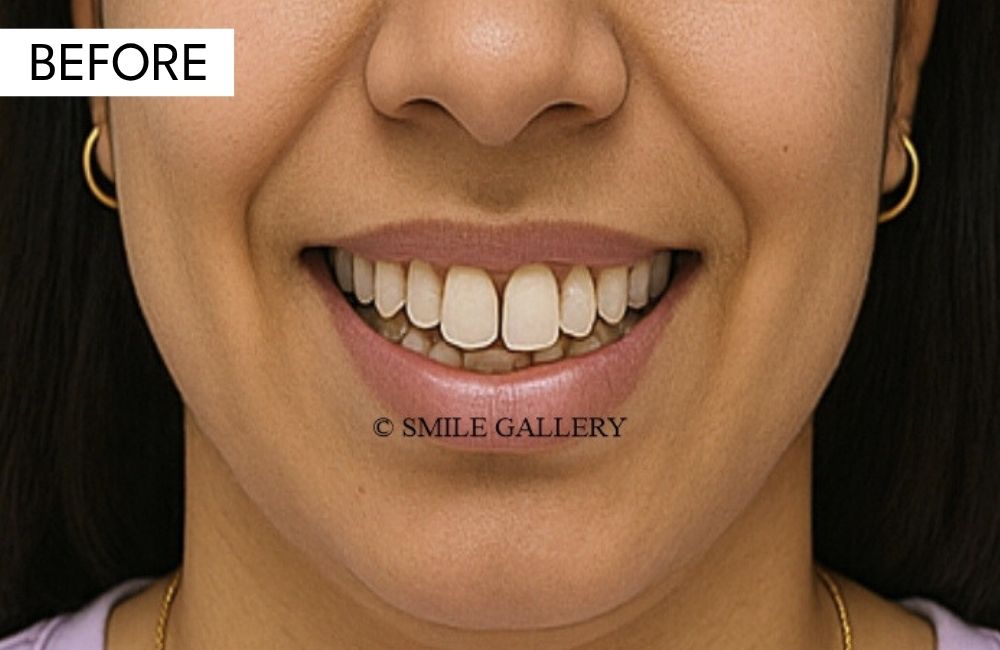
 Before
What our veneers patients say
★★★★★ 5.0 · 477 reviews"I'd like to share my review regarding my recent smile designing done by Dr. saurabh . i was of the view that i dont want an ortho treatment for minor corrections and sir suggested me this . and i went ahead with venners and really happy with this. kudos to the team"
"I had an excellent experience at Smile Gallery. The dentist Dr. Saurabh Shrivastava was very gentle, knowledgeable, and took the time to explain my treatment options. The staff was welcoming, the office was clean, and my appointment was on time. I'm very happy with the care I received and would definitely recommend this practice"
"I recently visited smile gallery, I truly had a wonderful experience there... Dr. Saurabh Shrivastava and his entire team is extremely polite, kind, and professional. They made sure I felt comfortable throughout the treatment and explained everything clearly. The clinic is clean, the atmosphere is calming, and everyone—from the doctor to the staff—treats you with so much care and respect. I'm genuinely happy with the service and highly recommend Dr. Saurabh Shrivastava and his whole team for any dental needs."
Can veneers fix crooked teeth without braces?
Yes, veneers can correct the appearance of mildly crooked, overlapping, or uneven front teeth without braces, since the veneer is shaped and angled to create the illusion of straight, aligned teeth. However, veneers only change the visible surface — they do not move the tooth root or correct the bite. For significantly crooked teeth or bite problems, orthodontic treatment is needed first, with veneers used afterward for cosmetic finishing if required.
Yes, veneers can correct the appearance of mildly crooked, overlapping, or uneven front teeth without braces. The veneer is shaped and angled to create the illusion of straight, aligned teeth.
However, veneers only change the visible surface — they do not move the tooth root or correct the bite. For significantly crooked teeth or bite problems, orthodontic treatment (braces or aligners) is needed first, with veneers used afterward for fine cosmetic finishing if required.
Do dental veneers damage your natural teeth?
Traditional porcelain veneers require removing a thin layer of enamel — about 0.3 to 0.5 mm — from the front of the tooth so the veneer sits flush and looks natural; this is irreversible, and the tooth will always need a veneer or crown afterward. Ultra-thin laminates and composite veneers, however, require minimal or no enamel removal. Digital planning and preparation under dental loupes ensure only the planned amount of enamel is ever removed.
Traditional porcelain veneers require removing a thin layer (0.3–0.5 mm) of enamel from the front of the tooth so the veneer sits flush and looks natural. This is irreversible — the tooth will always need a veneer or crown after that.
However, ultra-thin laminates and composite veneers require minimal or no enamel removal. At Smile Gallery, your dentist uses an intraoral scanner and Digital Smile Design to plan the most conservative preparation possible for your case. Dental loupes are used during preparation to ensure only the planned amount of enamel is removed — nothing more.
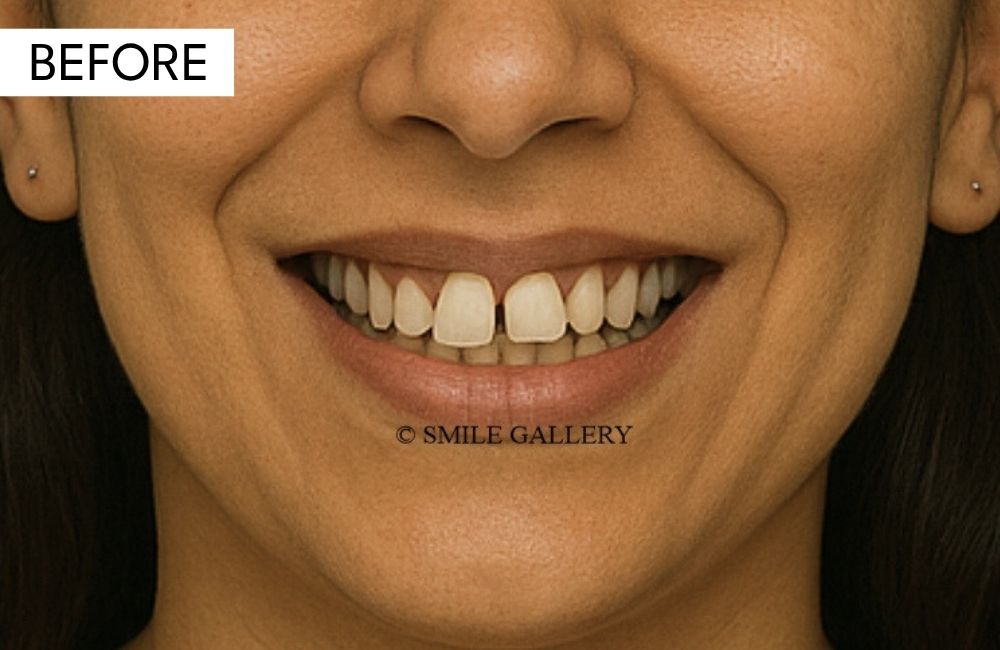
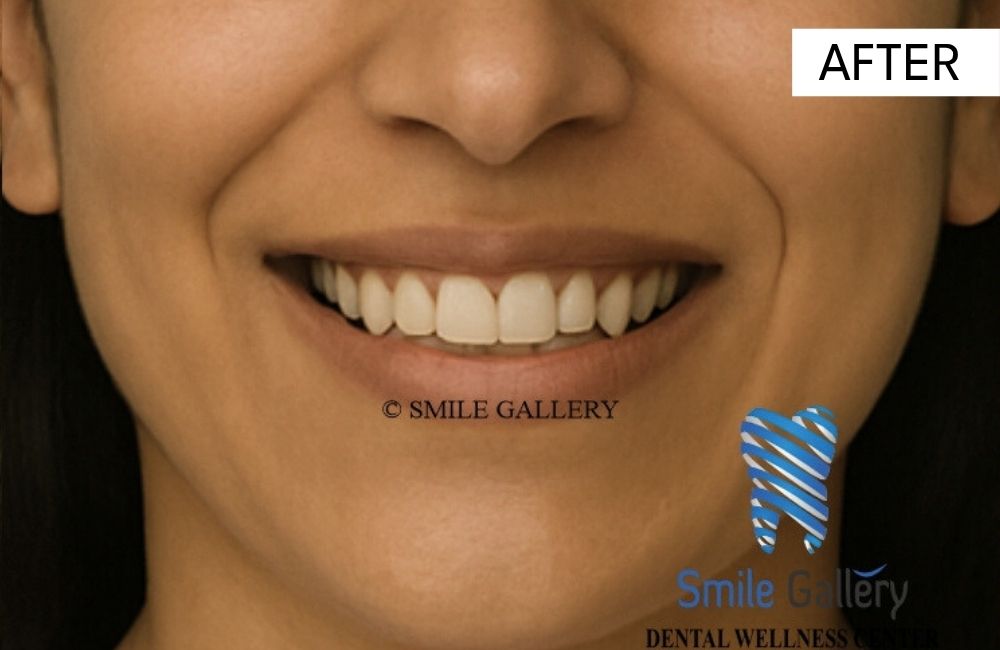 Before
Are dental veneers permanent and how long do they last?
Porcelain veneers typically last 10 to 15 years with proper care, while composite veneers last 5 to 7 years before needing replacement or repair. Longevity depends on oral hygiene, avoiding hard foods on the veneered teeth, and wearing a night guard if you grind your teeth. Porcelain veneers are a permanent restoration since enamel removal is irreversible, though the veneer itself eventually needs replacing; composite veneers are semi-permanent and reversible.
Porcelain veneers typically last 10 to 15 years with proper care — some last even longer. Composite veneers last 5 to 7 years before they may need replacement or repair due to chipping or staining.
Longevity depends on your oral hygiene, avoiding hard foods like ice or sugarcane on the veneered teeth, not using teeth as tools, and wearing a night guard if you grind your teeth.
Porcelain veneers are considered a permanent restoration because enamel is removed during preparation — the tooth cannot go back to its original state. The veneer itself will eventually need replacement. Composite veneers are semi-permanent and reversible since little or no enamel is removed. Neither type is a "one-time forever" solution — they are long-lasting restorations that require eventual maintenance, just like any dental work.
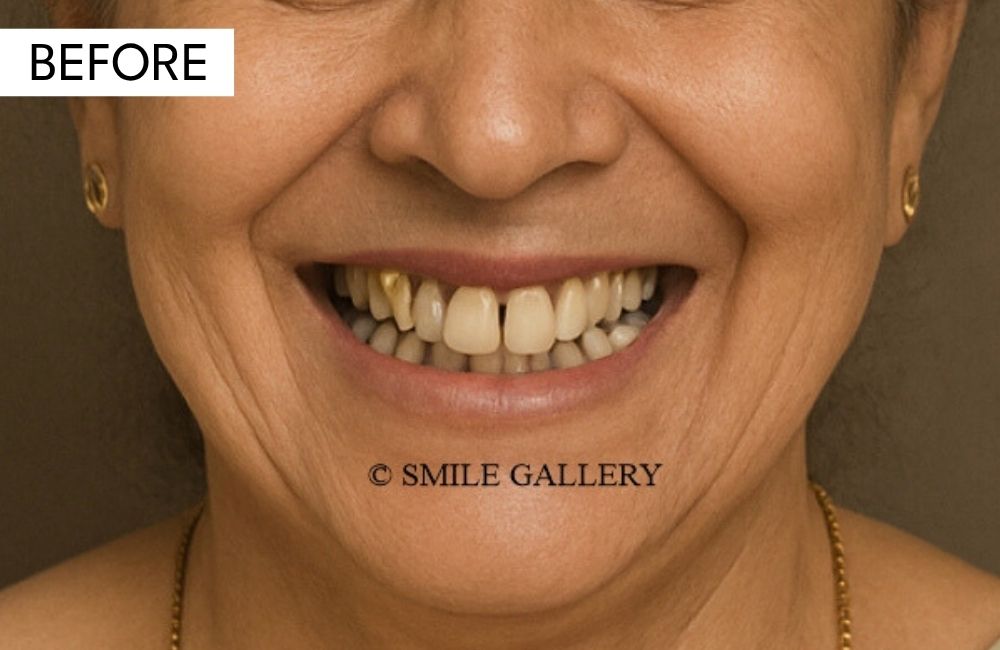
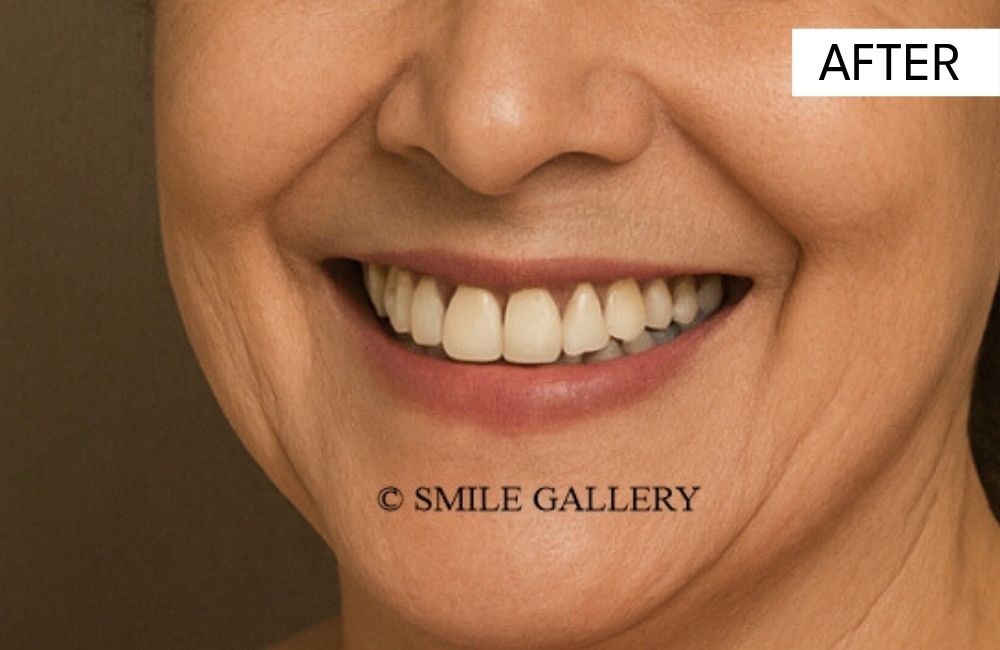 Before
Which is better for Indian teeth — composite or porcelain veneers?
The choice depends on your goals, budget, and the condition of your teeth. Since Indian diets commonly include tea, coffee, turmeric-based curries, and betel nut — all heavy staining agents — porcelain veneers offer superior stain resistance and are the better long-term choice for those who consume these regularly. Composite veneers work well for single-tooth fixes, younger patients wanting a reversible option, or budget-conscious cases, and can be repaired or re-polished chairside if staining occurs.
The choice depends on your specific goals, budget, and the condition of your teeth. Indian diets commonly include tea, coffee, turmeric-based curries, and betel nut — all heavy staining agents. Porcelain veneers offer superior stain resistance and are the better long-term investment if you consume these regularly.
Composite veneers work well for single-tooth fixes, younger patients who may want a reversible option, or cases where budget is a primary factor. They can be repaired and re-polished chairside if staining occurs.
At Smile Gallery, Dr. Saurabh discusses both options during your Digital Smile Design consultation, showing you the expected outcome for each material on your own teeth so you can make an informed decision.
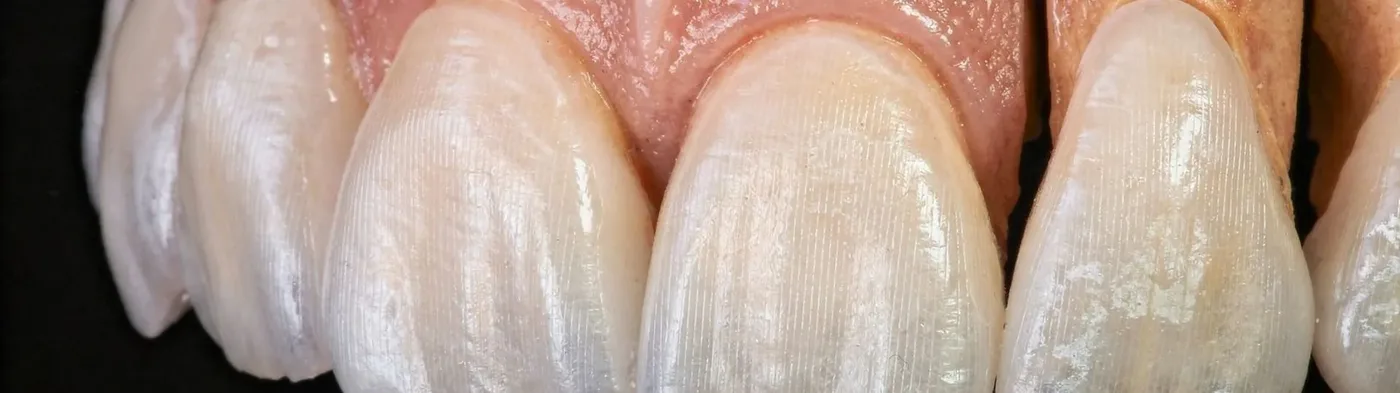
Why Bhopal patients choose Smile Gallery for veneers
Smile Gallery is one of the few clinics in Bhopal offering Digital Smile Design (DSD) planning for veneers. This means you see a digital preview of your new smile before any tooth preparation begins. Combined with intraoral scanning (no messy impressions) and preparation under dental loupes, the process is precise, comfortable, and predictable. Veneer fabrication is handled by a trusted dental lab partner to ensure consistent quality.
How is a veneers smile planned with Digital Smile Design?
Digital Smile Design lets your dentist design your veneers digitally before touching your teeth. The process starts with photographs and video of your smile, followed by an intraoral scan to capture a 3D model. Your dentist then designs the ideal shape, size, and position of each veneer on screen for you to preview and approve. Only after approval are your teeth conservatively prepared under dental loupes and the veneers bonded.
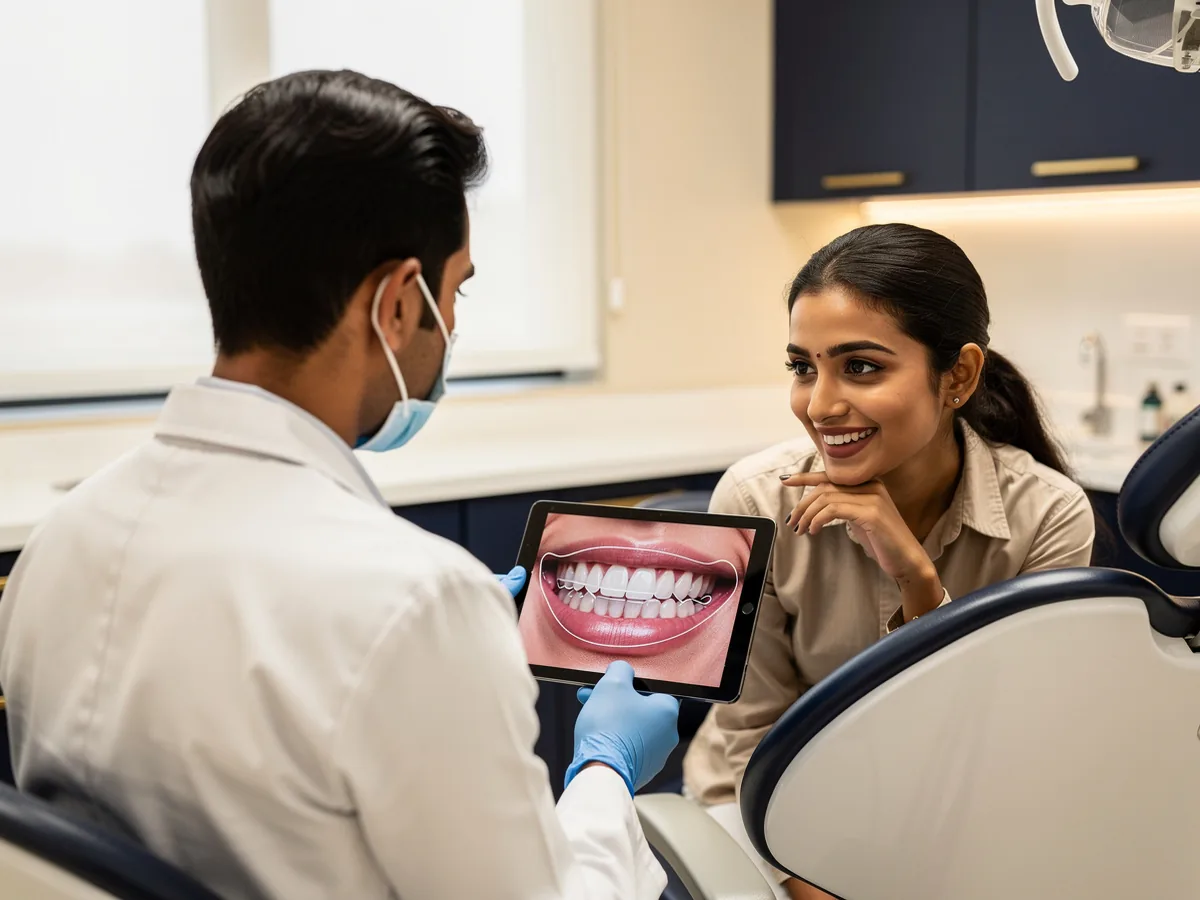
Digital Smile Design (DSD) is a planning protocol that lets your dentist design your veneers digitally before touching your teeth. Here is how the process works at Smile Gallery:
- Photographs and video: High-resolution photos and a short video of your smile at rest and while speaking are captured to study your facial proportions.
- Intraoral scan: A digital scanner captures a 3D model of your teeth — no gooey impression trays needed.
- Digital design: Using the DSD protocol, Dr. Saurabh designs the ideal shape, size, and position of each veneer on screen, aligned to your facial midline and lip line.
- Preview and approval: You see the proposed result on your own photograph before any preparation. Adjustments are made until you are happy with the design.
- Conservative preparation: Only after you approve the design are your teeth prepared — under dental loupes for maximum precision — and the case is sent to the lab for fabrication.
- Bonding: The finished veneers are tried in, verified for fit and shade, and permanently bonded.
Questions, answered
Frequently Asked Questions
Straight answers to what patients ask us. Anything else, message us on WhatsApp.
How many sittings do veneers take?
Porcelain veneers typically require 2 to 3 visits — one for preparation and scanning, one for a trial fitting, and one for final bonding. Composite veneers can often be completed in a single visit since they are sculpted directly on the tooth. At Smile Gallery, Digital Smile Design planning may add an initial consultation visit to design your ideal smile before any preparation begins.
Can I get veneers on just one or two teeth?
Yes, veneers can be placed on a single tooth or just a few teeth. This is common when you have one chipped, discoloured, or slightly misaligned tooth that stands out. Your dentist will shade-match the veneer to your surrounding natural teeth so it blends in seamlessly. Composite veneers are especially well-suited for single-tooth fixes.
Will veneers stain over time?
Porcelain veneers are highly stain-resistant, though dark drinks such as tea, coffee and red wine can still mark them over time. Composite veneers, however, can absorb stains from tea, coffee, turmeric, and tobacco over time and may need polishing or replacement after a few years. Good oral hygiene and limiting heavy staining substances helps preserve the appearance of both types.
How do I book a veneers consultation in Bhopal?
You can book a veneers consultation at Smile Gallery Dental Wellness Centre in Bhopal by calling +91 92007 00750 or using the online booking form on our website. During your consultation, Dr. Saurabh Shrivastava will evaluate your teeth, discuss your smile goals, and show you a Digital Smile Design preview of your expected result.
How long do dental veneers last?
Porcelain veneers typically last 10 to 15 years with proper care — some last even longer. Composite veneers last 5 to 7 years before they may need replacement or repair due to chipping or staining. Longevity depends on your oral hygiene, avoiding hard foods like ice or sugarcane on the veneered teeth, not using teeth as tools, and wearing a night guard if you grind your teeth.
Can dental veneers stain or change color over time?
Porcelain veneers are highly stain-resistant, though dark drinks such as tea, coffee and red wine can still mark them over time. This is one of their main advantages. Composite veneers, however, can absorb stains from tea, coffee, turmeric, and tobacco over time and may need polishing or replacement after a few years. In both cases, maintaining good oral hygiene and limiting heavy staining substances helps preserve the appearance.
Are veneers permanent?
Porcelain veneers are considered a permanent restoration because enamel is removed during preparation — the tooth cannot go back to its original state. The veneer itself will eventually need replacement after 10 to 15 years. Composite veneers are semi-permanent and reversible since little or no enamel is removed. Neither type is a "one-time forever" solution — they are long-lasting restorations that require eventual maintenance, just like any dental work.
Do you offer EMI for dental treatment in Bhopal?
Yes — Smile Gallery offers a zero-interest EMI option on eligible treatments, arranged in-house, so you can spread the cost into monthly instalments with no extra interest charged by the clinic. Availability and tenure depend on the treatment plan and are confirmed during your consultation, along with a clear written estimate before treatment begins — with no hidden charges.
अक्सर पूछे जाने वाले सवाल (Hindi FAQs)
Veneers lagwane mein kitni sittings lagti hain?
Porcelain veneers ke liye aksar 2 se 3 visits lagti hain — ek preparation aur scanning ke liye, ek trial fitting ke liye, aur ek final bonding ke liye. Composite veneers aksar ek hi visit mein complete ho jaate hain kyunki unhe tooth par hi seedhe sculpt kiya jaata hai. Smile Gallery mein, Digital Smile Design planning ke liye ek initial consultation visit bhi add ho sakti hai.
वेनियर्स लगवाने में कितनी सिटिंग्स लगती हैं?
पोर्सिलेन वेनियर्स के लिए अक्सर 2 से 3 विज़िट लगती हैं — एक तैयारी और स्कैनिंग के लिए, एक ट्रायल फिटिंग के लिए, और एक फाइनल बॉन्डिंग के लिए। कम्पोज़िट वेनियर्स अक्सर एक ही विज़िट में पूरे हो जाते हैं क्योंकि उन्हें दांत पर ही सीधे तराशा जाता है।
Dental veneers kitne saal chalte hain?
Porcelain veneers sahi dekhbhaal ke saath 10 se 15 saal tak chalte hain, kabhi kabhi zyada bhi. Composite veneers 5 se 7 saal tak chalte hain, uske baad unhe replace ya repair karne ki zaroorat pad sakti hai. Iska duration aapki oral hygiene, hard foods jaise ice ya sugarcane se bachne, aur agar aap teeth grind karte hain to night guard pehnne par depend karta hai.
डेंटल वेनियर्स कितने साल चलते हैं?
पोर्सिलेन वेनियर्स सही देखभाल के साथ 10 से 15 साल तक चलते हैं, कभी-कभी ज़्यादा भी। कम्पोज़िट वेनियर्स 5 से 7 साल तक चलते हैं, उसके बाद उन्हें बदलने या ठीक करने की ज़रूरत पड़ सकती है। यह अवधि आपकी ओरल हाइजीन और आदतों पर निर्भर करती है।
Porcelain aur composite veneers mein kya farak hai?
Porcelain veneers dental lab mein custom banaye jaate hain, 10 se 15 saal chalte hain, staining resist karte hain zyada achhe se, aur sabse natural-looking result dete hain, lekin thodi enamel remove karni padti hai. Composite veneers tooth par hi seedhe sculpt kiye jaate hain ek hi visit mein, 5 se 7 saal chalte hain, aur chip ya discolour hone ka chance zyada hota hai, lekin unmein enamel bahut kam ya bilkul nahi hatani padti. Poora smile makeover ke liye porcelain behtar hai; quick single-tooth fix ke liye composite achha kaam karta hai.
पोर्सिलेन और कम्पोज़िट वेनियर्स में क्या फ़र्क़ है?
पोर्सिलेन वेनियर्स डेंटल लैब में कस्टम बनाए जाते हैं, 10 से 15 साल चलते हैं, दाग-धब्बों को बेहतर तरीके से रोकते हैं, और सबसे प्राकृतिक दिखने वाला परिणाम देते हैं, लेकिन थोड़ा इनैमल हटाना पड़ता है। कम्पोज़िट वेनियर्स दांत पर ही सीधे तराशे जाते हैं एक ही विज़िट में, 5 से 7 साल चलते हैं।
Who treats you
Book a visit
Ready to See Your New Smile?
Book a Digital Smile Design consultation at Smile Gallery and preview your veneers before any treatment begins.
Send a photo of your teeth on WhatsApp. A real person from the clinic, not a bot, replies honestly. Darr lag raha hai? Pehle sirf baat kar lijiye.
Calls & WhatsApp 10 am–9 pmSmile Gallery Dental Wellness Centre
E-4/205, Main Rd 3, near Flower Market,
E-4, Arera Colony, Bhopal 462016
One last step: tap Send in WhatsApp so we know it’s really you.
Open WhatsAppCalls & WhatsApp 10 am–9 pm