

Root Canal Treatment in Bhopal
Painless & gentle RCT by Dr. Saurabh Shrivastava (MDS Prosthodontist)
Keep your own tooth. Nothing we make is as good as the one you were born with.
Root canal treatment in Bhopal is a highly effective, modern procedure used to save a severely decayed or infected tooth by removing the damaged nerve inside and sealing the root. Root canal treatment in Bhopal by Dr. Saurabh Shrivastava is performed using advanced rotary tools and laser disinfection for a truly comfortable, painless experience. Book your consultation today.
A severe toothache can completely disrupt your day, making it impossible to eat, sleep, or focus on your daily tasks. When the inner pulp of a tooth—which contains the nerves and blood vessels—becomes infected due to deep decay, a cracked tooth, or physical trauma, ignoring the problem will only make it worse. Root canal treatment in Bhopal at Smile Gallery is the most reliable, conservative way to instantly stop your pain and save your natural tooth from extraction.
Under the expert care of Dr. Saurabh Shrivastava, our clinic focuses on saving your natural smile whenever clinically possible. Here is what our RCT process involves:
- Precise diagnosis — low-radiation RVG X-rays map the internal structure of your tooth before we begin
- Infection removal — we access the hollow interior and thoroughly remove all bacterial contamination
- Canal cleaning — microscopic root canals are cleaned, shaped, and disinfected
- Permanent seal — the space is sealed securely so bacteria cannot re-enter
This meticulous process ensures you retain your natural tooth structure and continue to chew comfortably for decades.
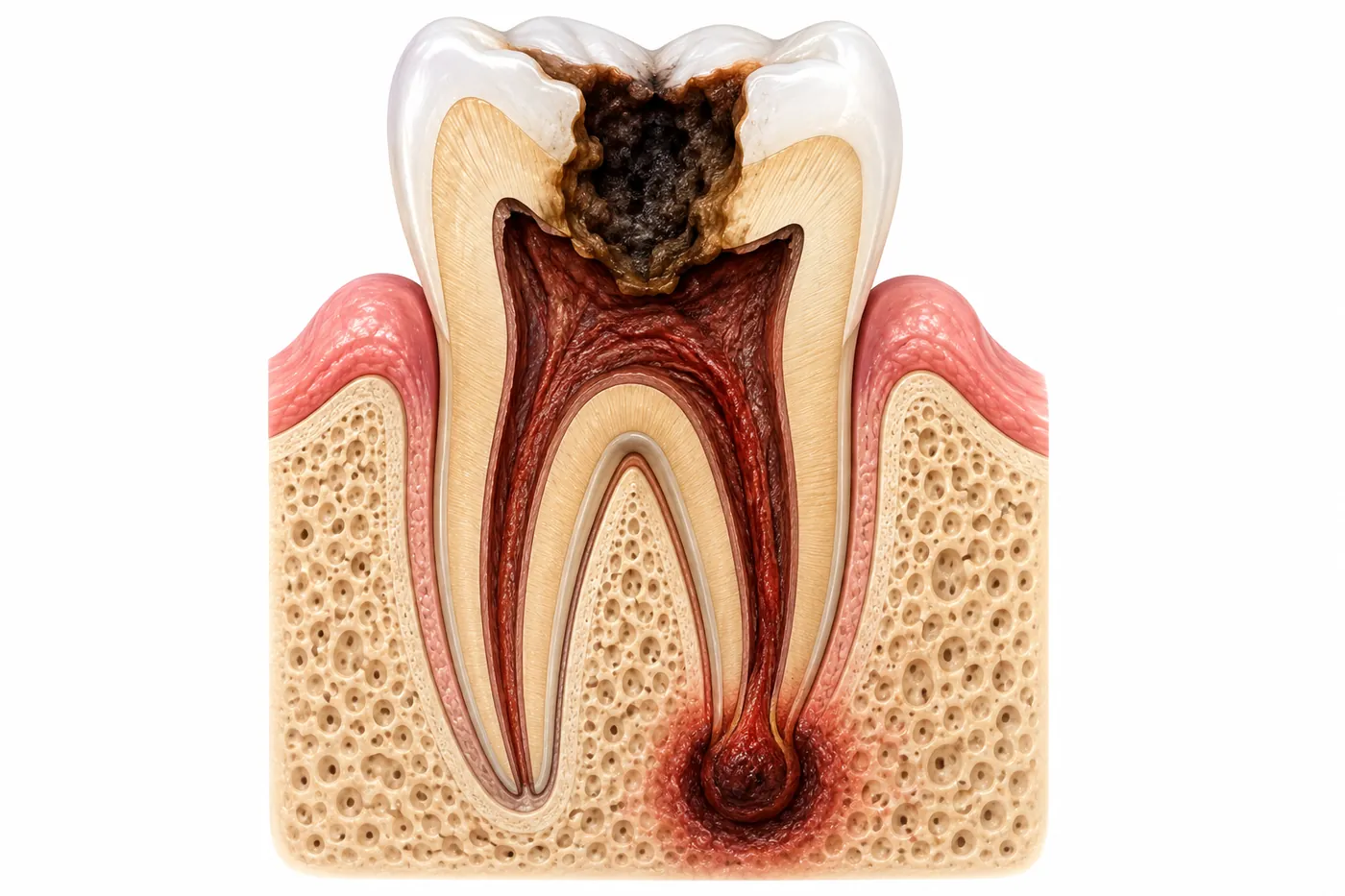
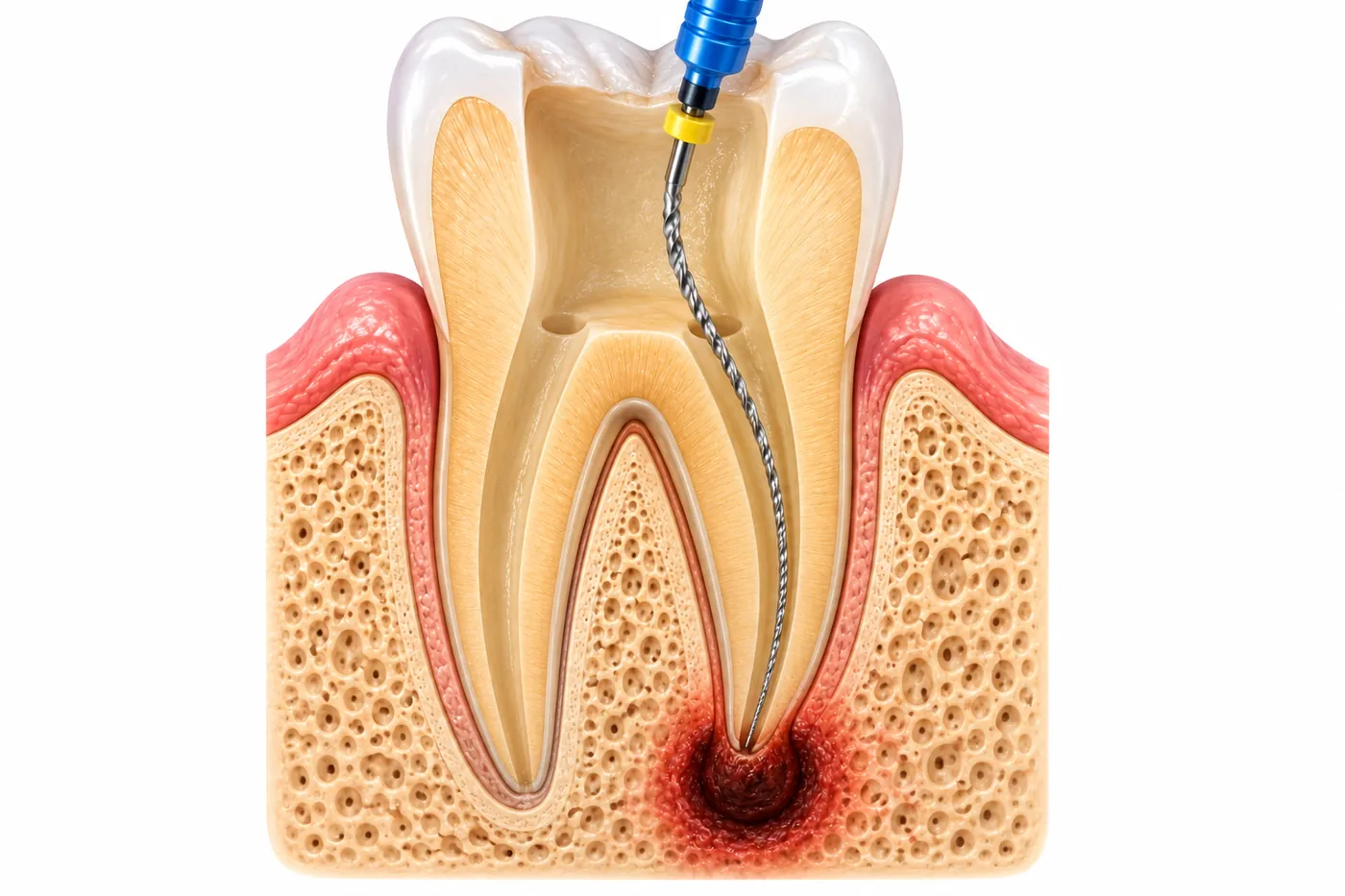
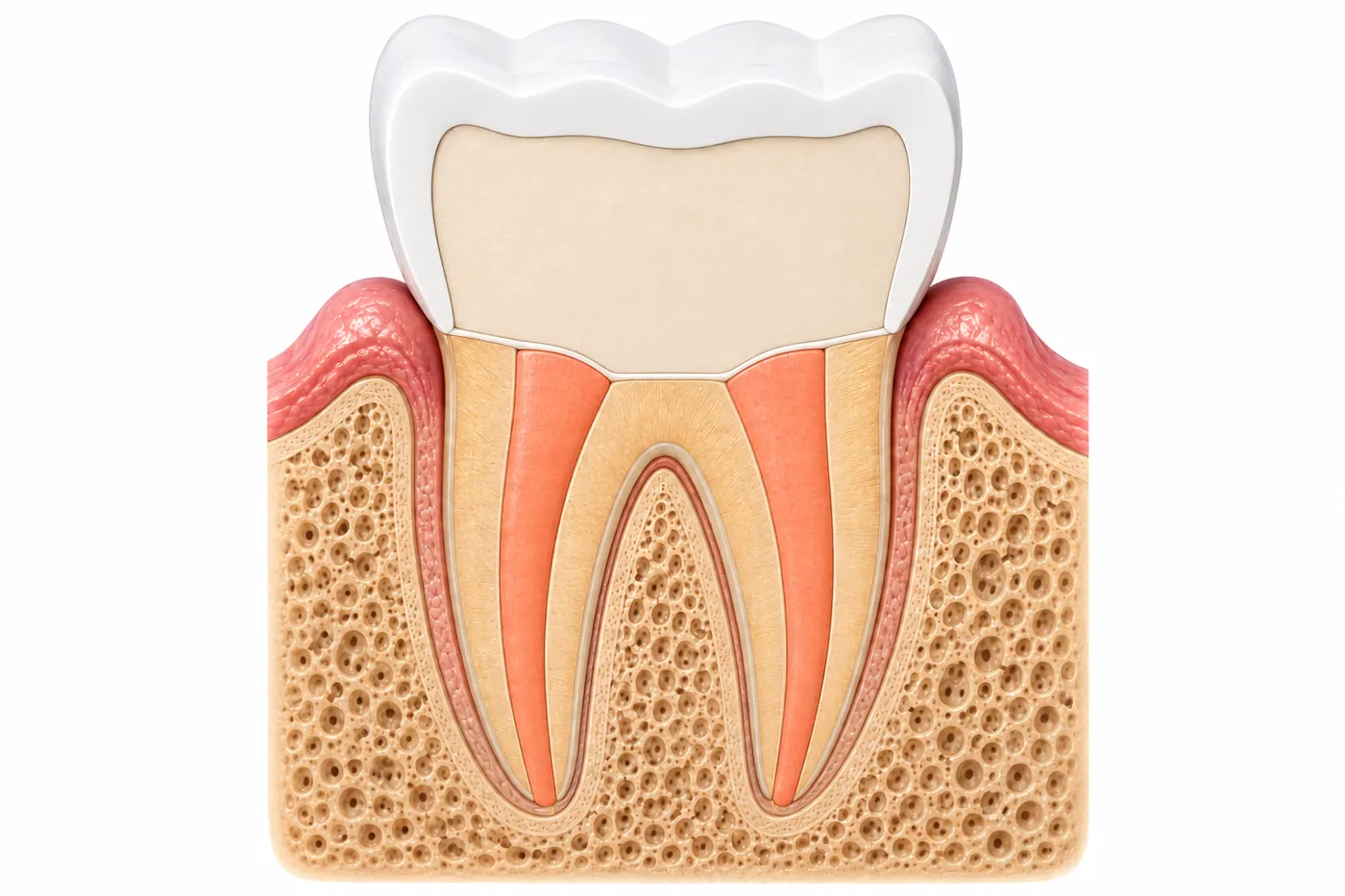
A three-stage illustrated cross-section of a molar tooth. First, deep decay reaches the pulp and an infection has formed in the bone at the root tip. Next, the decay and infected pulp are removed and a rotary instrument cleans and shapes the root canals. Finally, the canals are sealed with filling material, a ceramic crown covers the tooth, and the bone at the root tip has healed.
Signs you need RCT?
The most common signs you need a root canal include severe, throbbing tooth pain, lingering sensitivity to hot or cold foods long after the temperature is removed, swollen or tender gums, and sharp pain when chewing or applying pressure.
Early intervention is crucial. Watch for these warning signs:
- Gum boil (fistula) — a small, pimple-like bump on your gums near the painful tooth, indicating an active, draining infection
- Tooth discolouration — a single tooth turning dull grey or brown means the nerve has likely died
- Radiating pain — ache spreading into your jaw, ear, or neck, making it hard to pinpoint the exact tooth
- Lingering hot/cold sensitivity — pain that continues long after the temperature source is removed
A timely root canal treatment intercepts the infection before it can destroy the surrounding jawbone and spread to neighbouring healthy teeth. Even if a dead tooth is not causing severe pain right now, the necrotic tissue inside is a breeding ground for bacteria and will eventually trigger a painful flare-up.
Source: NIH / AAE
Source: AAE
Source: Cleveland Clinic
Is RCT painful?
No, a modern root canal treatment is not painful. The procedure is performed under precise local anaesthesia, so you remain completely numb and comfortable throughout. Most patients compare the experience to getting a standard dental filling.
The excruciating pain you associate with a root canal is actually caused by the infection pressing against the nerve — not the treatment itself. The treatment is the cure.
At Smile Gallery, comfort is a core pillar of our painless dental treatment philosophy. Here is what to expect:
- Before — targeted local anaesthesia deeply numbs the tooth and gums before we begin
- During — you feel pressure, but it is painless; most patients compare it to a standard filling
- After — mild soreness or jaw fatigue for a day or two, easily managed with ibuprofen
The severe, throbbing pain you felt before the appointment will be gone.
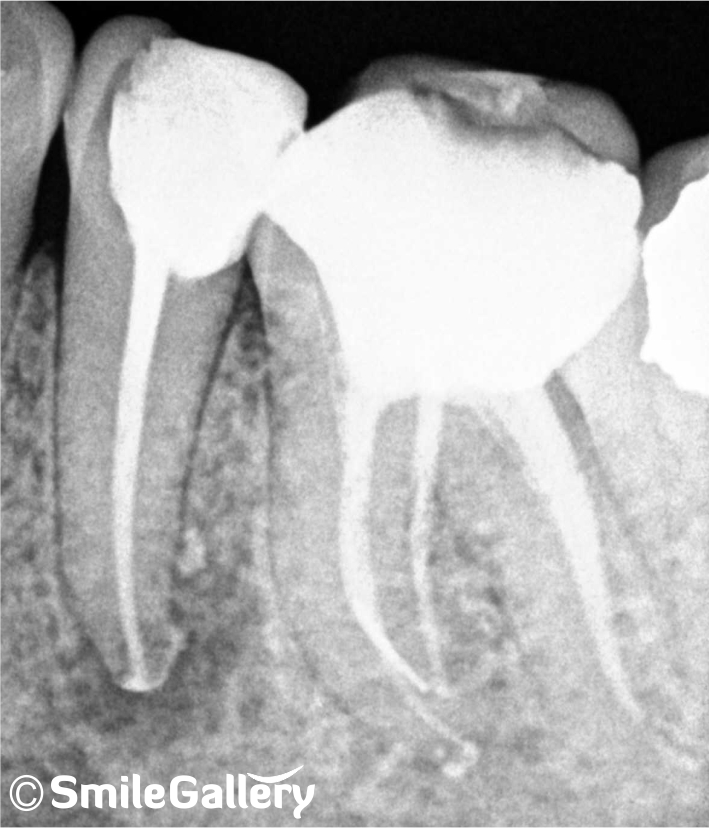 Before
What our root canal patients say
★★★★★ 5.0 · 477 reviews"My experience with dr saurabh shrivastava for my root canal treatment was very good. The doctor is very understanding and explained everything about the procedure. The environment and the staff is very good. Highly recommended . Must visit"
How long does RCT take?
A standard root canal treatment usually takes about 45 to 90 minutes. Depending on the severity of the infection and which tooth is being treated, it can often be completed in a single sitting, or it may require two visits for complex cases.
Duration depends on the tooth's anatomy:
- Front teeth (incisors, canines) — 1 canal, faster to clean (~45 min)
- Back teeth (premolars, molars) — 3–4 curved canals, need more time (~60–90 min)
For patients without active abscesses, we offer single sitting root canal treatments — cleaning, shaping, and sealing completed in one appointment.
If the infection is severe or canals are calcified, Dr. Saurabh places antibacterial medication inside and seals with a temporary filling. You return a week later for the final permanent seal (gutta-percha) once the infection has fully cleared.
Does a root canal last a lifetime?
Yes, with proper restorative care and excellent daily oral hygiene, a tooth treated with a root canal can last for the rest of your life. The critical factor in its longevity is ensuring the tooth is structurally protected with a crown immediately after the procedure.
Once the nerve and blood supply are removed, the tooth no longer receives hydration. The enamel dries out and becomes brittle. This structural weakness is why a root-canal-treated tooth is at a very high risk of splitting under daily chewing forces if left unprotected.
To prevent fracture, Dr. Saurabh strongly advises placing a custom dental crown over the treated tooth. To maximise its lifespan:
- Get crowned promptly — a zirconia or ceramic crown encases the fragile tooth and restores full chewing strength
- Brush and floss daily — the tooth underneath the crown is still susceptible to gum disease and decay at the margin
- Attend six-month check-ups — regular visits ensure the foundation stays healthy for decades
What happens if you avoid RCT?
Avoiding a root canal allows the bacterial infection inside the tooth to multiply and spread deep into your jawbone. This inevitably leads to excruciating pain, severe facial swelling, irreversible bone loss, and the eventual loss of the tooth.
If the pain stops suddenly without treatment, it does not mean the problem is gone — the nerve has simply died. Bacteria continue multiplying and spreading into your jawbone. Here is the cascade of consequences:
- Dental abscess — a painful, pus-filled pocket forms at the root tip
- Facial swelling — the infection spreads into surrounding soft tissue
- Bone loss — untreated abscesses destroy the jawbone around the tooth
- Systemic risk — in extreme cases, bacteria enter the bloodstream (Ludwig's angina)
Choosing extraction instead of saving the tooth leaves a permanent gap, causing neighbouring teeth to shift and requiring much more expensive replacement options later.
| Feature | Root Canal Treatment | Tooth Extraction |
|---|---|---|
| Primary Goal | Saves and preserves your natural tooth root. | Removes the entire tooth from the jawbone completely. |
| Long-term Impact | Maintains natural bite and prevents jawbone shrinkage. | Leaves a gap; jawbone will shrink and teeth will shift over time. |
| Follow-up Required | Requires a dental crown for structural protection. | Requires an implant or bridge to fill the empty space (higher cost). |
What to avoid after RCT?
After a root canal, strictly avoid chewing on the treated tooth until your permanent crown is placed. You should also avoid hard, crunchy, or sticky foods, and refrain from consuming extremely hot beverages while your mouth is still numb.
While waiting for your permanent crown, the tooth is sealed with a soft temporary filling. Follow these aftercare rules:
- Chew on the opposite side — the temporary seal can break under heavy pressure
- Stick to soft foods — avoid nuts, ice, hard candy, and sticky toffee
- Brush and floss normally — but be gentle around the temporary filling
- Complete the full antibiotic course — even if you feel fine after a few days
Do not ignore persistent swelling, an allergic reaction, or a sudden return of severe throbbing pain — contact our clinic immediately.
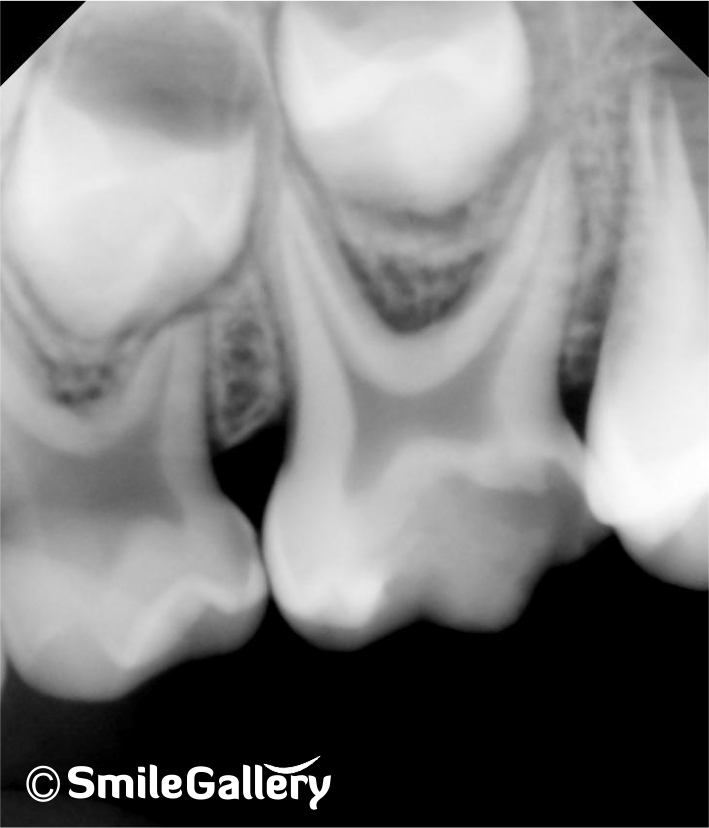
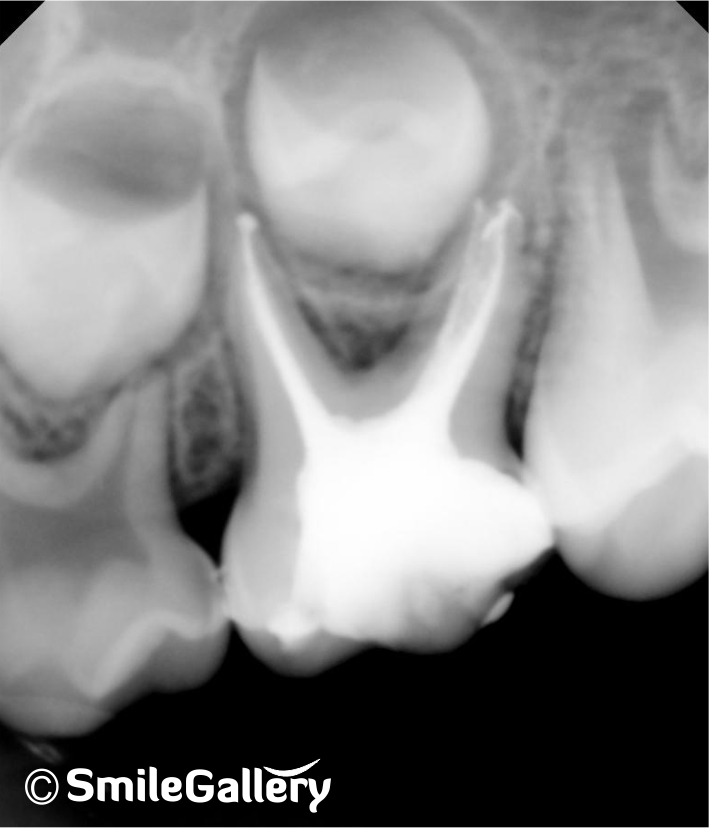 Before
How is rotary endodontics gentler?
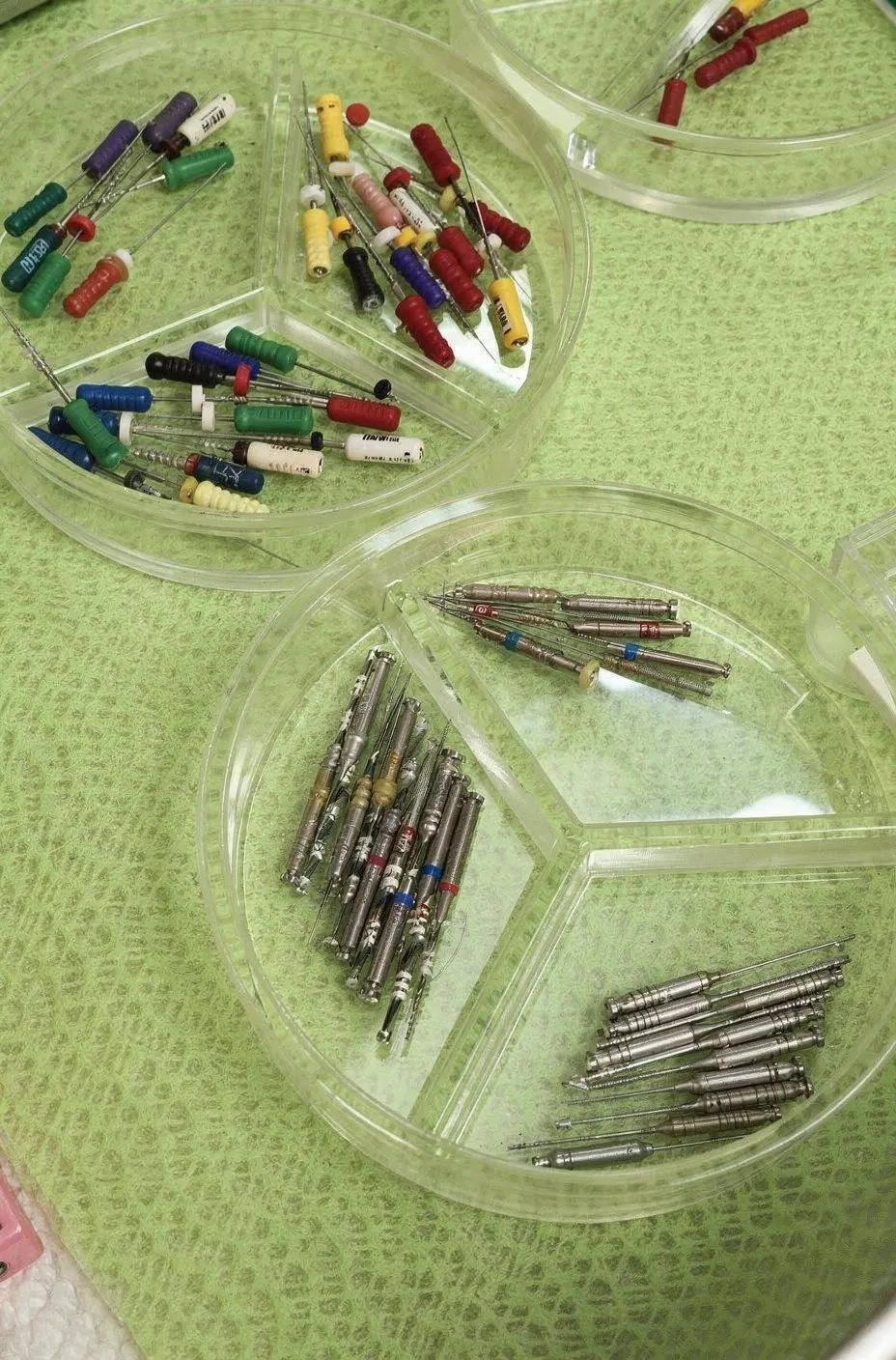
Rotary endodontics uses highly flexible, electrically powered nickel-titanium (NiTi) files to clean and shape the root canals much faster and smoother than traditional manual hand files, resulting in a significantly gentler and more predictable treatment.
Traditional stainless-steel hand files were stiff, slow, and tiring for the patient's jaw. Our modern rotary workflow is fundamentally different:
- Flexible NiTi files — follow the natural curve of your roots smoothly without damaging tooth structure
- Electronic apex locator — calculates canal length to the millimetre, ensuring complete cleaning without overshooting the root tip
- BIOLASE laser disinfection — agitates irrigant solutions deep into microscopic dentinal tubules, killing bacteria hand instruments cannot reach
This combination of rotary shaping + laser disinfection ensures a highly predictable, successful outcome.
What factors affect the cost of root canal treatment in Bhopal?
The cost depends on which tooth needs treatment, the severity of infection, the technology used, and whether a crown is placed afterward. An X-ray examination is needed before an accurate estimate.
- Tooth location — front teeth have one canal while molars have three or four, making them more complex and time-consuming
- Infection severity — a straightforward case costs less than re-treatment of a previously failed RCT
- Technology used — rotary endodontics with laser disinfection involves advanced equipment compared to manual filing
- Crown placement — a permanent crown after RCT is an additional but essential investment to protect the treated tooth long-term
— Dr. Saurabh Shrivastava, MDS "When a patient arrives at my clinic in severe, throbbing pain, my immediate and only priority is to get them out of discomfort. Using modern rotary tools and precise local anaesthesia, we can calmly and predictably save the tooth, allowing the patient to leave our clinic completely pain-free."
Questions, answered
Frequently Asked Questions
Straight answers to what patients ask us. Anything else, message us on WhatsApp.
Will I get tooth pain after an RCT procedure?
Most patients resume their normal routine the same day. Your dentist provides a post-procedure care plan with gentle medication to keep you completely comfortable during recovery. The treated tooth settles down quickly, and any mild awareness fades within a day or two.
Do I need a crown after RCT?
Yes, a dental crown is highly recommended after a root canal, especially for back teeth. The tooth becomes brittle after the pulp is removed, and a crown provides the necessary strength to withstand daily chewing forces and prevents the tooth from fracturing.
Is it better to get a root canal or an extraction?
It is always better to save your natural tooth with a root canal if possible. Extracting a tooth leaves a gap that can cause adjacent teeth to shift, affects your bite, and leads to jawbone loss. Replacing an extracted tooth is also generally more expensive than saving it.
How many sittings does a root canal take?
Many root canals can be completed in a single sitting lasting 45 to 90 minutes. However, if the tooth has a severe, active infection or complex root anatomy, it may require two sittings to ensure it is thoroughly cleaned and medicated before the final seal.
Can I eat normally after a root canal?
You must wait until the local anaesthetic has completely worn off before eating to avoid accidentally biting your cheek or tongue. Until your permanent crown is placed, stick to softer foods and avoid chewing directly on the treated tooth so you don't crack it.
Is a root canal safe during pregnancy?
Yes, a root canal is safe during pregnancy, and treating an active dental infection is much safer for the baby than leaving the infection to spread. We take special precautions, such as using a lead apron during X-rays and selecting safe local anaesthetics.
How do I book a root canal treatment in Bhopal?
You can book your root canal treatment in Bhopal at Smile Gallery Dental Wellness Centre by calling +91 92007 00750. Our clinic is located in Arera Colony, Bhopal, and we offer prompt appointments for patients experiencing severe dental pain.
Do you offer EMI for dental treatment in Bhopal?
Yes — Smile Gallery offers a zero-interest EMI option on eligible treatments, arranged in-house, so you can spread the cost into monthly instalments with no extra interest charged by the clinic. Availability and tenure depend on the treatment plan and are confirmed during your consultation, along with a clear written estimate before treatment begins — with no hidden charges.
अक्सर पूछे जाने वाले सवाल (Hindi FAQs)
Root canal ka kharcha kis cheez par depend karta hai?
RCT ka kharcha kai factors par depend karta hai — kaunsa tooth treat karna hai (front ya molar), infection kitni severe hai, kaunsi technology use ho rahi hai (rotary aur laser disinfection), aur baad mein crown lagwana hai ya nahi. Sahi estimate ke liye pehle X-ray examination zaroori hai.
रूट कैनाल का खर्चा किन बातों पर निर्भर करता है?
आरसीटी का खर्चा कई बातों पर निर्भर करता है — कौनसा दांत इलाज करना है (आगे का या पिछला), इन्फेक्शन कितना गंभीर है, कौनसी तकनीक इस्तेमाल हो रही है (रोटरी और लेज़र डिसइन्फेक्शन), और बाद में कैप लगवाना है या नहीं। सही अनुमान के लिए पहले एक्स-रे जांच ज़रूरी है।
Kya root canal treatment mein dard hota hai?
Nahi, modern root canal treatment mein dard nahi hota. Yeh procedure precise local anaesthesia ke under kiya jaata hai, isliye aap poori tarah numb aur comfortable rehte hain. Zyadatar patients ise ek normal filling jaisa hi experience batate hain. Woh tez, throbbing dard jo aapko pehle tha, infection ki wajah se tha — treatment hi uska ilaaj hai.
क्या रूट कैनाल ट्रीटमेंट में दर्द होता है?
नहीं, आधुनिक रूट कैनाल ट्रीटमेंट में दर्द नहीं होता। यह प्रक्रिया सटीक लोकल एनेस्थीसिया के तहत की जाती है, इसलिए आप पूरी तरह सुन्न और आरामदायक रहते हैं। ज़्यादातर मरीज़ इसे एक सामान्य फिलिंग जैसा ही अनुभव बताते हैं।
Root canal treatment mein kitni sittings aur kitna time lagta hai?
Ek standard root canal treatment aksar 45 se 90 minute mein poora ho jaata hai. Infection ki severity aur tooth ke hisaab se, yeh aksar ek hi sitting mein poora ho sakta hai, ya complex cases mein do visits lag sakti hain. Front teeth mein sirf ek canal hota hai (~45 min), jabki back teeth mein 3-4 curved canals hote hain (~60-90 min).
रूट कैनाल ट्रीटमेंट में कितनी सिटिंग्स और कितना समय लगता है?
एक सामान्य रूट कैनाल ट्रीटमेंट अक्सर 45 से 90 मिनट में पूरा हो जाता है। इन्फेक्शन की गंभीरता और दांत के अनुसार, यह अक्सर एक ही सिटिंग में पूरा हो सकता है, या जटिल मामलों में दो विज़िट लग सकती हैं।
Who treats you
Book a visit
Ready for a Consultation?
Send a photo of your teeth on WhatsApp. A real person from the clinic, not a bot, replies honestly. Darr lag raha hai? Pehle sirf baat kar lijiye.
Calls & WhatsApp 10 am–9 pmSmile Gallery Dental Wellness Centre
E-4/205, Main Rd 3, near Flower Market,
E-4, Arera Colony, Bhopal 462016
One last step: tap Send in WhatsApp so we know it’s really you.
Open WhatsAppCalls & WhatsApp 10 am–9 pm
Visiting us in Arera Colony? Directions, parking, hours and local questions: Root canal treatment in Arera Colony.