

Bleeding Gum Treatment in Bhopal — Expert Periodontal & Laser Gum Care
Advanced deep cleaning & laser periodontal therapy by Dr. Saurabh Shrivastava (MDS Prosthodontist)
Bleeding gums usually signal gum disease, and the early stage, gingivitis, is reversible with timely professional care. At Smile Gallery Dental Wellness Centre in Arera Colony, Bhopal, we treat bleeding gums with ultrasonic deep scaling, diode laser periodontal therapy and intraoral camera diagnostics. Book your periodontal evaluation today.
- Why do gums bleed when you brush?
- Gingivitis vs periodontitis
- Can bleeding gums lead to tooth loss?
- How is gum disease treated with deep cleaning?
- How does laser therapy treat bleeding gums?
- Is deep cleaning and laser treatment painful?
- How can I prevent gum disease at home?
- Frequently asked questions
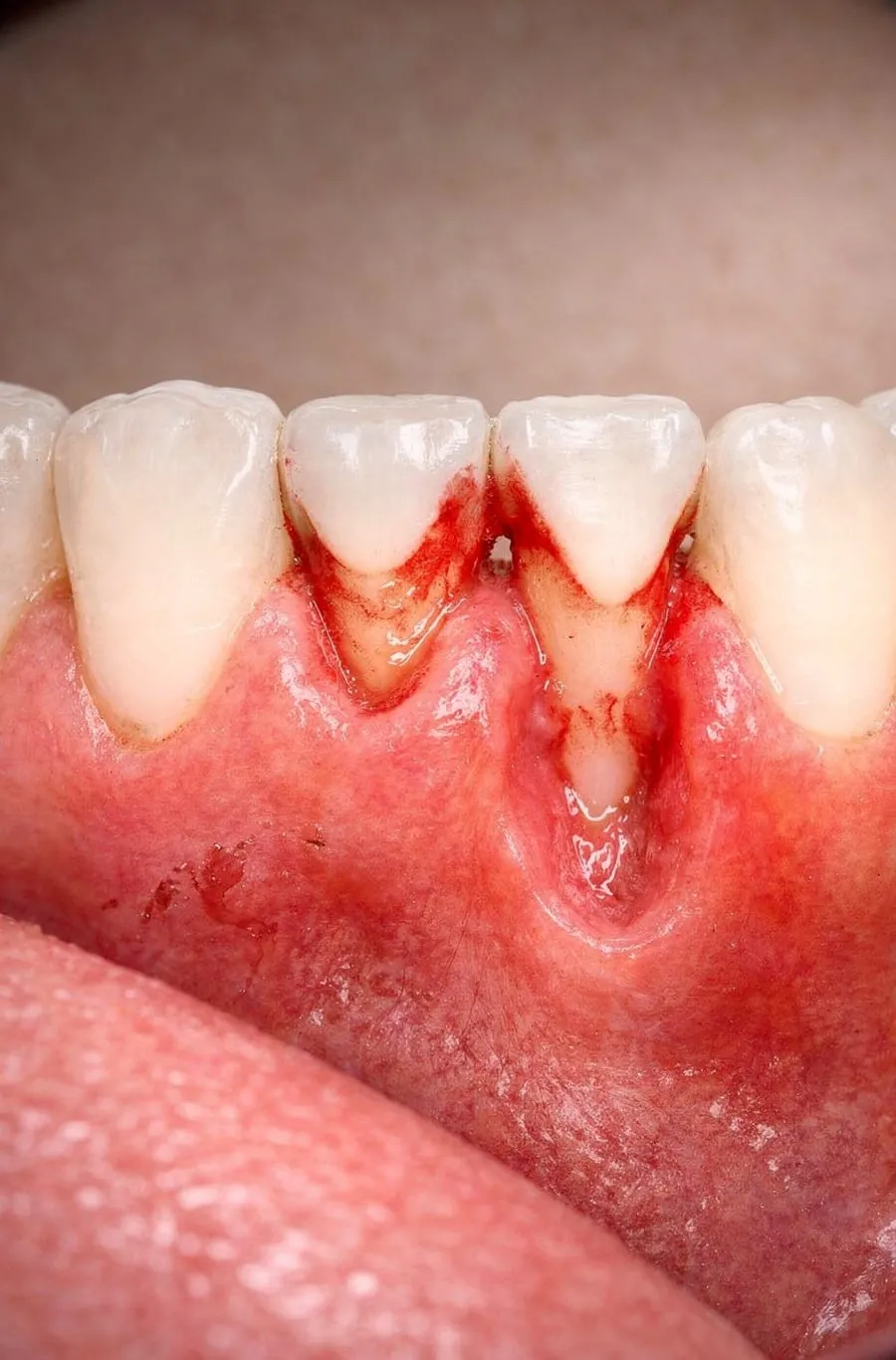
Bleeding gums are the body's warning sign of active gum disease—a bacterial infection attacking the tissues and bone that hold your teeth in place. If your gums bleed when you brush, it is not normal and should never be dismissed as a minor inconvenience. Left untreated, what starts as mild inflammation can progress into periodontitis, destroying the bone around your teeth and eventually leading to tooth loss.
When you need bleeding gum treatment
- Gums bleed regularly when brushing or flossing
- Red, swollen, or puffy gums that feel tender to the touch
- Persistent bad breath that won't go away despite brushing
- Teeth feel loose or are shifting position
- Receding gums exposing tooth roots
At Smile Gallery, Dr. Saurabh Shrivastava uses ultrasonic deep scaling, laser-assisted periodontal therapy, and intraoral camera diagnostics to identify the exact depth of infection and treat it with precision. Every case begins with a thorough examination using our intraoral camera, so you can see exactly what is happening below your gumline before treatment starts.
ADA MouthHealthy
CDC
Why do gums bleed when you brush your teeth?
Gums bleed because bacteria in plaque biofilm trigger an immune response that inflames and weakens the gum tissue, making it fragile enough to bleed on contact.
The root cause of bleeding gums is almost always plaque biofilm—a sticky, invisible layer of bacteria that constantly forms on your teeth. When plaque is not removed thoroughly through daily brushing and flossing, it begins to irritate the gum tissue at the gumline. Your immune system responds by sending blood cells to fight the bacterial invasion, which causes the gums to become inflamed, red, and swollen.
Within 48 to 72 hours of undisturbed accumulation, plaque begins to mineralise by absorbing calcium and phosphate from your saliva. This hardened deposit is called calculus (tartar), and it cannot be removed by a toothbrush alone. Calculus acts as a rough surface that harbours even more bacteria, creating a vicious cycle of infection. The bacteria produce toxins that break down the connective tissue fibres attaching your gums to your teeth, forming progressively deeper pockets where more bacteria hide.
This is why bleeding during brushing is not a sign to brush more gently or stop flossing—it is your body signalling that a bacterial infection is active and professional intervention is needed. At Smile Gallery, our ultrasonic scaler removes both soft plaque and hardened calculus without damaging your enamel, and our intraoral camera lets us show you exactly where the deposits are hiding.
What is the difference between gingivitis and periodontitis?
Gingivitis is early, reversible gum inflammation limited to the soft tissue. Periodontitis is advanced gum disease that has destroyed bone—it can be managed but not fully reversed.
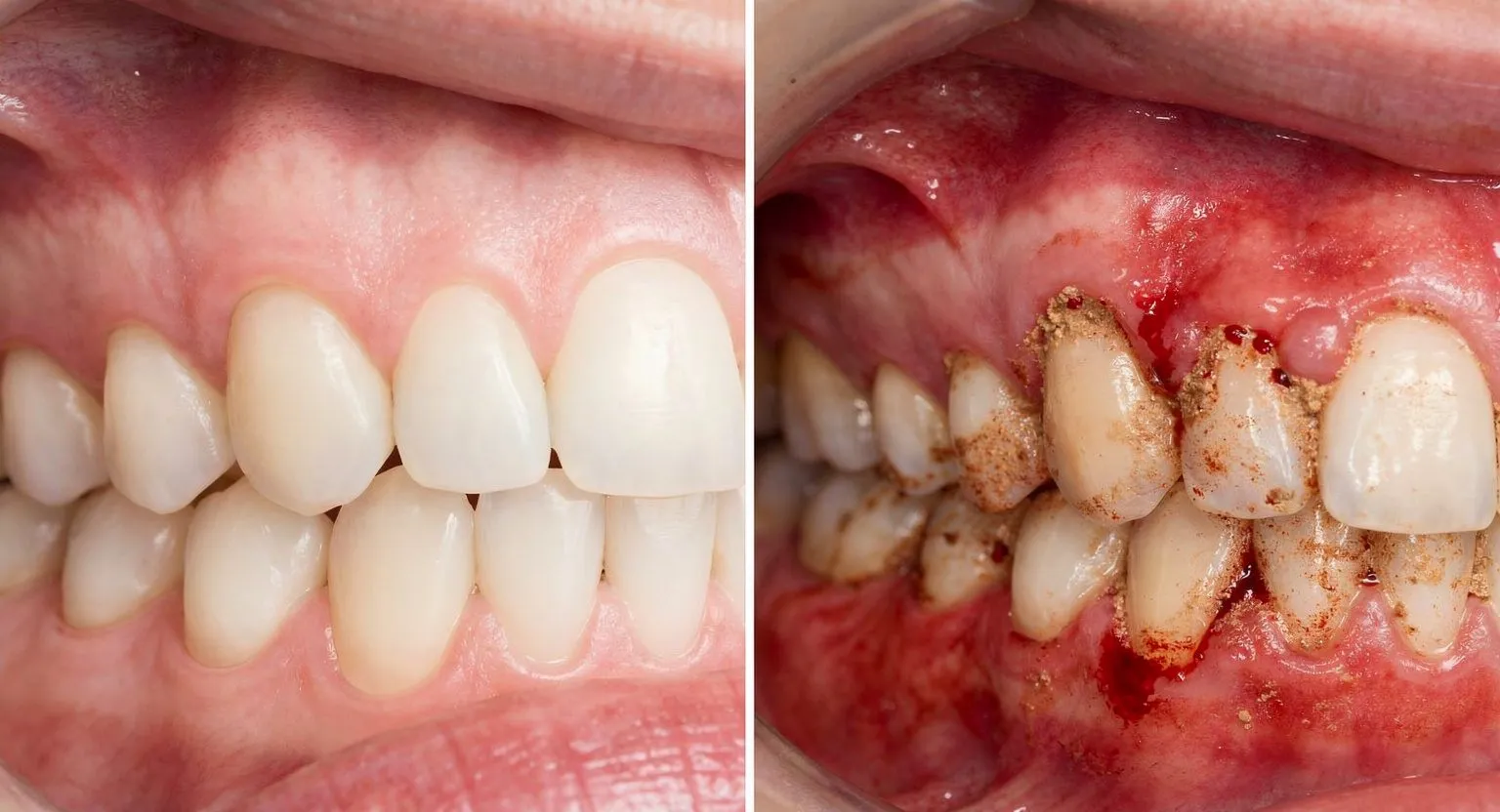
Understanding the difference between these two stages is critical because it determines the urgency and type of bleeding gum treatment in Bhopal you need. Gingivitis is the body's initial inflammatory response to plaque bacteria. At this stage, the damage is confined to the gum tissue itself—no bone loss has occurred. With professional cleaning and improved home care, gingivitis is reversible.
Periodontitis develops when gingivitis is left untreated. The infection spreads below the gumline, and the bacteria begin destroying the periodontal ligament and alveolar bone that anchor your teeth. Once bone is lost, it does not grow back on its own. The goal of treatment shifts from cure to management—halting further destruction and stabilising the remaining support.
| Feature | Healthy Gums | Gingivitis | Periodontitis |
|---|---|---|---|
| Gum Colour | Pale pink, stippled | Red, slightly swollen | Dark red or purplish |
| Bleeding | None | When brushing or flossing | Spontaneous or on slight touch |
| Pocket Depth | 1–3 mm | 3–4 mm | 5 mm or deeper |
| Bone Loss | None | None | Moderate to severe |
| Tooth Mobility | None | None | Loosening, shifting, or drifting |
| Bad Breath | Absent | Occasional | Persistent, strong odour |
| Reversibility | — | Reversible | Manageable, not reversible |
| Treatment | Routine cleaning | Professional scaling | Deep cleaning + laser therapy |
What our patients say
★★★★★ 5.0 · 477 reviews"I had an outstanding experience with Dr. Saurabh Srivastava. I visited him regarding multiple supernumerary teeth and from the very first consultation, he was exceptionally patient in addressing all my queries. His vigilance and attention to detail throughout the entire procedure were truly commendable. The tooth extraction was remarkably comfortable, with little to no pain and the supplementary treatments such as Laser-assisted periodontal therapy (LAPT) and periodontal care were carried out with utmost precision. I felt completely at ease and confident under his care. For anyone in Bhopal seeking expert dental treatment, I can wholeheartedly recommend Dr. Srivastava's clinic. His professionalism, skill, and compassionate approach make it a must-visit for any dental concerns. Highly recommended....!!!!"
Can bleeding gums lead to tooth loss?
Yes. Untreated gum disease can lead to tooth loss—the infection progressively destroys the bone that holds your teeth, which can make them loosen and, in the worst cases, need removal.
The progression from bleeding gums to tooth loss follows a predictable pattern. As periodontitis advances, the pockets between your gums and teeth deepen. Bacteria colonise these pockets, producing enzymes and toxins that dissolve the periodontal ligament fibres and resorb the surrounding alveolar bone. As bone support diminishes, teeth begin to feel mobile. You may notice your bite changing, gaps appearing between teeth that were once tightly spaced, or teeth visibly shifting position.
Beyond oral health, research has found associations between advanced gum disease and other health conditions. The chronic inflammation and bacterial load of periodontitis have been linked, in studies, with cardiovascular disease and with difficulty controlling diabetes. Treating gum disease is not just about saving teeth—it is about protecting your overall health.
For patients who have already experienced multiple tooth loss due to advanced periodontal disease, full mouth rehabilitation may be necessary to restore function and aesthetics after the gum disease is brought under control.
How is gum disease treated with deep cleaning?
Deep cleaning—also called scaling and root planing (SRP)—removes calculus and infected tissue from below the gumline and smooths the root surfaces so gums can reattach to the teeth.
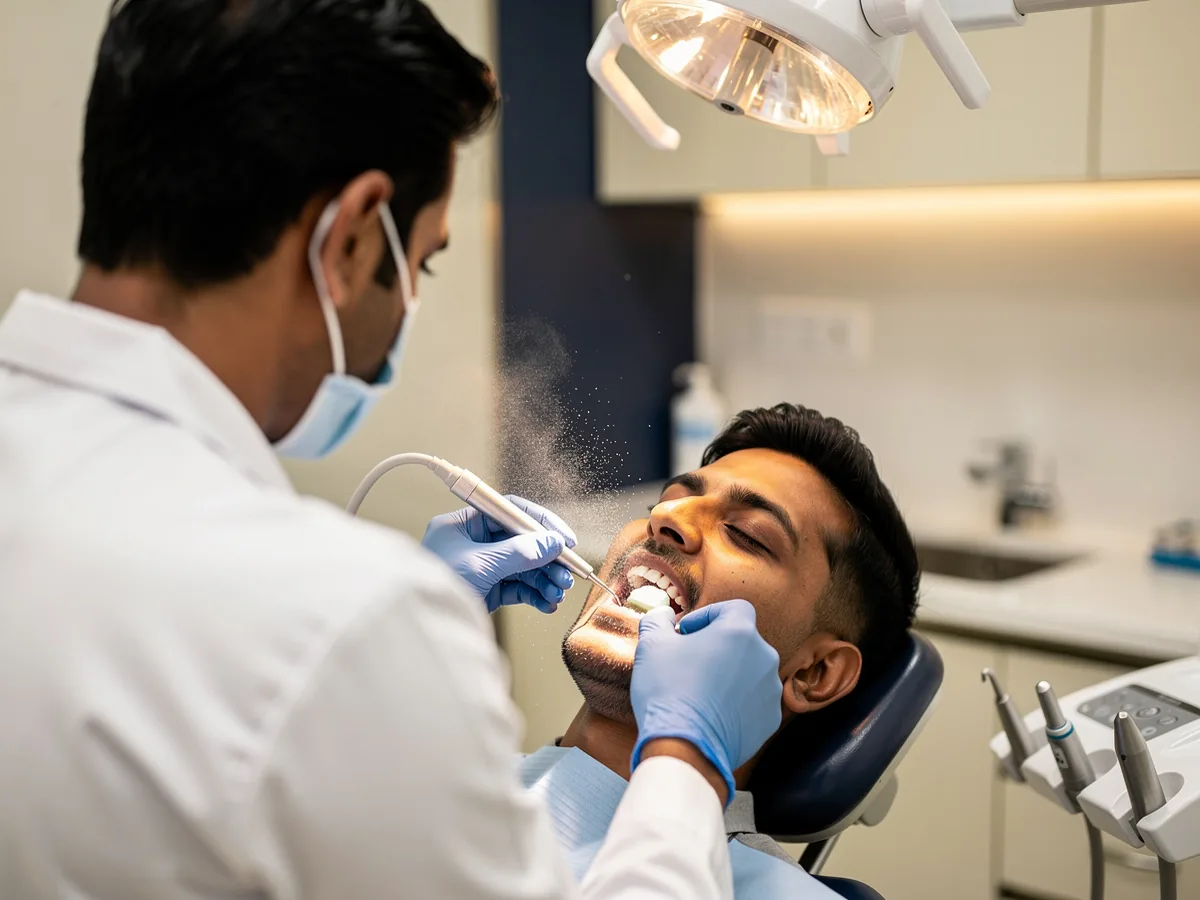
Deep cleaning goes far beyond a routine prophylactic cleaning. While a standard cleaning addresses deposits above and slightly below the gumline, scaling and root planing is a therapeutic procedure that targets the disease process happening deep within the periodontal pockets.
The deep cleaning process at Smile Gallery
- Diagnosis with intraoral camera: Before any instrument touches your teeth, we use our intraoral camera to visualise the extent of calculus buildup and pocket depths. You see everything on screen alongside us.
- Ultrasonic scaling: Our ultrasonic scaler uses high-frequency vibrations combined with a continuous water lavage to shatter and flush calculus from root surfaces deep within pockets. It is far more efficient and comfortable than manual scraping alone.
- Root planing: After the calculus is removed, the root surfaces are carefully smoothed. Rough root surfaces harbour bacteria; a smooth surface allows the gum tissue to heal and reattach tightly to the tooth.
- Targeted antibiotic placement: For deeper pockets (5 mm or more), we place antibiotic micro-spheres directly into the pocket. These slowly release medication over days, killing residual bacteria that mechanical cleaning alone cannot reach.
- Re-evaluation: Four to six weeks after deep cleaning, we reassess pocket depths and healing. Many patients see pocket depths reduce and bleeding settle.
For routine preventive cleaning that maintains healthy gums and prevents disease, visit our teeth cleaning page. Deep cleaning is specifically indicated when pockets have deepened beyond 4 mm and active disease is present.
Dr. Saurabh Shrivastava, Smile Gallery Bhopal “Most patients are surprised by how comfortable deep cleaning actually is. With ultrasonic technology and proper local anaesthesia, we can treat even severely infected gums comfortably. The real discomfort comes from leaving the disease untreated—loose teeth, constant bad breath, and the fear of losing your smile.”
How does laser therapy treat bleeding gums without surgery?
A diode laser selectively targets infected and inflamed gum tissue inside periodontal pockets, destroying bacteria and diseased tissue while stimulating healthy tissue regeneration—no scalpel, no sutures.
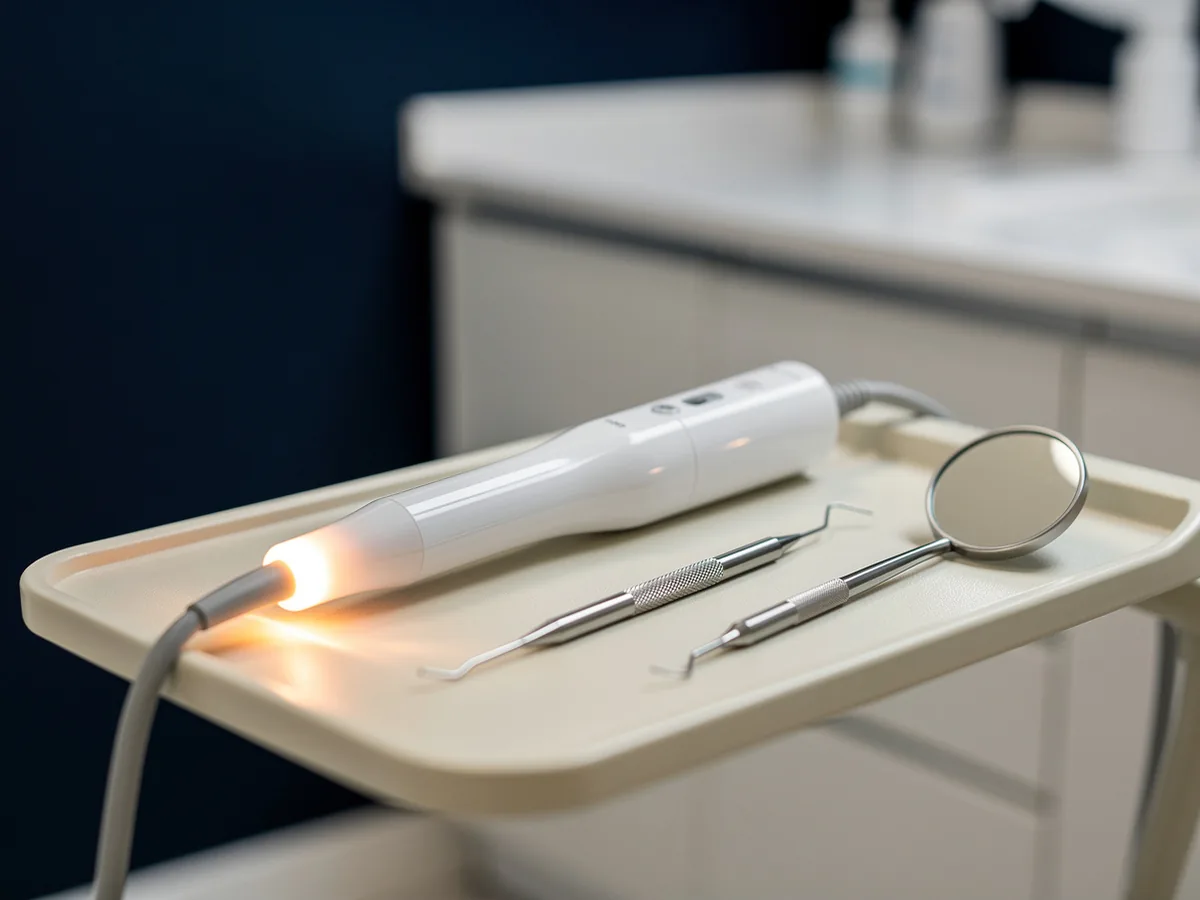
Laser-assisted periodontal therapy represents a significant advancement in how we treat moderate to advanced gum disease. At Smile Gallery, we use a diode laser as an adjunct to scaling and root planing for pockets that need extra intervention. The laser energy is absorbed by the pigmented, inflamed tissue and bacteria, effectively decontaminating the pocket without harming healthy tissue.
Key benefits of laser gum treatment
- No cutting, no stitches: Unlike traditional flap surgery, laser therapy treats the disease through the pocket opening
- Bacterial decontamination: The laser eliminates bacteria that survive mechanical cleaning
- Biostimulation: Low-level laser energy promotes tissue healing and collagen regeneration
- Minimal bleeding: The laser cauterises as it works, reducing post-operative bleeding
- Faster recovery: Many patients return to normal activities soon afterwards
Learn more about our laser and painless approach on our painless dental treatment page, which covers the full range of laser applications we offer at Smile Gallery.
Is deep cleaning and laser gum treatment painful?
Most patients find them comfortable. With modern ultrasonic instruments, diode laser technology, and effective local anaesthesia, deep cleaning and laser gum treatment at Smile Gallery are done with good numbing and minimal post-operative discomfort.
Fear of pain is the single biggest reason patients delay gum disease treatment—and ironically, that delay makes the disease worse and eventual treatment more involved. Here is what you can realistically expect:
- During the procedure: We apply a topical numbing gel before administering local anaesthesia. Once the area is numb, you will feel vibration from the ultrasonic scaler and slight pressure, as the area is well numbed. The diode laser produces a warm sensation that most patients describe as mildly tingling.
- Immediately after: Some tenderness and mild sensitivity to hot and cold is normal for 2 to 3 days as the gums begin healing. Over-the-counter pain relief is usually sufficient.
- Within a week: Most patients report that their gums already feel firmer, bleeding has stopped, and the chronic bad breath has improved dramatically.
The discomfort of a single treatment session is far less than the ongoing discomfort of living with bleeding, swollen gums and the anxiety of wondering when the next tooth will loosen.
How can I prevent gum disease and bleeding gums at home?
Effective daily plaque removal through proper brushing technique, interdental cleaning, and regular professional check-ups can help prevent gum disease or stop it from returning after treatment.
Prevention is always simpler and less expensive than treatment. Once your gums have been professionally treated and are back to a healthy state, maintaining them requires consistent daily habits:
- Brush twice daily with a soft-bristled brush: Use gentle, circular motions angled 45 degrees toward the gumline. Aggressive, horizontal scrubbing can damage gums further. Electric toothbrushes with pressure sensors are particularly effective.
- Clean between teeth daily: Interdental brushes or floss reach the tooth surfaces your toothbrush misses. This is where gum disease most often starts.
- Use an antimicrobial mouthwash: A chlorhexidine-based rinse (short-term) or a therapeutic mouthwash helps reduce bacterial load in hard-to-reach areas.
- Don't skip professional cleanings: Even with excellent home care, calculus forms in areas you cannot clean. Professional scaling every 6 months—or every 3 to 4 months for patients with a history of periodontal disease—prevents recurrence.
- Quit tobacco: Smoking is one of the most significant risk factors for gum disease. It reduces blood flow to the gums, masks bleeding (a key warning sign), and impairs healing after treatment.
- Manage systemic conditions: Uncontrolled diabetes, hormonal changes during pregnancy, and certain medications can increase gum disease susceptibility. Inform your dentist about all medications and health conditions.
A healthy diet rich in vitamin C, staying well-hydrated, and managing stress also contribute to gum health. Gum disease is a chronic condition—once you have had it, you are at higher risk of recurrence, making lifelong maintenance essential.
Questions, answered
Frequently Asked Questions
Straight answers to what patients ask us. Anything else, message us on WhatsApp.
How much does bleeding gum treatment cost in Bhopal?
The cost of bleeding gum treatment depends on how far the disease has progressed — early gingivitis needs far less than periodontitis that requires deep cleaning, laser therapy, or localised antibiotics across multiple visits. At Smile Gallery, Dr. Shrivastava first measures your pocket depths and examines the extent of the infection, then gives you a clear written estimate before treatment begins — with no hidden charges.
How long does a deep cleaning session take?
A full-mouth deep cleaning is typically completed in one or two appointments, each lasting 45 to 60 minutes. For severe cases, we may divide the treatment into quadrants across two to four visits to ensure thorough care and your comfort. Laser therapy, when indicated, adds only 10 to 15 minutes per quadrant.
Can bleeding gums heal on their own without treatment?
Gingivitis (early gum disease) can improve significantly with meticulous home care—proper brushing, flossing, and antimicrobial rinses. However, once calculus has formed below the gumline, no amount of home care can remove it. Periodontitis absolutely requires professional treatment. The sooner you seek treatment, the simpler and less expensive it will be.
Is gum disease linked to heart disease and diabetes?
Studies have found an association between gum disease and conditions such as diabetes and cardiovascular disease, although research is ongoing and the link is not fully settled. Untreated periodontitis can make diabetes harder to control. Treating gum disease supports your overall health.
How do I know if I need deep cleaning or just regular cleaning?
Your dentist determines this by measuring the depth of the pockets around each tooth using a periodontal probe. Pockets of 1 to 3 mm with no bleeding indicate healthy gums suitable for routine preventive cleaning. Pockets of 4 mm or deeper with bleeding on probing indicate active disease requiring deep cleaning (scaling and root planing). At Smile Gallery, we use an intraoral camera to show you these measurements visually.
Do you offer EMI for dental treatment in Bhopal?
Yes — Smile Gallery offers a zero-interest EMI option on eligible treatments, arranged in-house, so you can spread the cost into monthly instalments with no extra interest charged by the clinic. Availability and tenure depend on the treatment plan and are confirmed during your consultation, along with a clear written estimate before treatment begins — with no hidden charges.
अक्सर पूछे जाने वाले सवाल (Hindi FAQs)
Bleeding gums ke treatment ka kharcha kis cheez par depend karta hai?
Bleeding gum treatment ka kharcha disease kitni advance ho chuki hai us par depend karta hai — shuru ki gingivitis mein bahut kam zarurat hoti hai, jabki periodontitis mein deep cleaning, laser therapy, ya antibiotics multiple visits mein lagte hain. Smile Gallery mein Dr. Shrivastava pehle aapki pocket depths measure karte hain aur infection ki extent dekhte hain, phir treatment shuru hone se pehle ek clear likhit estimate dete hain — koi hidden charge nahi.
ब्लीडिंग गम्स के इलाज का खर्चा किन बातों पर निर्भर करता है?
ब्लीडिंग गम के इलाज का खर्चा इस बात पर निर्भर करता है कि बीमारी कितनी बढ़ चुकी है — शुरुआती जिंजिवाइटिस में बहुत कम ज़रूरत होती है, जबकि पीरियोडोंटाइटिस में डीप क्लीनिंग, लेज़र थेरेपी या एंटीबायोटिक्स कई विज़िट में लगते हैं। स्माइल गैलरी में डॉ. श्रीवास्तव पहले आपकी पॉकेट डेप्थ नापते हैं और संक्रमण की सीमा देखते हैं, फिर इलाज शुरू होने से पहले एक स्पष्ट लिखित अनुमान देते हैं — कोई छुपा शुल्क नहीं।
Kya deep cleaning aur laser gum treatment dard-bhara hota hai?
Aam taur par nahi. Modern ultrasonic instruments, diode laser technology, aur effective local anaesthesia ke saath, Smile Gallery mein deep cleaning aur laser gum treatment comfortable procedures hain. Topical numbing gel aur local anaesthesia ke baad aapko sirf halka pressure aur vibration mehsoos hoga, kyunki area acchi tarah numb hota hai. Laser se halki garmahat jaisi tingling feeling hoti hai. Procedure ke 2-3 din baad thodi sensitivity ho sakti hai, jo over-the-counter pain relief se theek ho jaati hai.
क्या डीप क्लीनिंग और लेज़र गम ट्रीटमेंट में दर्द होता है?
आमतौर पर नहीं। आधुनिक अल्ट्रासोनिक उपकरण, डायोड लेज़र तकनीक, और प्रभावी लोकल एनेस्थीसिया के साथ, स्माइल गैलरी में डीप क्लीनिंग और लेज़र गम ट्रीटमेंट आरामदायक प्रक्रियाएं हैं। सुन्न करने वाले जेल और लोकल एनेस्थीसिया के बाद आपको केवल हल्का दबाव और कंपन महसूस होगा, क्योंकि क्षेत्र अच्छी तरह सुन्न होता है। प्रक्रिया के 2-3 दिन बाद थोड़ी संवेदनशीलता हो सकती है, जो सामान्य दर्द निवारक दवा से ठीक हो जाती है।
Deep cleaning session mein kitna time lagta hai?
Full-mouth deep cleaning aam taur par ek ya do appointments mein complete ho jaati hai, har session 45 se 60 minute ka hota hai. Severe cases mein, treatment ko quadrants mein baant kar do se chaar visits mein kiya ja sakta hai, taaki care thorough rahe aur aap comfortable rahein. Laser therapy, jab zarurat ho, har quadrant mein sirf 10-15 minute aur lagta hai.
डीप क्लीनिंग सेशन में कितना समय लगता है?
फुल-माउथ डीप क्लीनिंग आमतौर पर एक या दो अपॉइंटमेंट में पूरी हो जाती है, हर सेशन 45 से 60 मिनट का होता है। गंभीर मामलों में, इलाज को हिस्सों में बांटकर दो से चार विज़िट में किया जा सकता है, ताकि देखभाल पूरी रहे और आप सहज महसूस करें। लेज़र थेरेपी, जब ज़रूरत हो, हर हिस्से में केवल 10-15 मिनट और लेती है।
Sources
- American Dental Association (MouthHealthy): Gum Disease — gingivitis as the early, reversible stage, bleeding gums as a warning sign, brushing and cleaning between teeth, and that chronic periodontitis affects 47.2% of US adults over 30.
- CDC: Gum (Periodontal) Disease — gingivitis as reversible, periodontitis as not reversible but manageable with professional treatment, bleeding gums as a sign, and untreated periodontitis making diabetes worse.
- NIDCR (NIH): Periodontal (Gum) Disease — swollen, red and bleeding gums as early signs, healthy pocket depth of about 1 to 3 millimetres, and loose teeth in the worst cases.
- American Academy of Periodontology: Gum Disease Information — gingivitis being reversible with professional treatment and home care, bleeding while brushing or flossing as a symptom, and pockets deepening as the disease progresses.
Who treats you
Book a visit
Stop the Bleeding. Save Your Teeth.
Early-stage gum disease (gingivitis) is reversible with timely care. Book your periodontal evaluation at Smile Gallery today.
Send a photo of your teeth on WhatsApp. A real person from the clinic, not a bot, replies honestly. Darr lag raha hai? Pehle sirf baat kar lijiye.
Calls & WhatsApp 10 am–9 pmSmile Gallery Dental Wellness Centre
E-4/205, Main Rd 3, near Flower Market,
E-4, Arera Colony, Bhopal 462016
One last step: tap Send in WhatsApp so we know it’s really you.
Open WhatsAppCalls & WhatsApp 10 am–9 pm