

Bad Breath Treatment in Bhopal — Lasting Relief from Chronic Bad Breath
Expert halitosis diagnosis & treatment by Dr. Saurabh Shrivastava (MDS Prosthodontist)
Chronic bad breath is usually caused by bacteria in the mouth, mainly on the tongue and gums, not the stomach, and it can be treated once the source is found. At Smile Gallery Dental Wellness Centre in Arera Colony, Bhopal, Dr. Saurabh Shrivastava uses intraoral camera imaging to find the cause, then treats it. Book a discreet consultation.
Chronic bad breath — medically known as halitosis — is a persistent unpleasant odor caused by anaerobic bacteria breaking down proteins in the mouth, releasing foul-smelling volatile sulfur compounds (VSCs). Unlike the temporary morning breath everyone experiences, chronic halitosis lingers throughout the day and cannot be masked by mints or mouth fresheners alone.
When you need professional help
- Bad breath persists even after brushing and flossing
- You notice a white or yellow coating on the back of your tongue
- People subtly offer you mints or step back during conversation
- You have dry mouth, bleeding gums, or untreated cavities
- Over-the-counter mouthwash provides only temporary relief
At Smile Gallery, Dr. Saurabh Shrivastava conducts a thorough diagnostic exam using intraoral camera imaging to locate the exact bacterial source — then eliminates it through professional cleaning, cavity restoration, or laser gum therapy. Our approach treats the cause, not just the symptom, so your fresh breath lasts.
NCBI review, 2022
NCBI review, 2022
ADA MouthHealthy
What causes chronic bad breath?
The overwhelming majority of chronic bad breath (85–90%) originates inside the mouth — from bacterial colonies thriving on the tongue, between teeth, and under the gumline — not from the stomach.
Anaerobic bacteria feed on leftover food particles and dead cells in your mouth. As they break down proteins, they produce volatile sulfur compounds (VSCs) — hydrogen sulfide, methyl mercaptan, and dimethyl sulfide — which create that characteristic rotten-egg or cabbage-like smell. Here are the most common oral causes:
- Tongue coating: The rough surface of the tongue, especially the posterior third, traps bacteria and debris. A white or yellowish coating is the single largest source of mouth odor.
- Gum disease (periodontitis): Deep periodontal pockets harbor anaerobic bacteria that produce VSCs continuously. Bleeding or inflamed gums are a strong indicator.
- Untreated cavities: Decayed teeth create sheltered spaces where bacteria multiply and food particles decompose, producing persistent odor.
- Poor-fitting dental work: Old crowns or bridges with gaps trap bacteria underneath, creating a hidden odor source.
- Dry mouth (xerostomia): Saliva naturally cleanses the mouth. Medications, mouth breathing, or dehydration reduce saliva flow, allowing bacteria to flourish.
- Impacted wisdom teeth: Partially erupted wisdom teeth create flaps of gum tissue that trap food and bacteria.
Can stomach problems cause bad breath?
While GERD (acid reflux) and H. pylori infection can contribute to bad breath, gastrointestinal and endocrine causes together account for only about 5% of cases in one published review. Most people who think their bad breath comes from the stomach actually have an oral source.
This is one of the most common misconceptions about halitosis. Patients often arrive at Smile Gallery convinced that their stomach is the culprit, only to discover through our diagnostic exam that the real source is a coated tongue, hidden cavity, or early gum disease.
That said, certain gastrointestinal conditions can genuinely cause or worsen bad breath:
- GERD (Gastroesophageal Reflux Disease): Stomach acid rising into the esophagus carries odorous gases and can erode tooth enamel, creating new bacterial niches.
- H. pylori infection: The bacterium that causes stomach ulcers can produce sulfur compounds detectable on the breath.
- Intestinal conditions: Bowel obstruction or certain metabolic disorders can produce distinctive breath odors, though these are rare.
At Smile Gallery, Dr. Shrivastava's approach is to first rule out every oral cause using intraoral camera imaging and clinical examination. If the mouth is healthy and the odor persists, we refer patients to a gastroenterologist for further evaluation. This systematic approach saves patients months of guessing and self-medicating.
What our patients say
★★★★★ 5.0 · 477 reviewsWhy doesn't mouthwash cure bad breath?
Most commercial mouthwashes only mask odor with fragrance and alcohol — they don't eliminate the bacterial colonies producing VSCs. Some alcohol-based rinses actually worsen bad breath by drying out the mouth.
Understanding why mouthwash alone fails is key to appreciating professional treatment. Here is how the two approaches compare:
| Factor | Over-the-Counter Mouthwash | Professional Treatment at Smile Gallery |
|---|---|---|
| Mechanism | Masks odor with fragrance; alcohol kills some surface bacteria temporarily | Physically removes tartar, plaque, and bacterial colonies at the source |
| Duration of relief | 30 minutes to 2 hours | Lasting when the cause is treated |
| Tongue bacteria | Cannot penetrate tongue papillae | Professional tongue debridement removes embedded bacteria |
| Gum pockets | Cannot reach below the gumline | Ultrasonic scaler cleans deep periodontal pockets |
| Dry mouth risk | Alcohol-based rinses worsen dryness | Alcohol-free therapeutic rinses (chlorine dioxide/zinc) prescribed |
| Diagnosis | No diagnostic value | Intraoral camera identifies exact source |
| Hidden cavities | No effect on decay | Cavities restored; odor source sealed |
At Smile Gallery, we prescribe alcohol-free therapeutic rinses containing chlorine dioxide or zinc compounds when ongoing rinse support is appropriate. Unlike commercial mouthwash, these formulations neutralize VSCs chemically rather than masking them.
How do dentists diagnose and treat halitosis?
Diagnosis begins with a comprehensive clinical exam and intraoral camera imaging to identify every potential odor source. Treatment targets each cause individually — from professional cleaning to gum therapy to cavity restoration.
At Smile Gallery, Dr. Saurabh Shrivastava follows a systematic diagnostic protocol for every bad breath patient:
Step 1: Comprehensive Oral Examination
Using an intraoral camera, Dr. Shrivastava magnifies and photographs every surface of your teeth and gums. This allows both the doctor and the patient to see the exact areas harboring bacteria — a coated tongue, inflamed gum pockets, cavities, or ill-fitting restorations. The visual evidence takes the guesswork out of diagnosis.
Step 2: Identify All Contributing Sources
Bad breath often has multiple contributing causes. A single patient might have early gum disease, a deep cavity on a back molar, and a heavily coated tongue. Each source must be identified and addressed individually for lasting results.
Step 3: Targeted Treatment
Based on the diagnosis, treatment may include one or more of the following:
- Professional cleaning (scaling & polishing): An ultrasonic scaler removes hardened tartar and bacterial plaque from all tooth surfaces and below the gumline. This alone resolves bad breath for many patients.
- Tongue debridement: Professional cleaning of the tongue surface to remove embedded bacteria from the papillae.
- Cavity restoration: Decayed teeth are restored with fillings or dental crowns, sealing off bacterial hiding spots.
- Laser gum therapy: For patients with periodontal disease, laser-assisted treatment reduces pocket depth and eliminates deep-seated bacterial colonies.
- Wisdom tooth removal: Impacted or partially erupted wisdom teeth that trap debris are extracted to eliminate chronic odor sources.
- Alcohol-free therapeutic rinses: Chlorine dioxide or zinc-based rinses are prescribed to chemically neutralize VSCs as a supportive measure.
Step 4: Prevention Plan
Before you leave, Dr. Shrivastava provides a personalized daily care plan — including tongue cleaning technique, recommended rinse, brushing modifications, and a follow-up schedule — so your fresh breath is maintained long after you leave the clinic.
Does tongue scraping really help with bad breath?
Yes — the tongue is the single largest source of bad breath bacteria. Regular tongue scraping can reduce VSC levels by up to 75%, making it one of the most effective daily habits for maintaining fresh breath.
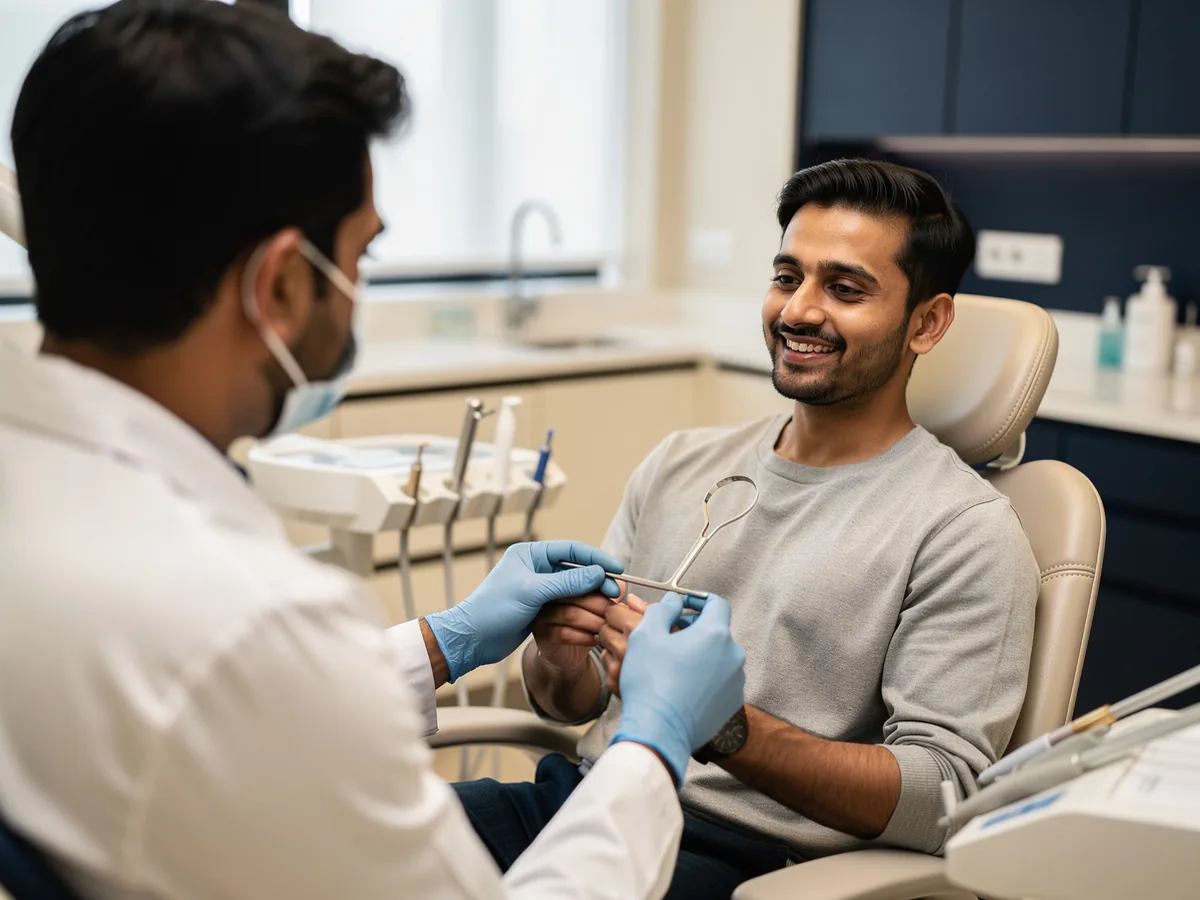
The surface of your tongue is covered in tiny projections called papillae. These papillae create a rough, textured surface with countless grooves and crevices — an ideal hiding place for bacteria, dead cells, and food debris. The posterior third of the tongue (the part closest to your throat) is the worst offender because it is drier, harder to clean, and has the deepest papillae.
A visible white or yellowish coating on the tongue is essentially a biofilm — a dense mat of bacteria actively producing VSCs. Simply brushing your tongue with a toothbrush is often insufficient because the soft bristles cannot effectively scrape bacteria from between the papillae.
How to scrape your tongue correctly
- Use a dedicated tongue scraper (stainless steel or copper) — not the back of your toothbrush.
- Stick your tongue out as far as comfortable.
- Place the scraper at the back of the tongue and pull forward with gentle, even pressure.
- Rinse the scraper after each stroke.
- Repeat 3–5 times, covering the entire tongue surface.
- Do this every morning before brushing your teeth.
At Smile Gallery, we demonstrate proper tongue scraping technique as part of our bad breath treatment in Bhopal protocol. For patients with particularly heavy tongue coating, Dr. Shrivastava performs an initial professional tongue debridement to give patients a clean starting point.
Can bleeding gums cause bad breath?
Absolutely. Bleeding gums are a hallmark of gum disease (gingivitis or periodontitis), which creates deep pockets where odor-producing bacteria thrive unchecked. The blood itself also has a metallic odor that compounds the problem.
When gums are inflamed and bleed easily, it signals that bacterial plaque has accumulated along and beneath the gumline. These bacteria produce both the inflammation and the volatile sulfur compounds responsible for bad breath. The deeper the gum pockets, the more sheltered the bacteria, and the worse the odor becomes.
For comprehensive gum disease treatment, visit our bleeding gum treatment page.
How can I prevent bad breath every day?
Preventing bad breath requires a consistent daily routine that targets bacteria on the tongue, between teeth, and along the gumline — not just the tooth surfaces your brush reaches.
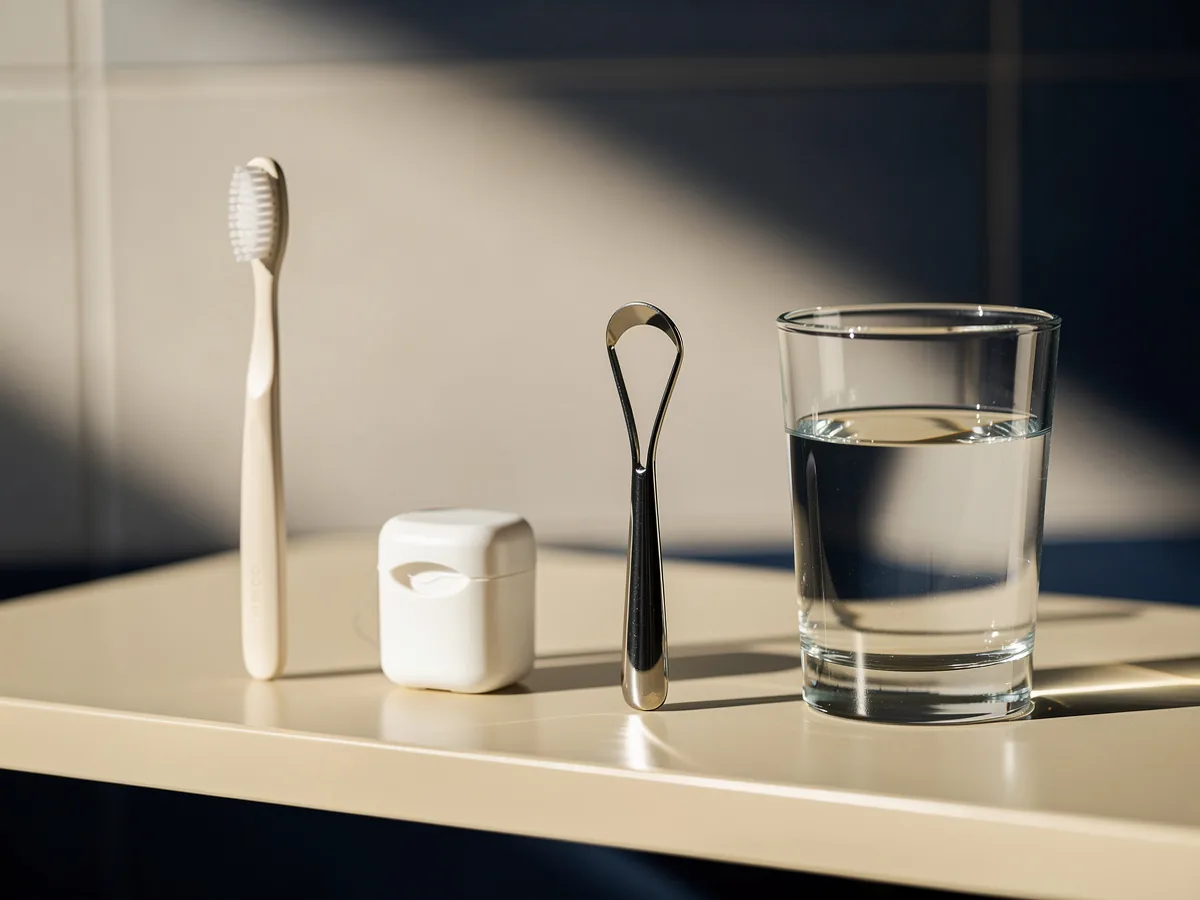
Dr. Saurabh Shrivastava recommends this evidence-based daily routine for maintaining fresh breath:
- Scrape your tongue every morning — before brushing, using a stainless steel or copper tongue scraper. This removes the overnight bacterial biofilm that is the biggest single source of mouth odor.
- Brush twice daily for two full minutes — use a soft-bristled brush at a 45-degree angle to the gumline. Pay special attention to the gumline and back teeth.
- Floss every night before bed — interdental bacteria produce significant VSCs. Flossing removes food particles and plaque your brush cannot reach.
- Stay hydrated — dry mouth is a major contributor to bad breath. Drink water regularly throughout the day, especially if you take medications that cause dry mouth.
- Use an alcohol-free therapeutic rinse — look for rinses containing chlorine dioxide or zinc. Avoid alcohol-based mouthwash, which dries the mouth and worsens odor over time.
- Avoid tobacco — smoking and chewing tobacco dry the mouth, stain teeth, and create their own persistent odor on top of bacterial halitosis.
- Get professional cleanings every 6 months — even with perfect home care, tartar builds up in areas you cannot clean. Regular painless dental visits keep bacterial colonies in check.
Dr. Saurabh Shrivastava, MDS "Most patients who come to us for bad breath treatment are relieved to learn the problem is fixable. In the majority of cases, a professional cleaning combined with proper tongue hygiene can clear up halitosis. We make the process comfortable and completely discreet — there is no judgment here, only solutions."
Questions, answered
Frequently Asked Questions
Straight answers to what patients ask us. Anything else, message us on WhatsApp.
How much does bad breath treatment cost in Bhopal?
The cost depends entirely on the underlying cause — a simple professional cleaning is a very different investment from treatment that also involves cavity restoration, gum therapy, or wisdom tooth removal. At Smile Gallery, Dr. Shrivastava examines your mouth first, identifies exactly which sources are contributing to the odor, and gives you a clear written estimate before any treatment begins — with no hidden charges.
Can bad breath be treated successfully?
Yes, in most cases. Once the bacterial source is identified and treated — whether through professional cleaning, cavity restoration, or gum treatment — bad breath usually does not return as long as you maintain proper daily oral hygiene. Dr. Shrivastava provides a personalized prevention plan to support lasting results.
How do I know if my bad breath is serious?
If your bad breath persists despite regular brushing, flossing, and tongue cleaning, it likely indicates an underlying dental problem such as gum disease, hidden cavities, or a chronic tongue coating. Persistent halitosis should be evaluated by a dentist rather than masked with mouthwash. At Smile Gallery, we use intraoral camera imaging to identify the exact cause.
Does drinking water help with bad breath?
Water helps significantly because it combats dry mouth, one of the key contributors to halitosis. Staying well-hydrated promotes saliva production, which naturally washes away food particles and bacteria. However, water alone cannot cure halitosis caused by tartar buildup, cavities, or gum disease — those require professional treatment.
Is the bad breath consultation at Smile Gallery discreet?
Absolutely. We understand that halitosis can be an embarrassing topic, which is why our consultations are conducted in a private, judgment-free setting. Dr. Shrivastava and the Smile Gallery team treat bad breath as the medical condition it is — no different from treating a cavity or gum disease. Your comfort and dignity are always our priority.
Do you offer EMI for dental treatment in Bhopal?
Yes — Smile Gallery offers a zero-interest EMI option on eligible treatments, arranged in-house, so you can spread the cost into monthly instalments with no extra interest charged by the clinic. Availability and tenure depend on the treatment plan and are confirmed during your consultation, along with a clear written estimate before treatment begins — with no hidden charges.
अक्सर पूछे जाने वाले सवाल (Hindi FAQs)
Bad breath ke treatment ka kharcha kis cheez par depend karta hai?
Bad breath ke treatment ka kharcha uski underlying cause par depend karta hai — sirf professional cleaning ek simple cheez hai, jabki cavity restoration, gum therapy, ya wisdom tooth removal shaamil hone par cost alag hoti hai. Smile Gallery mein Dr. Shrivastava pehle aapka mooh examine karte hain, exact karan pata karte hain, aur treatment shuru hone se pehle ek clear likhit estimate dete hain — koi hidden charge nahi.
बैड ब्रेथ के इलाज का खर्चा किन बातों पर निर्भर करता है?
बैड ब्रेथ के इलाज का खर्चा उसके मूल कारण पर निर्भर करता है — सिर्फ प्रोफेशनल क्लीनिंग एक सामान्य बात है, जबकि कैविटी रिस्टोरेशन, गम थेरेपी, या विज़डम टूथ निकलवाने जैसी चीज़ें शामिल होने पर खर्चा अलग होता है। स्माइल गैलरी में डॉ. श्रीवास्तव पहले आपका मुँह जांचते हैं, सही कारण पता लगाते हैं, और इलाज शुरू होने से पहले एक स्पष्ट लिखित अनुमान देते हैं — कोई छुपा शुल्क नहीं।
Kya Smile Gallery mein bad breath consultation discreet aur judgment-free hota hai?
Bilkul. Hum samajhte hain ki halitosis ek embarrassing topic ho sakta hai, isliye humari consultations private aur judgment-free environment mein hoti hain. Dr. Shrivastava aur Smile Gallery team bad breath ko ek medical condition ki tarah treat karte hain — bilkul cavity ya gum disease jaisa. Aapka comfort aur dignity hamesha hamari priority hai.
क्या स्माइल गैलरी में बैड ब्रेथ की सलाह गोपनीय और बिना जज किए होती है?
बिल्कुल। हम समझते हैं कि हैलिटोसिस एक शर्मिंदगी भरा विषय हो सकता है, इसलिए हमारी परामर्श निजी और बिना जज किए माहौल में होती है। डॉ. श्रीवास्तव और स्माइल गैलरी टीम बैड ब्रेथ को एक मेडिकल स्थिति की तरह मानती है — बिल्कुल कैविटी या गम डिजीज़ जैसा। आपका आराम और सम्मान हमेशा हमारी प्राथमिकता है।
Kya bad breath ka successful ilaaj ho sakta hai?
Haan, zyada tar cases mein. Ek baar bacterial source pata chal jaaye aur uska treatment ho jaaye — chahe professional cleaning, cavity restoration, ya gum treatment se — to bad breath aam taur par wapas nahi aata, basharte aap daily oral hygiene sahi tarike se maintain karein. Dr. Shrivastava ek personalized prevention plan bhi dete hain taaki result lasting rahe.
क्या बैड ब्रेथ का सफल इलाज हो सकता है?
हाँ, ज़्यादातर मामलों में। एक बार बैक्टीरियल स्रोत का पता चल जाए और उसका इलाज हो जाए — चाहे प्रोफेशनल क्लीनिंग, कैविटी रिस्टोरेशन, या गम ट्रीटमेंट से — तो बैड ब्रेथ आमतौर पर वापस नहीं आता, बशर्ते आप रोज़ाना सही मौखिक स्वच्छता बनाए रखें। डॉ. श्रीवास्तव एक व्यक्तिगत रोकथाम योजना भी देते हैं ताकि परिणाम लंबे समय तक बने रहें।
Sources
- American Dental Association (MouthHealthy): Bad Breath — causes of bad breath (bacteria, dry mouth, gum disease, tobacco), mouthwash as a temporary fix, and that about half of adults have had bad breath at some point.
- NHS: Bad breath — tooth and gum problems as causes, cleaning the tongue once a day, and when to see a dentist.
- Cleveland Clinic: Bad Breath (Halitosis) — poor oral hygiene as the main cause, scraping the tongue, and that some mouthwashes only mask odour.
- Revisiting Standard and Novel Therapeutic Approaches in Halitosis: A Review (Int J Environ Res Public Health, 2022, via NCBI) — 85–90% of halitosis originating in the mouth, volatile sulfur compounds, tongue coating, and tongue scrapers reducing VSCs by 75%.
Who treats you
Book a visit
Ready to Get Rid of Bad Breath?
Book a discreet, no-judgment consultation with Dr. Saurabh Shrivastava at Smile Gallery, Bhopal.
Send a photo of your teeth on WhatsApp. A real person from the clinic, not a bot, replies honestly. Darr lag raha hai? Pehle sirf baat kar lijiye.
Calls & WhatsApp 10 am–9 pmSmile Gallery Dental Wellness Centre
E-4/205, Main Rd 3, near Flower Market,
E-4, Arera Colony, Bhopal 462016
One last step: tap Send in WhatsApp so we know it’s really you.
Open WhatsAppCalls & WhatsApp 10 am–9 pm