Monday to Saturday10am–2 pm, 5–9 pm
AddressE-4/205, Main Rd 3, near Flower Market, E-4, Arera Colony, Bhopal, Madhya Pradesh 462016
Home › Treatments › Braces
Expert orthodontic care by Dr. Saurabh Shrivastava (MDS Prosthodontist)
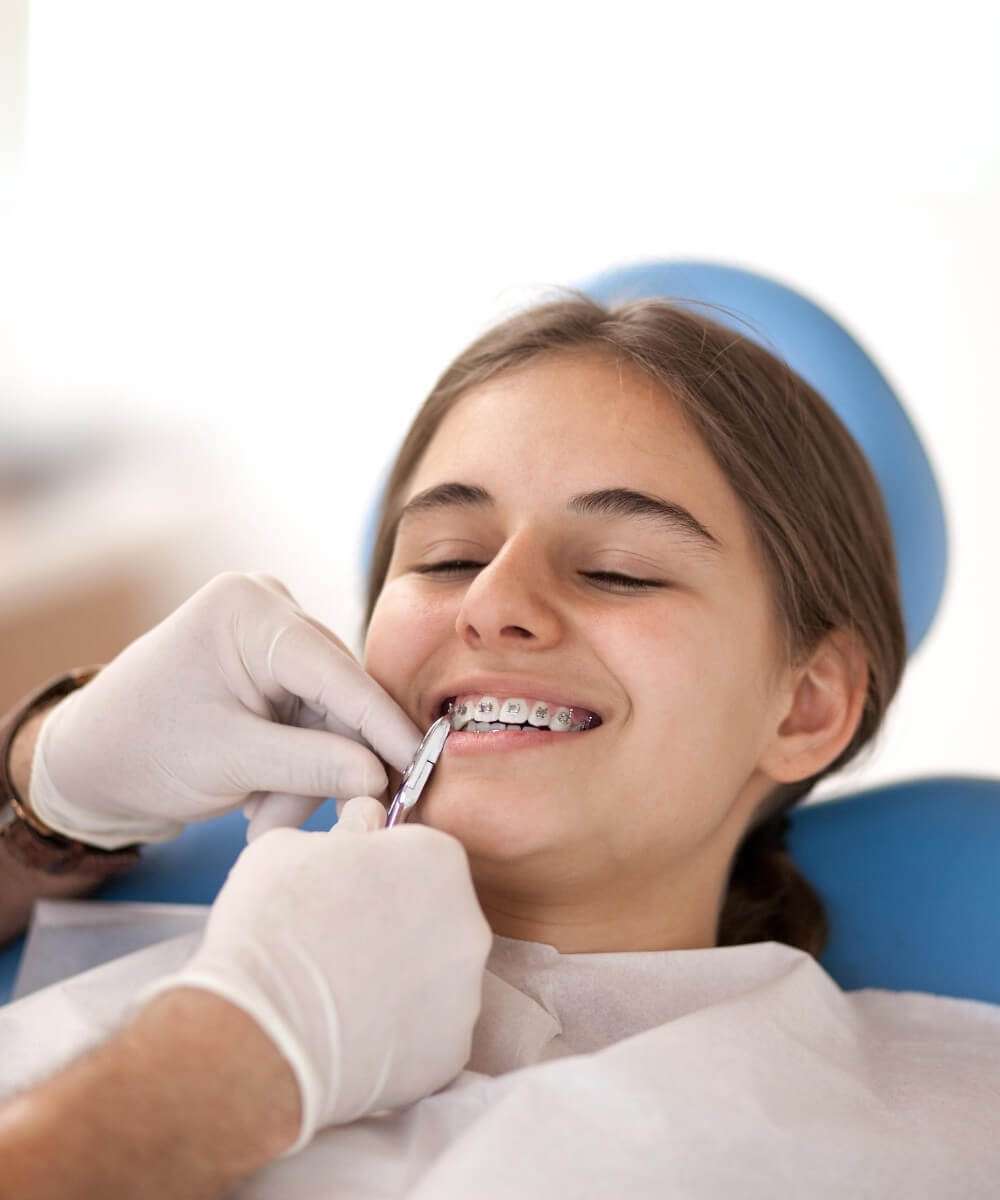
Dental braces are fixed appliances used to straighten crooked teeth, close gaps, and correct improper bites for both teens and adults. Consulting an expert orthodontist in Bhopal at Smile Gallery ensures a precise, digital-planned treatment for a perfectly aligned, healthy smile. Book your orthodontic consultation today.
Medically reviewed by Dr. Saurabh Shrivastava, BDS MDS (Prosthodontics) · DCI: A-04860 · IDA: 75737
★★★★★ 5.0 · 472 Google ReviewsDental braces are fixed orthodontic appliances made of metal or ceramic brackets bonded to each tooth and connected by an archwire. The wire applies gentle, continuous pressure that gradually moves teeth into their correct positions over months, correcting crooked teeth, gaps, overbites, underbites, and crossbites.
You should consider braces when:
At Smile Gallery, our orthodontic care is guided by an intraoral scanner and intraoral camera for advanced digital diagnostics — whether you are a teenager ready for classic metal brackets or an adult seeking discreet ceramic options.
See a specialist if you have visibly crooked teeth, large gaps, an overbite or underbite, or difficulty chewing or speaking because of misaligned jaws. Persistent jaw clicking, teeth that do not meet properly when you bite, and crowding that traps food are also reasons to get assessed.
Common signs that braces are needed:
Comprehensive braces treatment usually takes 18 to 24 months. Minor cosmetic corrections can finish in as little as 6 months, while complex bite problems may need up to 3 years of active wear. The exact duration depends on how far the teeth must move and how consistently you attend adjustments.
What affects your treatment duration:
"I have done treatment for teeth alignment...Dr. Saurabh, they explained me everything so nicely and I'm now happy with my new well aligned teeths...thank you so much dr and all staff."
"Highly recommend this dentist! Excellent at their work, very skilled, patient, and professional throughout the treatment. What stood out the most was how supportive and caring they were — always explaining things clearly and even holding my hand during difficult moments which made me feel comfortable and relaxed. Their kindness and attention really made a difference. Great experience overall and I would definitely recommend them to others."
"I recently visited smile gallery, I truly had a wonderful experience there.. Dr sourabh shrivastava and his entire team is extremely polite, kind,and professional."
Metal braces use durable stainless steel brackets and are highly effective for every kind of correction. Ceramic braces work identically but use tooth-coloured or clear brackets, so they are far less noticeable. Ceramic costs more and the brackets are slightly more fragile, so metal is often chosen for complex cases.
How each type compares:
| Feature | Metal Braces | Ceramic Braces |
|---|---|---|
| Appearance | Highly visible silver brackets. | Discreet, tooth-coloured or clear. |
| Durability | Extremely strong; rarely break. | Slightly brittle; require careful chewing. |
| Staining | Does not stain. | Clear elastic ties can stain from coffee/curry. |
Putting the braces on is completely painless. You will feel mild soreness and a sense of pressure for 3 to 5 days after they are first fitted, and again after each monthly tightening. Over-the-counter pain relief and soft food help during those days, and the discomfort settles on its own.
What to expect at each stage:
Braces work at any age, but the usual window for traditional treatment is between 10 and 14, while the head and mouth are still growing and teeth move more easily. Adults are treated successfully too; the movement simply takes longer because the surrounding bone is denser and fully formed.
Age considerations for orthodontics:
 Before
Teeth have a strong elastic memory and drift back towards their original positions once the braces come off. A retainer holds them in the new alignment while the surrounding bone solidifies around them. Most patients wear it full-time for several months, then only at night, often long-term.
Retainer essentials:
Treatment begins with a digital assessment using an intraoral scanner and X-rays, which lets us plan each tooth movement before anything is fitted. The custom brackets are then bonded, and you visit monthly for adjustments, when the wires are changed as the teeth move into position.
Our orthodontic workflow:
Self-ligating braces use a built-in sliding clip instead of elastic bands to hold the archwire in place. That means less friction, smoother tooth movement, and a more comfortable experience between visits. They also collect less plaque than elastic ties, which makes them easier to keep clean during treatment.
Self-ligating systems like Damon braces have become increasingly popular. Here is what sets them apart:
While self-ligating braces offer real advantages in comfort and convenience, traditional braces with elastic ties remain highly effective — especially for complex cases. Your orthodontist at Smile Gallery will recommend the best system based on your specific bite and alignment needs.
Dr. Saurabh Shrivastava, MDS "Orthodontics is a true blend of biology, physics, and art. We are physically remodelling the bone structure of the face. Using precise digital planning ensures that every wire adjustment moves the patient efficiently toward a stable, perfectly aligned bite."
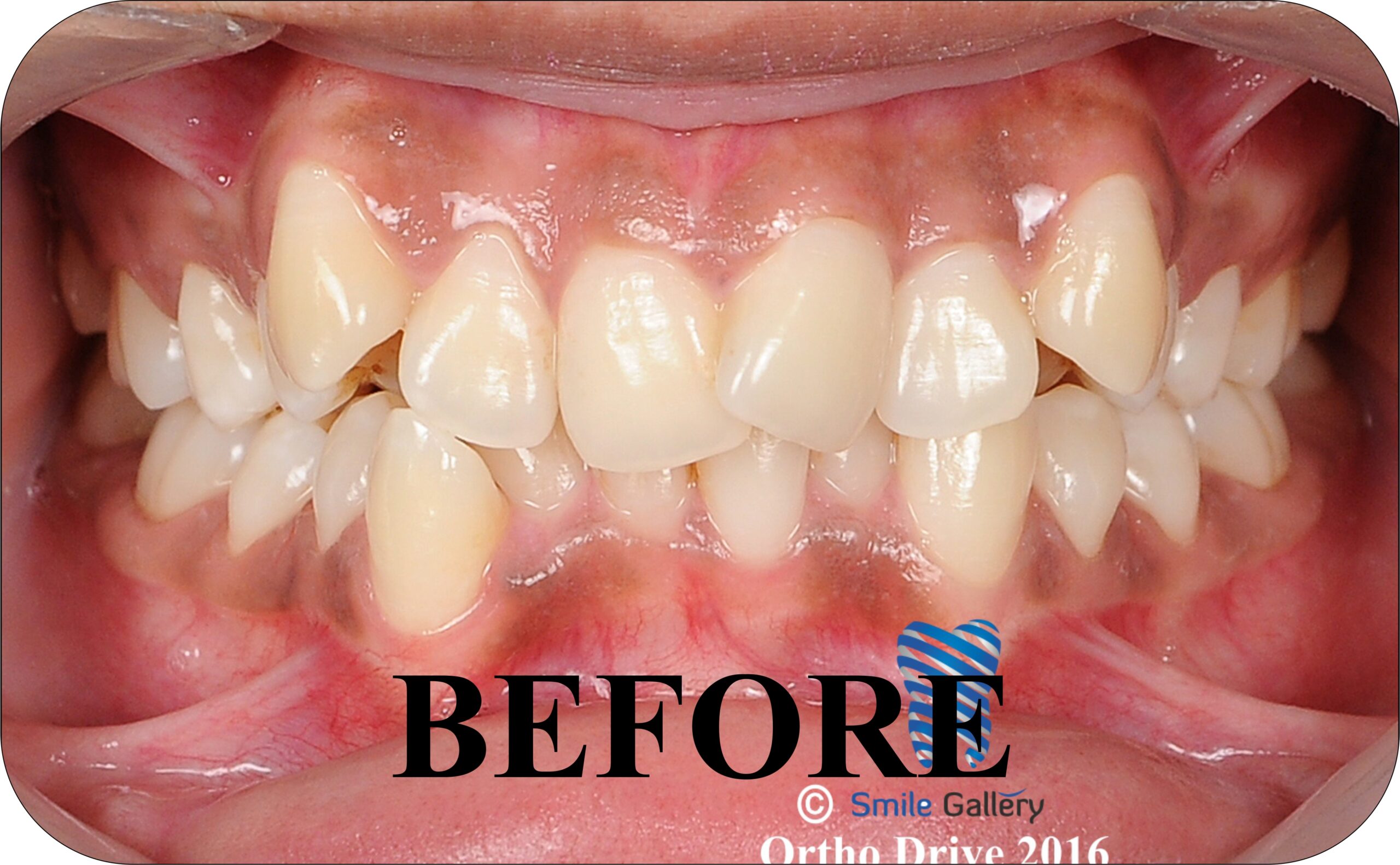
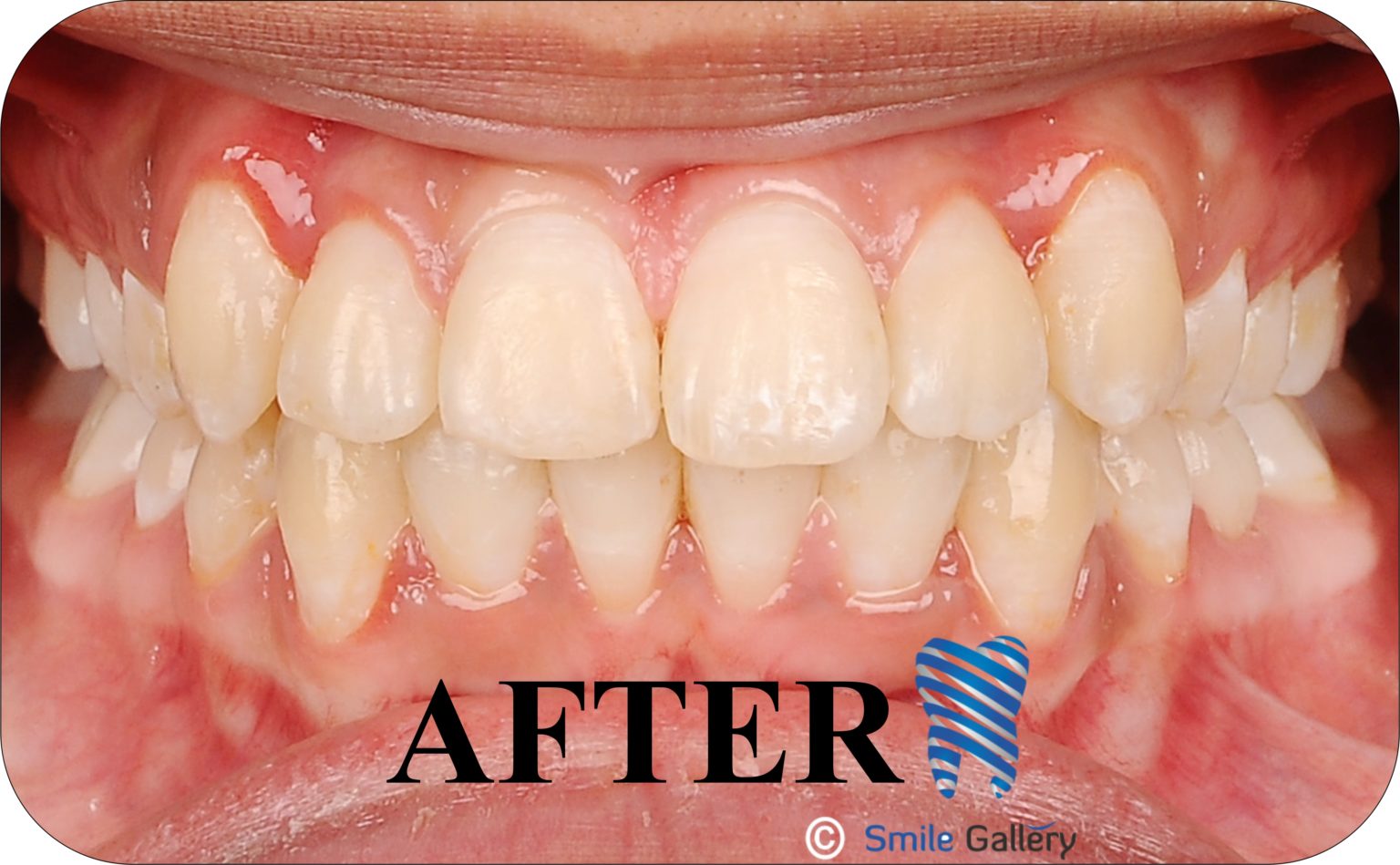
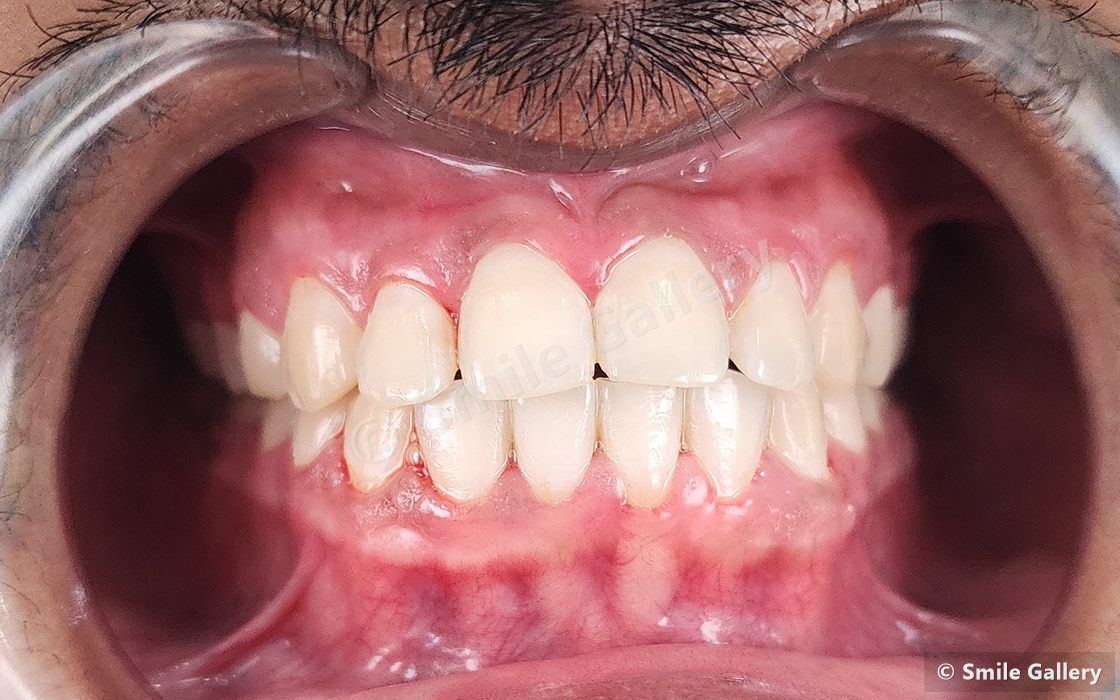
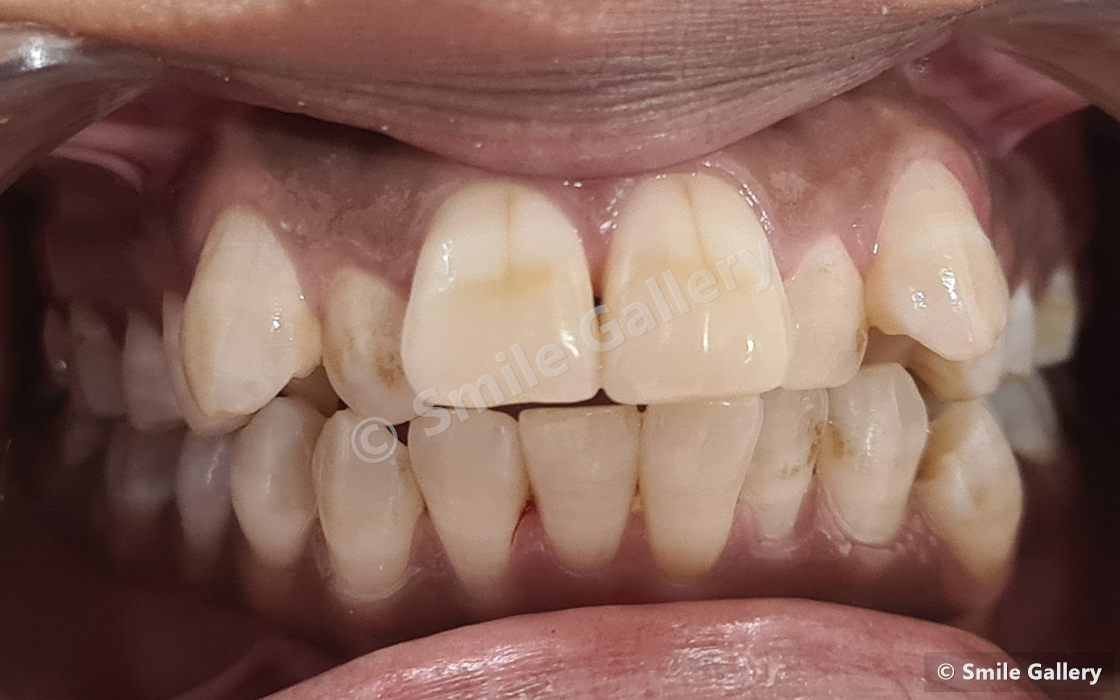
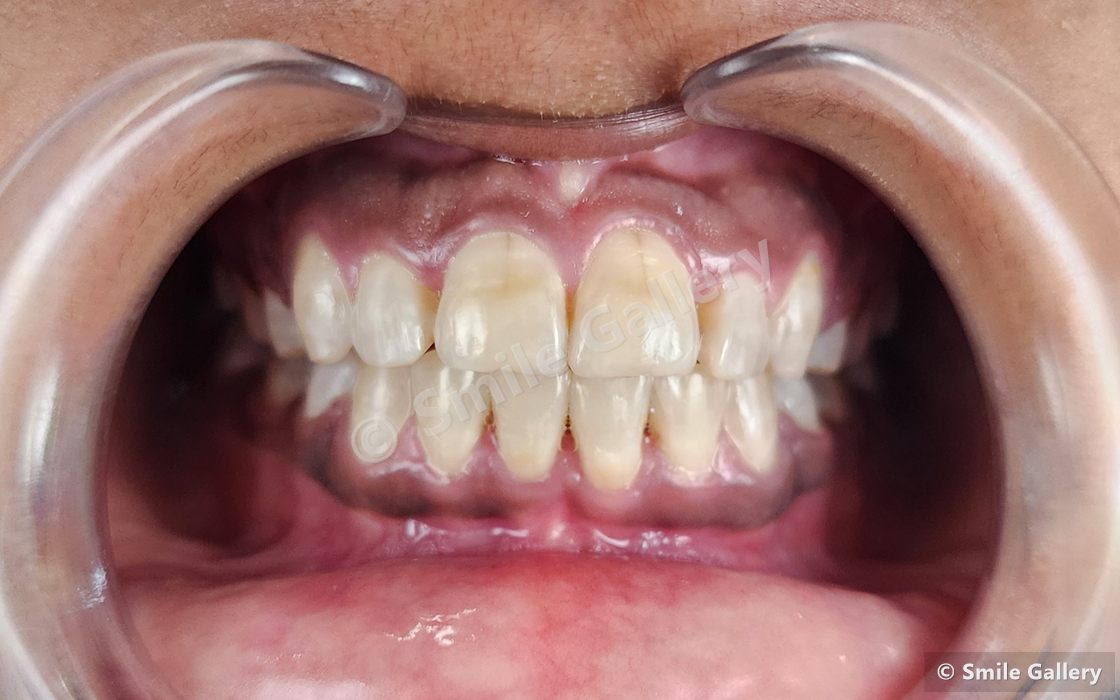
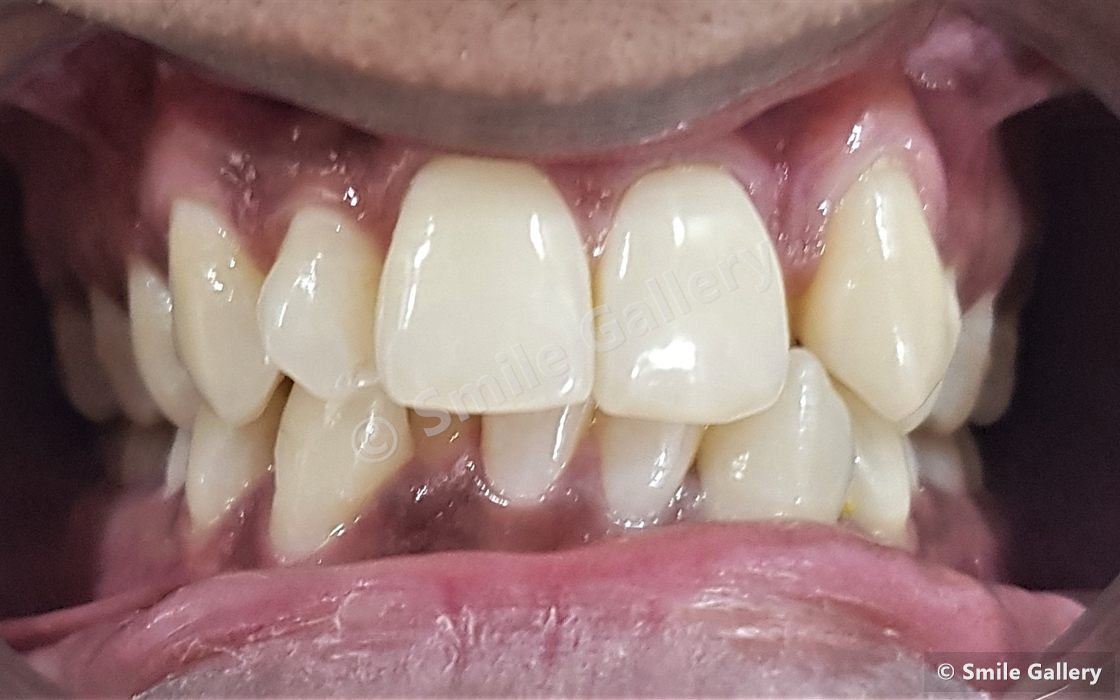
Every case below was treated at Smile Gallery, Arera Colony. Each pair is the same mouth, photographed from the same angle before treatment began and after the braces came off. Scroll each one and the after-image sweeps across on its own.
Photographs say more than a description ever will. Look closely at each starting position first — the detail that had to be corrected is usually visible in the first second.
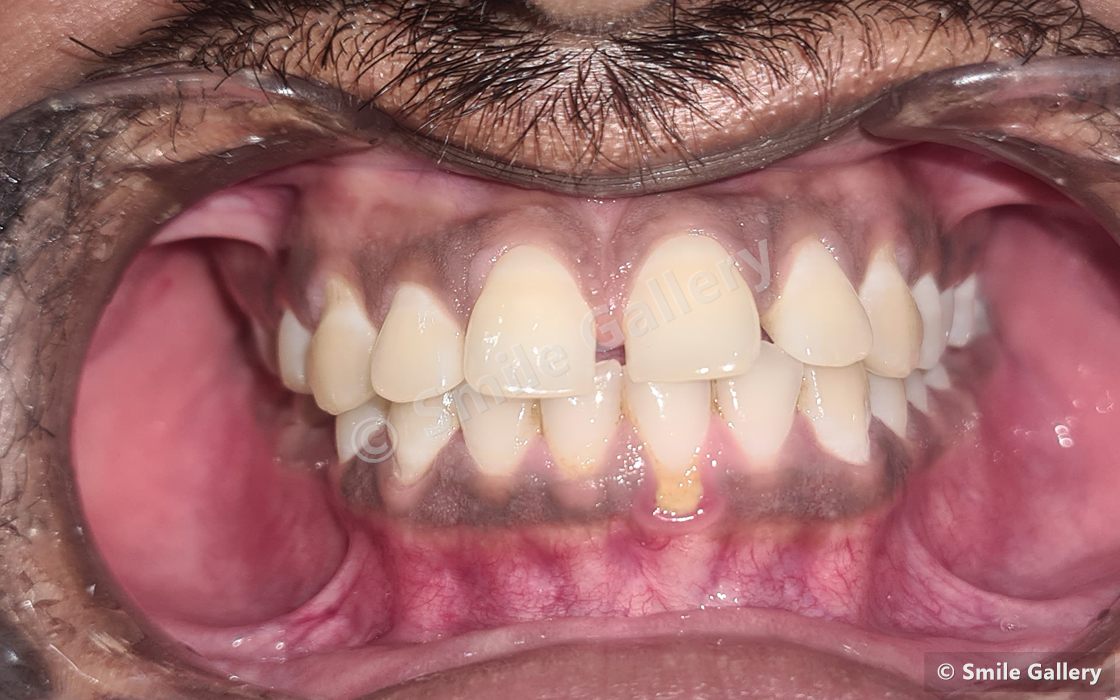
Start with the upper front teeth. There is a gap between them, the neighbouring teeth have drifted to fill the space, and the lower arch is crowded underneath. Closing a space like this is not simply a matter of pulling two teeth together — everything behind them has to move as well. Watch what happens to the whole arch.
 Before
Crowded teeth overlap, and where they overlap a toothbrush cannot reach. The staining along the edges in the first image is the evidence — this was becoming a gum problem, not only an appearance one. Watch both the alignment and those dark margins as the sweep passes.
 Before
At first glance this smile looks nearly straight. Look again at the two teeth either side of the front pair: both are rotated and sitting behind the arch, so a good part of each tooth is not visible at all. The sweep reveals how much wider the smile becomes once they are turned back into line.
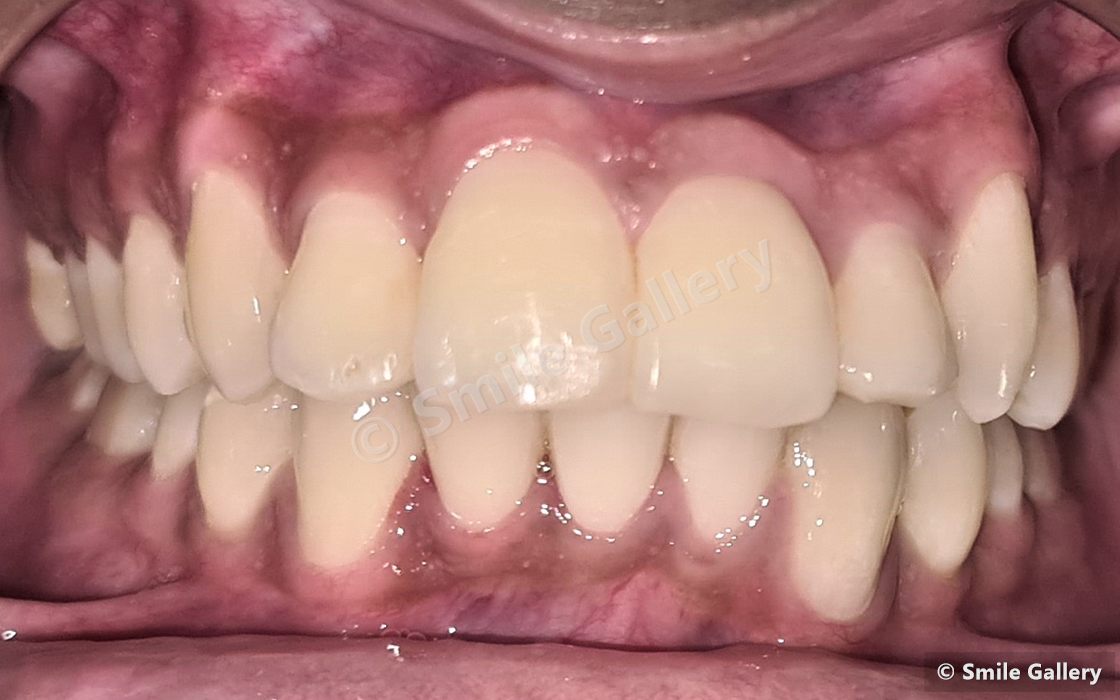 Before
This is the crowding parents worry about, and rightly so. The canines have been forced high above the arch because there was simply no space left for them to come down into. Cases like this are the reason we screen children early. Watch the space appear.
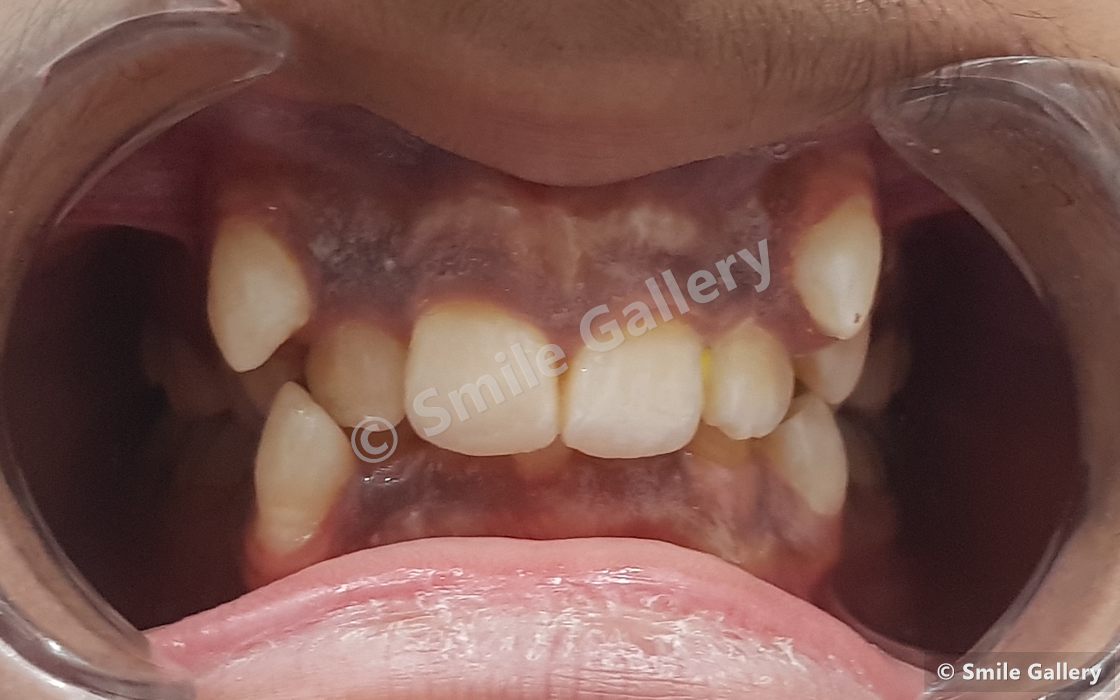
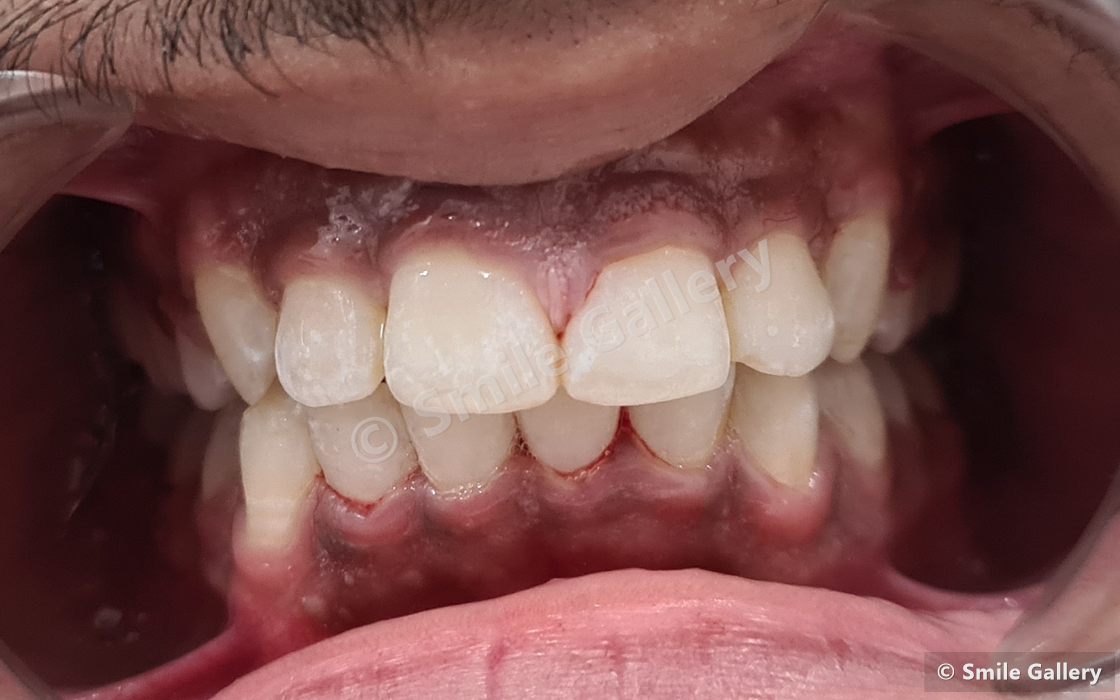 Before
Your own starting point is the only one that matters. None of these patients knew what was achievable until their bite was assessed properly. Send us a message on WhatsApp and we will tell you honestly what braces can and cannot do in your case.
Braces use fixed brackets and wires bonded to your teeth, while clear aligners are removable transparent trays you change every one to two weeks. Each option has its own pros and cons depending on case complexity, lifestyle preferences, and treatment goals. For a detailed comparison and to find out if clear aligners are right for you, visit our invisible braces & aligner page.
Absolutely. Age is not a barrier to orthodontic treatment. As long as your jawbone and gums are healthy and free from active periodontal disease, adults can successfully achieve a perfectly straight smile with braces.
You must be extra diligent with oral hygiene. Use an orthodontic toothbrush to brush around every bracket and use special floss threaders or a water flosser daily to remove plaque trapped beneath the archwire.
Yes. You must avoid hard foods (nuts, hard candy, ice, whole apples) and incredibly sticky foods (caramel, chewing gum, taffy). These exert too much force and will snap the wire or pop the brackets off your enamel.
Yes, it is even more important to get professional cleanings every six months while wearing braces, as the hardware makes it very easy for stubborn plaque and tartar to build up around the brackets and gumline.
Yes, retainers are essential to prevent teeth from shifting back. You'll typically wear them full-time for the first 3–6 months, then switch to nightly wear for 1–2 years. Some patients choose a bonded (permanent) retainer behind their front teeth for long-term stability.
Modern ceramic braces are significantly stronger than earlier versions, but metal braces remain more durable overall — especially for complex cases. Many patients opt for metal on the lower arch (less visible) and ceramic on the upper arch for the best balance of strength and aesthetics.
You can book your consultation with our orthodontist in Bhopal at Smile Gallery Dental Wellness Centre by calling +91 9200 700 750. We are located in Arera Colony, Bhopal, and offer comprehensive bite assessments.
Yes — Smile Gallery offers a zero-interest EMI option on eligible treatments, arranged in-house, so you can spread the cost into monthly instalments with no extra interest charged by the clinic. Availability and tenure depend on the treatment plan and are confirmed during your consultation, along with a clear written estimate before treatment begins — with no hidden charges.
Braces treatment ka total kharcha brackets ke type (metal ya ceramic) aur case ki complexity par depend karta hai. Smile Gallery zero-interest EMI ki facility bhi deta hai, taaki cost monthly instalments mein split ho sake, koi extra interest charge nahi. Exact estimate consultation ke baad likhit roop mein diya jaata hai, koi hidden charge nahi.
ब्रेसेस ट्रीटमेंट का कुल खर्चा ब्रैकेट्स के प्रकार (मेटल या सेरामिक) और केस की जटिलता पर निर्भर करता है। स्माइल गैलरी ज़ीरो-इंटरेस्ट ईएमआई की सुविधा भी देता है, ताकि लागत मासिक किश्तों में बंट सके, कोई अतिरिक्त ब्याज नहीं। सही अनुमान परामर्श के बाद लिखित रूप में दिया जाता है, कोई छुपा शुल्क नहीं।
Braces lagwane ka process bilkul painless hota hai — koi injection ya drilling nahi hoti. Brackets lagne ke baad aur har mahine ki tightening ke baad 3 se 5 din tak halka soreness aur pressure feel ho sakta hai, jo bilkul normal hai.
ब्रेसेस लगाने की प्रक्रिया बिल्कुल दर्द रहित होती है — कोई इंजेक्शन या ड्रिलिंग नहीं होती। ब्रैकेट लगने के बाद और हर महीने की टाइटनिंग के बाद 3 से 5 दिन तक हल्की सूजन और दबाव महसूस हो सकता है, जो बिल्कुल सामान्य है।
Comprehensive braces treatment aam taur par 18 se 24 mahine leta hai. Minor cosmetic corrections sirf 6 mahine mein ho sakte hain, jabki complex bite issues theek karne mein 3 saal tak lag sakte hain.
पूर्ण ब्रेसेस ट्रीटमेंट में आमतौर पर 18 से 24 महीने लगते हैं। छोटे कॉस्मेटिक सुधार सिर्फ 6 महीने में हो सकते हैं, जबकि जटिल बाइट समस्याओं को ठीक करने में 3 साल तक लग सकते हैं।
Smile Gallery Dental Wellness Centre is at E-4/205, Main Rd 3, near Flower Market, E-4, Arera Colony, Bhopal, Madhya Pradesh 462016. We are open Monday to Saturday, 10 AM–2 PM and 5 PM–9 PM. Call +91 9200 700 750 to book your consultation.
E-4/205, Main Rd 3, near Flower Market,
E-4, Arera Colony,
Bhopal, Madhya Pradesh 462016
Landmark: Opposite the Flower Market, 10 No. Market
Get directions →Hours: Mon–Sat 10:00 AM – 2:00 PM & 5:00 PM – 9:00 PM · Sunday closed | Phone: +91 9200 700 750 | Email: [email protected]
Smile Gallery Dental Wellness Centre
E-4/205, Main Rd 3, near Flower Market, E-4, Arera Colony, Bhopal, M.P. 462016

At Smile Gallery Dental Wellness Centre,we understand that there is no such thing as a perfect smile but a smile that is perfect for each of our patients. Check us out now!
