Monday to Saturday10am–2 pm, 5–9 pm
AddressE-4/205, Main Rd 3, near Flower Market, E-4, Arera Colony, Bhopal, Madhya Pradesh 462016
Home › Treatments › TMJ Treatment
Specialist jaw pain diagnosis & splint therapy by Dr. Saurabh Shrivastava (MDS Prosthodontist)
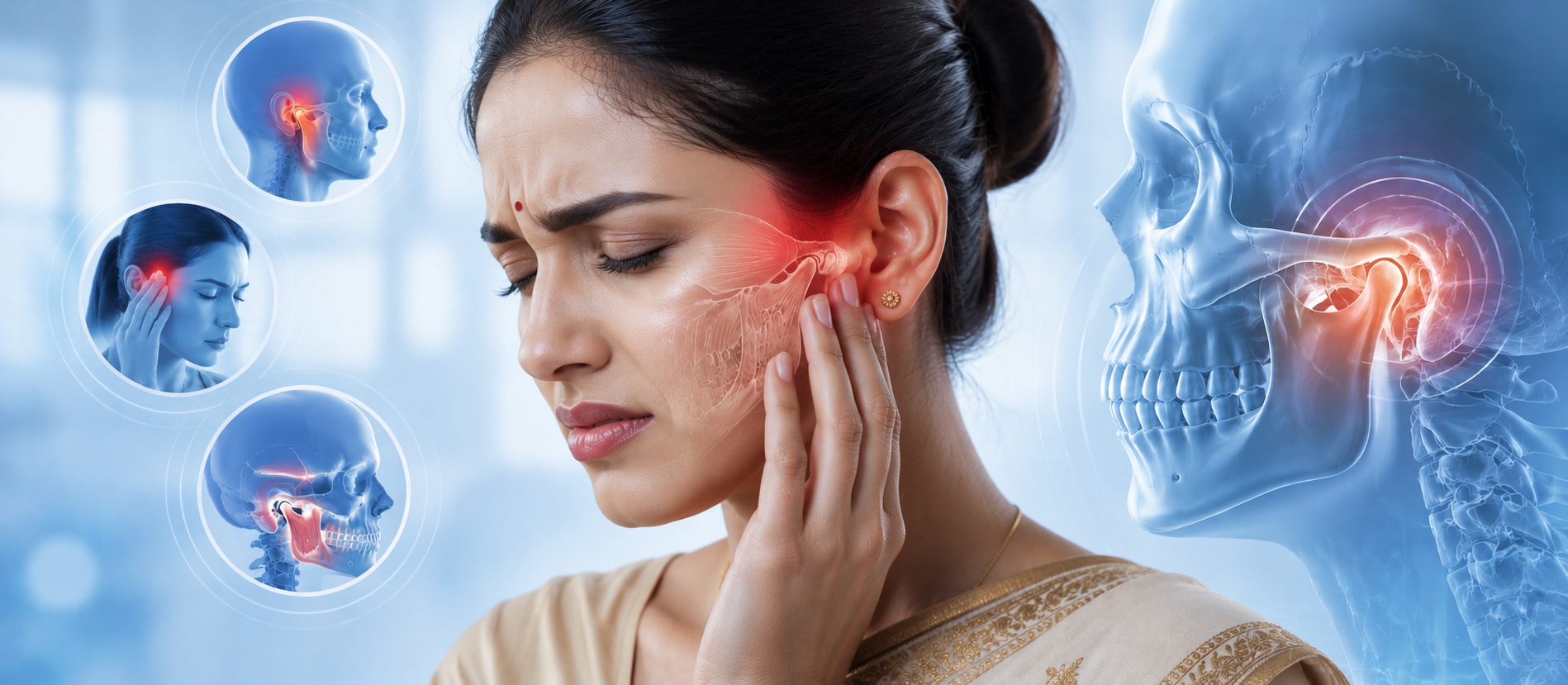
Temporomandibular Joint (TMJ) disorders cause chronic jaw pain, headaches, and clicking sounds when chewing. Specialised TMJ treatment in Bhopal at Smile Gallery involves diagnosing bite imbalances and prescribing custom occlusal splints or physical therapy to relax the jaw muscles. Book your TMJ consultation today.
Medically reviewed by Dr. Saurabh Shrivastava, BDS MDS (Prosthodontics) · DCI: A-04860 · IDA: 75737
★★★★★ 5.0 · 472 Google ReviewsChronic facial pain and unexplained morning headaches are frequently misdiagnosed, leading patients to rely on temporary painkillers rather than addressing the root cause. Often, the true source lies in the temporomandibular joint — the complex sliding hinge connecting your jawbone to your skull.
As a specialist MDS Prosthodontist, Dr. Saurabh Shrivastava uses an intraoral scanner for precise 3D bite mapping and an intraoral camera for magnified joint assessments. At Smile Gallery, we move beyond basic symptom relief — utilizing custom orthotic splints, bite adjustments, and muscle-relaxing protocols to restore harmony to your jaw joints.
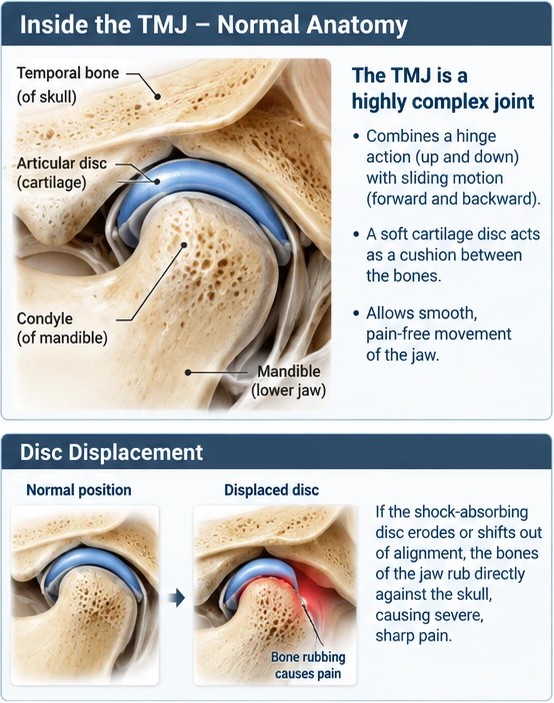
Temporomandibular Joint (TMJ) disorder, often referred to as TMD, is an umbrella term for conditions causing pain and dysfunction in the jaw joint and the muscles that control jaw movement.
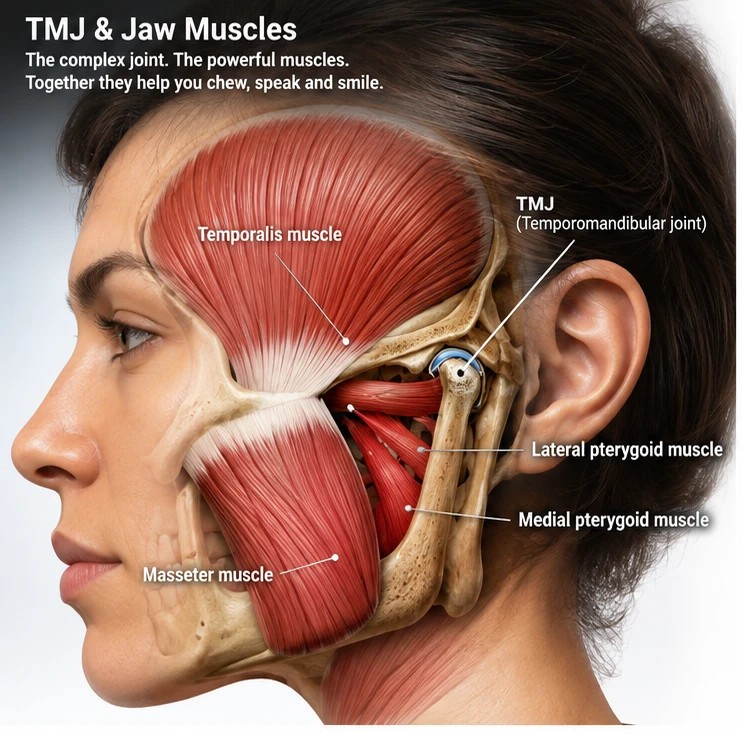
Common symptoms of TMJ disorder include a dull, aching pain in the face or around the ear, frequent morning headaches, a clicking or popping sound when chewing, and instances where the jaw feels "locked".
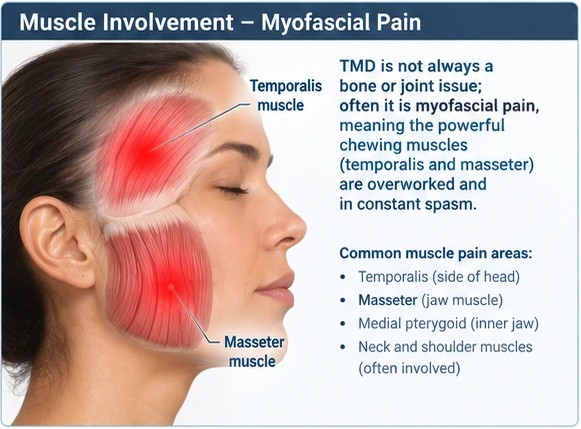
TMJ pain is most frequently caused by bruxism (subconscious teeth grinding or clenching), physical trauma to the jaw, severe bite misalignment, or systemic conditions like rheumatoid arthritis.
A regular night guard simply protects the teeth from wearing down during grinding. A TMJ splint (orthotic) is a highly specialised device designed by a prosthodontist to physically reposition the jaw and decompress the joint.
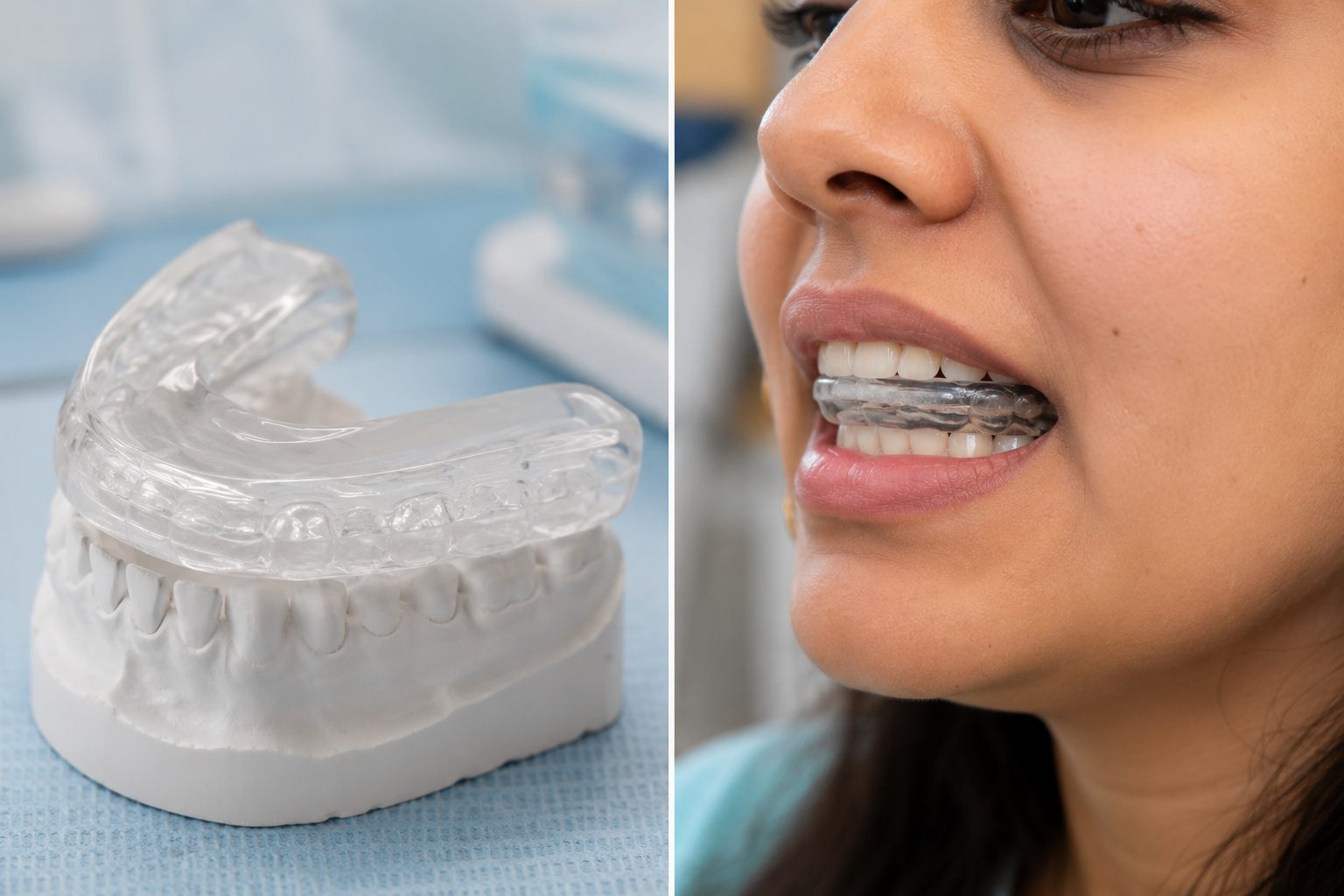
| Feature | Soft Night Guard | Custom TMJ Splint (Orthotic) |
|---|---|---|
| Primary Function | Protects tooth enamel from wear. | Repositions jaw, relaxes muscles, decompresses joint. |
| Material | Soft, rubbery plastic. | Hard, highly polished acrylic. |
| Prescribed By | General Dentist. | MDS Prosthodontist. |
While structural joint damage (like arthritis) cannot be completely reversed, TMJ symptoms can be managed and virtually eliminated long-term with proper splint therapy, stress reduction, and bite correction.
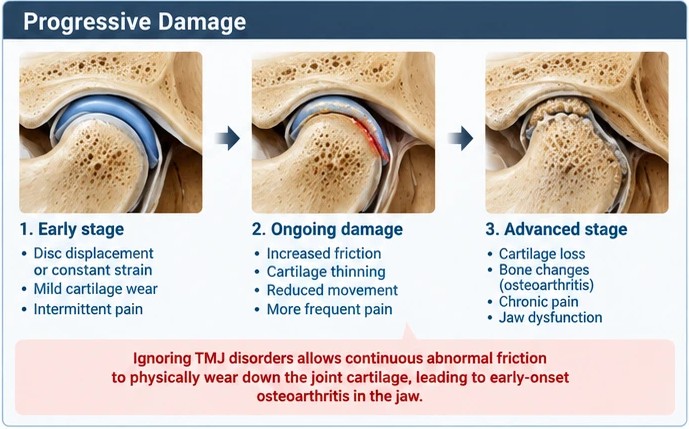
No, jaw surgery is rarely required for TMJ disorders. Surgery is considered an absolute last resort and is strictly reserved for severe cases of joint degeneration, tumours, or traumatic bone fractures.
A Prosthodontist is the recognised dental specialist in bite mechanics (occlusion) and full mouth dynamics. They possess three extra years of specialised training specifically focused on diagnosing and treating complex jaw relationship issues.
The clicking or popping sound happens when the articular disc — a small cushion inside the jaw joint — slips out of its normal position and snaps back as you open or close your mouth.
If the click is painless and doesn't limit your mouth opening, it's usually harmless and may not require any treatment. However, if the clicking is accompanied by pain, locking, or restricted opening, you should get it evaluated by a TMJ specialist to rule out progressive disc displacement.
Dr. Saurabh Shrivastava, MDS "Many patients suffer from chronic headaches and facial pain for years, unaware that their teeth and jaw alignment are the root cause. A precision-engineered TMJ splint acts like an orthotic for your jaw, allowing inflamed muscles to finally rest and heal."
Yes, psychological stress is a primary trigger. Stress causes subconscious muscle tension and sleep bruxism (heavy teeth grinding at night), which severely overworks the jaw muscles and damages the TMJ over time.
A painless, occasional click is common and often doesn't require treatment. However, if the clicking is loud, frequent, accompanied by pain, or if your jaw ever gets "stuck," you must seek a professional TMJ evaluation immediately.
During a TMJ flare-up, avoid chewy foods (steak, bagels, chewing gum), hard foods (raw carrots, nuts), and foods that require you to open your mouth very wide (large burgers or thick sandwiches). Stick to a soft diet until the inflammation subsides.
Yes, targeted Botox injections are sometimes used to temporarily paralyse the overworked masseter and temporalis muscles. This forces the muscles to relax and breaks the cycle of severe spasms, providing significant pain relief for 3 to 6 months.
Yes, bruxism is one of the most common causes of TMJ disorder. Constant clenching and grinding puts excessive force on the jaw joint and surrounding muscles. A custom-made night guard absorbs these forces and is often the first line of treatment.
Yes. The jaw joint sits close to a complex network of muscles and nerves. When inflamed or misaligned, pain can radiate to the temples, behind the eyes, down the neck, and even into the ears — mimicking an ear infection. Many patients see an ENT specialist or neurologist before discovering the TMJ connection.
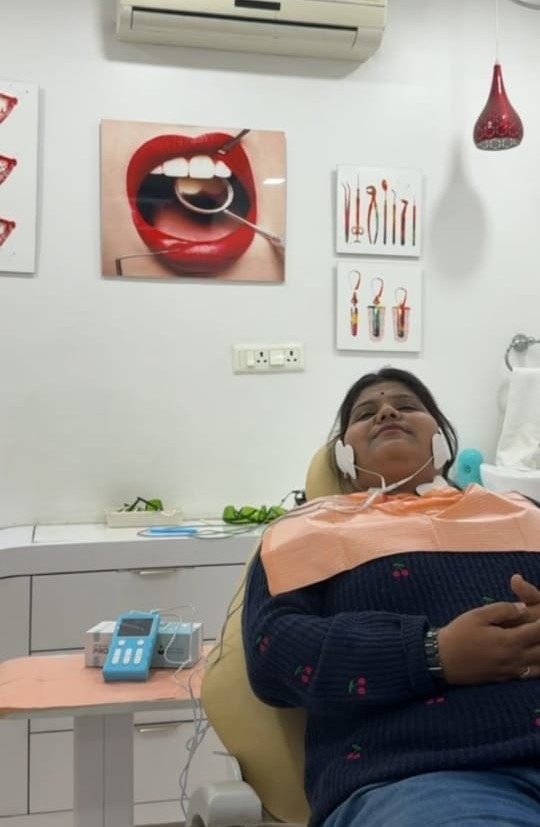
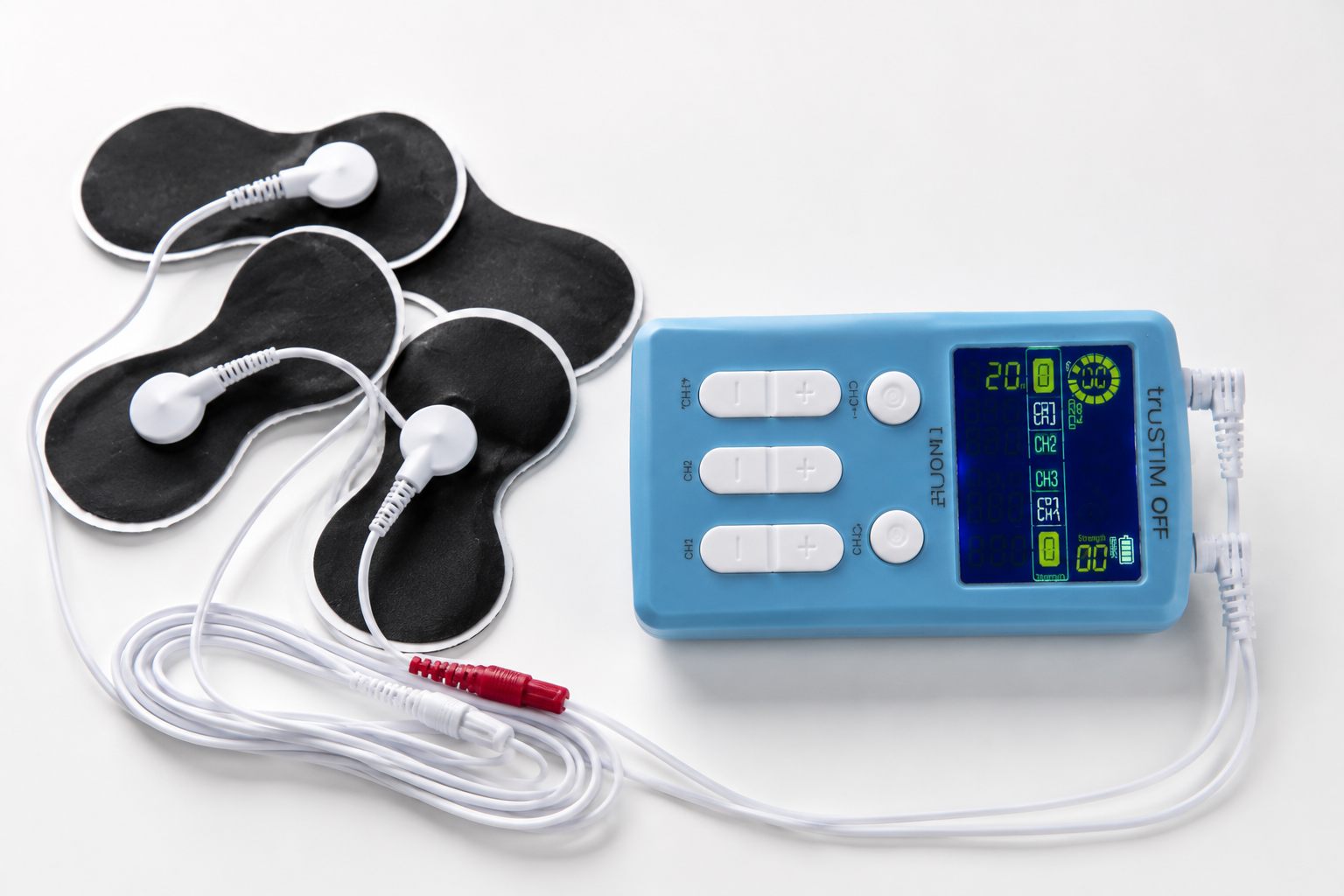
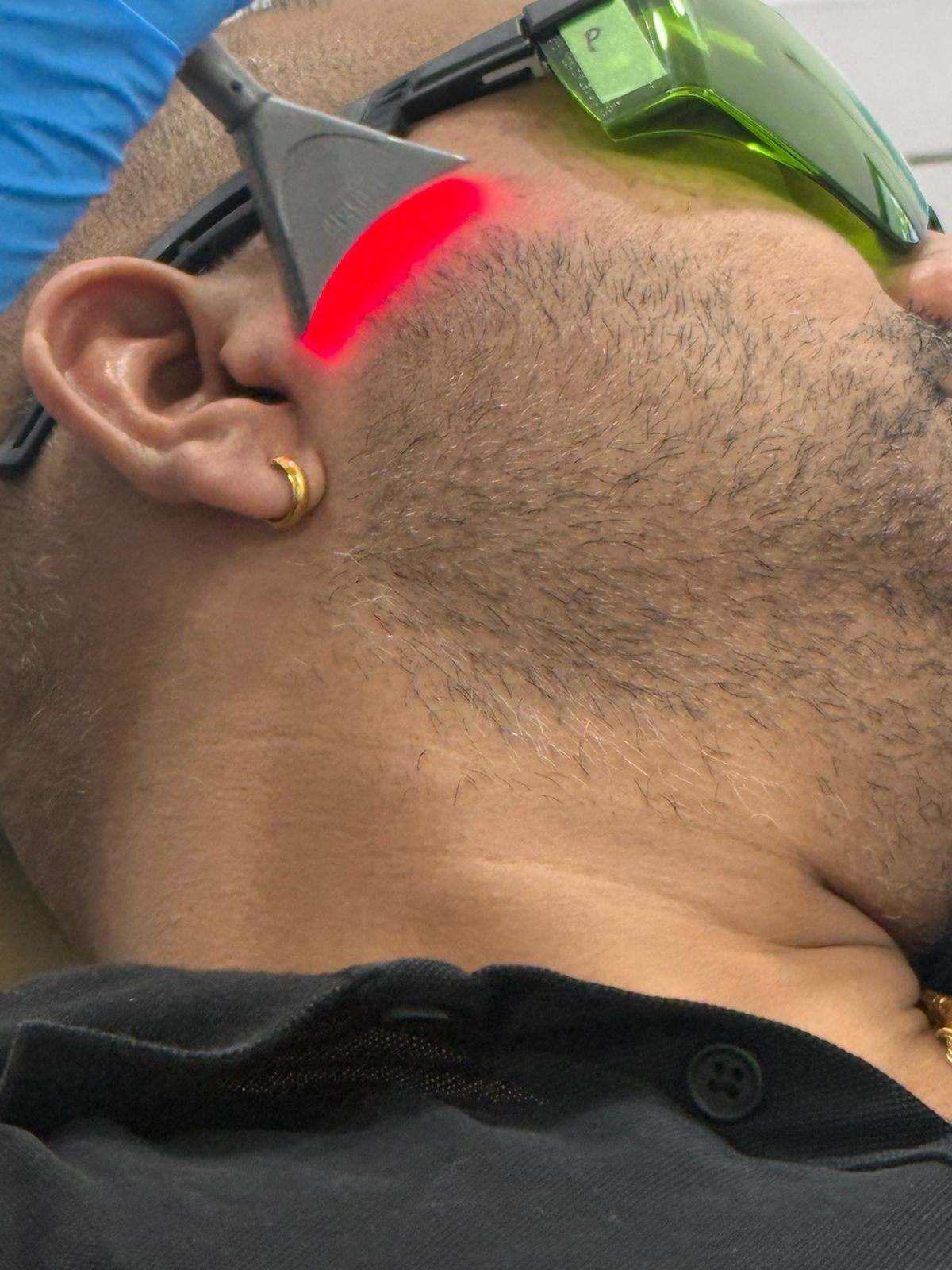
TMJ disorders are best treated by prosthodontists and oral & maxillofacial surgeons who specialize in jaw function. At Smile Gallery, Dr. Saurabh evaluates your bite, joint, and muscle health and creates a customized plan that may include splint therapy, physiotherapy exercises, and laser therapy.
You can book your specialised TMJ assessment in Bhopal at Smile Gallery Dental Wellness Centre by calling +91 9200 700 750. Dr. Saurabh Shrivastava will conduct a thorough bite and joint evaluation to determine the source of your pain.
Yes — Smile Gallery offers a zero-interest EMI option on eligible treatments, arranged in-house, so you can spread the cost into monthly instalments with no extra interest charged by the clinic. Availability and tenure depend on the treatment plan and are confirmed during your consultation, along with a clear written estimate before treatment begins — with no hidden charges.
TMJ pain zyada tar bruxism (raat mein daant pisna ya clench karna), bite ka sahi na milna (malocclusion), ya missing teeth ki wajah se hota hai. Stress subconscious clenching badhata hai jo joint aur muscles par ghanton pressure daalta hai. Missing teeth chewing pattern badal dete hain jisse ek side par zyada zor padta hai aur joint asymmetrically wear hota hai.
टीएमजे दर्द ज़्यादातर ब्रक्सिज़्म (रात में दांत पीसना या भींचना), बाइट का सही न मिलना (मैलोक्लूज़न), या गायब दांतों की वजह से होता है। तनाव अवचेतन रूप से भींचने को बढ़ाता है जो जोड़ और मांसपेशियों पर घंटों दबाव डालता है। गायब दांत चबाने के तरीके को बदल देते हैं जिससे एक तरफ ज़्यादा ज़ोर पड़ता है और जोड़ असमान रूप से घिसता है।
Common symptoms mein chehre ya kaan ke aas-paas dull dard, subah sar dard, chewing karte waqt clicking ya popping sound, aur kabhi-kabhi jaw ka "lock" ho jaana shamil hai. Kyunki TMJ joint kaan ke bahut kareeb hota hai, log isse ear infection samajh lete hain.
सामान्य लक्षणों में चेहरे या कान के आसपास हल्का दर्द, सुबह सिरदर्द, चबाते समय क्लिकिंग या पॉपिंग आवाज़, और कभी-कभी जबड़े का "लॉक" हो जाना शामिल है। क्योंकि टीएमजे जोड़ कान के बहुत पास होता है, लोग इसे कान का संक्रमण समझ लेते हैं।
Joint ka structural damage (jaise arthritis) pura reverse nahi hota, lekin splint therapy, stress kam karna aur bite correction se TMJ symptoms manage ho sakte hain aur lambe samay tak khatam ho sakte hain. Pehle custom splints, soft diet aur muscle relaxants se pain kam kiya jaata hai, phir bite equilibrium par kaam hota hai.
जोड़ की संरचनात्मक क्षति (जैसे गठिया) पूरी तरह ठीक नहीं होती, लेकिन स्प्लिंट थेरेपी, तनाव कम करने और बाइट सुधार से टीएमजे के लक्षणों को नियंत्रित किया जा सकता है और लंबे समय तक खत्म किया जा सकता है। पहले कस्टम स्प्लिंट, नरम आहार और मसल रिलैक्सेंट से दर्द कम किया जाता है, फिर बाइट इक्विलिब्रियम पर काम होता है।
Smile Gallery Dental Wellness Centre is at E-4/205, Main Rd 3, near Flower Market, E-4, Arera Colony, Bhopal. We are open Monday to Saturday, 10 AM–2 PM and 5 PM–9 PM. Call +91 9200 700 750 to book your consultation.
E-4/205, Main Rd 3, near Flower Market,
E-4, Arera Colony,
Bhopal, Madhya Pradesh 462016
Landmark: Opposite the Flower Market, 10 No. Market
Get directions →Hours: Mon–Sat 10:00 AM – 2:00 PM & 5:00 PM – 9:00 PM · Sunday closed | Phone: +91 9200 700 750 | Email: [email protected]
Smile Gallery Dental Wellness Centre
E-4/205, Main Rd 3, near Flower Market, E-4, Arera Colony, Bhopal, M.P. 462016

At Smile Gallery Dental Wellness Centre,we understand that there is no such thing as a perfect smile but a smile that is perfect for each of our patients. Check us out now!
