

Single Sitting Root Canal Treatment in Bhopal
Complete your root canal in one painless appointment, with gentle numbing, rotary endodontics & laser disinfection
A single sitting root canal treatment completes the treatment in one appointment instead of 2–3 visits. A Cochrane review of 47 studies found similar X-ray failure rates for one-visit and multi-visit root canals. At Smile Gallery Dental Wellness Centre in Arera Colony, Bhopal, Dr. Saurabh Shrivastava first checks whether your tooth suits one visit. Book your appointment today.
- What is a single sitting root canal and how is it different?
- Am I the right candidate for single sitting RCT?
- Is single sitting RCT better than multiple visits?
- What happens during a single sitting RCT — step by step?
- Is single sitting RCT less painful than multiple visits?
- Do I still need a crown after single sitting RCT?
- Why choose a prosthodontist for your single sitting RCT in Bhopal?
- Frequently Asked Questions
Single sitting root canal treatment is an advanced endodontic procedure where the infected nerve is removed, the canals are cleaned and shaped, and the tooth is permanently sealed — all in one appointment instead of the traditional 2–3 visits. This approach avoids the leakage risk of temporary fillings and the inconvenience of returning multiple times.
You may need a single sitting root canal when:
- Severe toothache from an inflamed or dying nerve (irreversible pulpitis)
- Cracked tooth with exposed nerve and no active infection
- You want to avoid the inconvenience and contamination risk of multiple visits
- Your schedule doesn't allow returning for 2–3 appointments
At Smile Gallery, Dr. Saurabh Shrivastava uses NiTi rotary endodontics, electronic apex locators, and laser-assisted canal disinfection to clean the canals thoroughly — supporting single-visit sealing in suitable cases. For a general overview of root canal treatment, visit our RCT treatment page.
Source: Cochrane review (PubMed)
Cleveland Clinic: most root canals take 60–90 minutes
Source: Cochrane review (PubMed)
What is a single sitting root canal and how is it different?
In a multi-visit root canal, the dentist opens the tooth, places medication inside, and seals it with a temporary filling. You return a week or two later for the next stage. Each time that temporary filling is in place, there is a risk of bacterial re-contamination — essentially undoing the cleaning that was just done.
A single sitting root canal closes this gap. The four-step process happens consecutively:
- Access opening — a small opening is made in the crown of the tooth to reach the infected pulp chamber
- Rotary shaping — NiTi rotary files remove the infected nerve tissue and shape the canals to a precise taper for thorough cleaning
- Laser disinfection — laser energy helps reduce residual bacteria on the canal walls, in addition to chemical irrigants
- Obturation — the cleaned canals are permanently sealed with biocompatible gutta-percha, locking out future infection
Because the tooth is never left open between visits, the risk of recontamination is reduced, and healing can begin straight after the procedure.
For a general overview of root canal treatment, visit our RCT treatment page.
Am I the right candidate for single sitting RCT?
Ideal candidates for single sitting root canal include patients with:
- Irreversible pulpitis — the nerve is inflamed beyond recovery, causing intense throbbing pain that worsens at night or with hot foods
- Fractured teeth with exposed nerve — trauma or a deep crack has exposed the pulp but there is no established infection or pus drainage
- Failed old fillings — decay has progressed under an existing filling and reached the nerve, but the infection has not spread to the bone
- Elective single-visit completion — patients who cannot return for multiple appointments due to travel, work, or personal scheduling constraints
Who may NOT qualify for single sitting RCT:
- Active abscess with pus drainage — the tooth needs to drain first, and intra-canal medication (calcium hydroxide) must sit for 1–2 weeks before permanent sealing
- Severely curved or calcified canals — complex anatomy may require extended instrumentation that is safer when spread across visits
- Large periapical lesions — significant bone infection around the root tip may require inter-appointment medication for predictable healing
- Patients who cannot keep their mouth open for 60–90 minutes due to TMJ issues or medical conditions
Dr. Saurabh uses digital periapical X-rays and, when needed, 3D CBCT imaging (scan arranged at a partner imaging centre) to assess canal anatomy, infection extent, and bone involvement before recommending single-visit completion. This diagnostic step ensures that only appropriate cases are treated in one sitting.
Is single sitting RCT better than multiple visits?
The traditional multi-visit approach was designed when instrumentation was manual and slow, and chemical disinfection was the only option. Modern rotary systems and laser disinfection have made a single visit possible for many suitable cases. Here is how they compare:
| Factor | Single Sitting RCT | Multiple Visit RCT |
|---|---|---|
| Number of visits | 1 appointment (45–90 min) | 2–3 appointments over 2–4 weeks |
| Anaesthesia injections | 1 session of numbing | 2–3 separate injections |
| Contamination risk | Lower — no temporary filling gap | A temporary filling can leak between visits |
| Healing timeline | Starts once the canals are sealed | Starts once the final visit seals the canals |
| Time off work | 1 day or less | 2–3 separate days |
| Swelling or flare-up | No clear difference (Cochrane 2022) | No clear difference (Cochrane 2022) |
| Pain within the first week | More people reported pain (Cochrane 2022) | Fewer people reported pain (Cochrane 2022) |
| Failure on X-ray | No clear difference (Cochrane 2022) | No clear difference (Cochrane 2022) |
| Suited to | Irreversible pulpitis, no active abscess | Active abscess, complex anatomy |
The main advantage is fewer visits and no temporary-filling gap. Every day a temporary filling sits in a root-canal-treated tooth, bacteria have an opportunity to re-enter the cleaned canals. Single sitting RCT closes that gap by sealing the canals in the same appointment.
Dr. Saurabh Shrivastava, MDS Prosthodontist, Smile Gallery Bhopal “With NiTi rotary files and laser-assisted disinfection, we achieve the same level of canal cleanliness in one visit that previously required multiple sessions with calcium hydroxide dressings. For properly selected cases, there is no clinical reason to make the patient return two or three times.”
What happens during a single sitting RCT — step by step?
Step 1: Numbing (5–10 minutes)
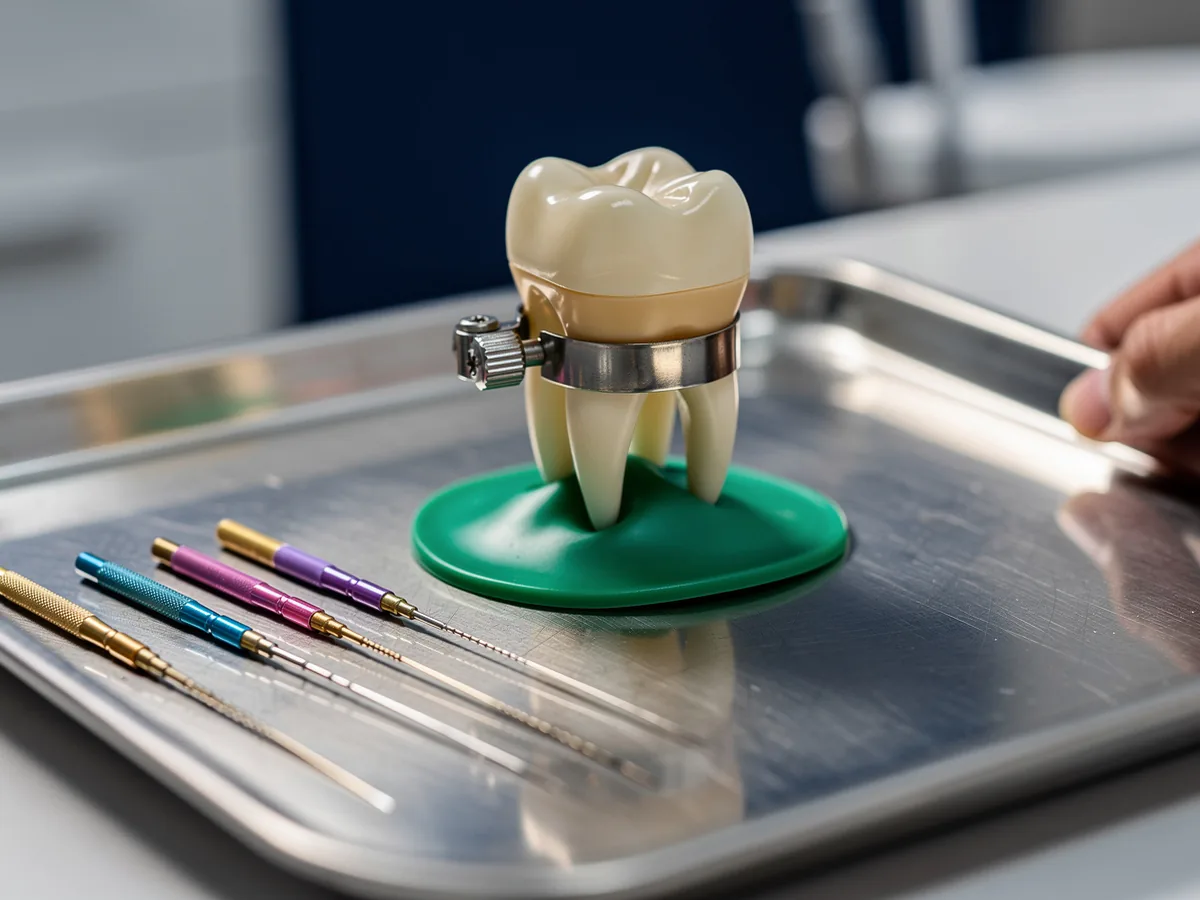
Dr. Saurabh applies a topical anaesthetic gel to the gum before administering the local anaesthesia injection. You will feel a brief pinch, and within a few minutes the area around the tooth is numb. For anxious patients, we can discuss sedation options beforehand. If you are concerned about pain, learn more on our painless dental treatment page.
Step 2: Rubber dam isolation (2 minutes)
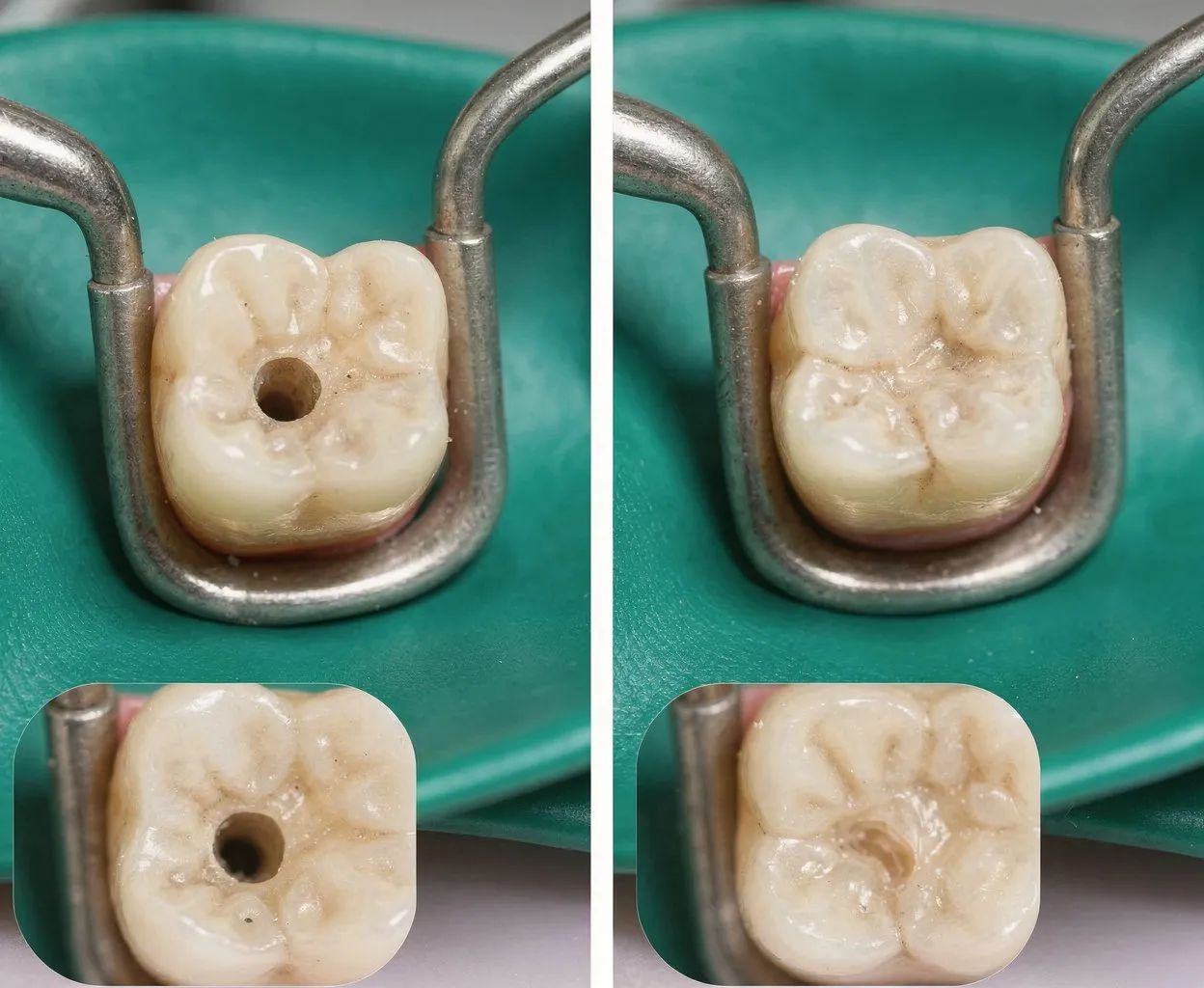
A thin rubber sheet is placed around the tooth to isolate it from saliva and bacteria in the rest of your mouth. This is critical for preventing contamination during the procedure and is one reason single-visit completion is now safe.
Step 3: Access opening (5–8 minutes)
Using a high-speed handpiece under magnification with dental loupes, Dr. Saurabh creates a small opening in the top of your tooth to access the infected pulp chamber. You should feel pressure, vibration and water spray, not pain — tell us at once if you do.
Step 4: Rotary canal cleaning and shaping (15–30 minutes)
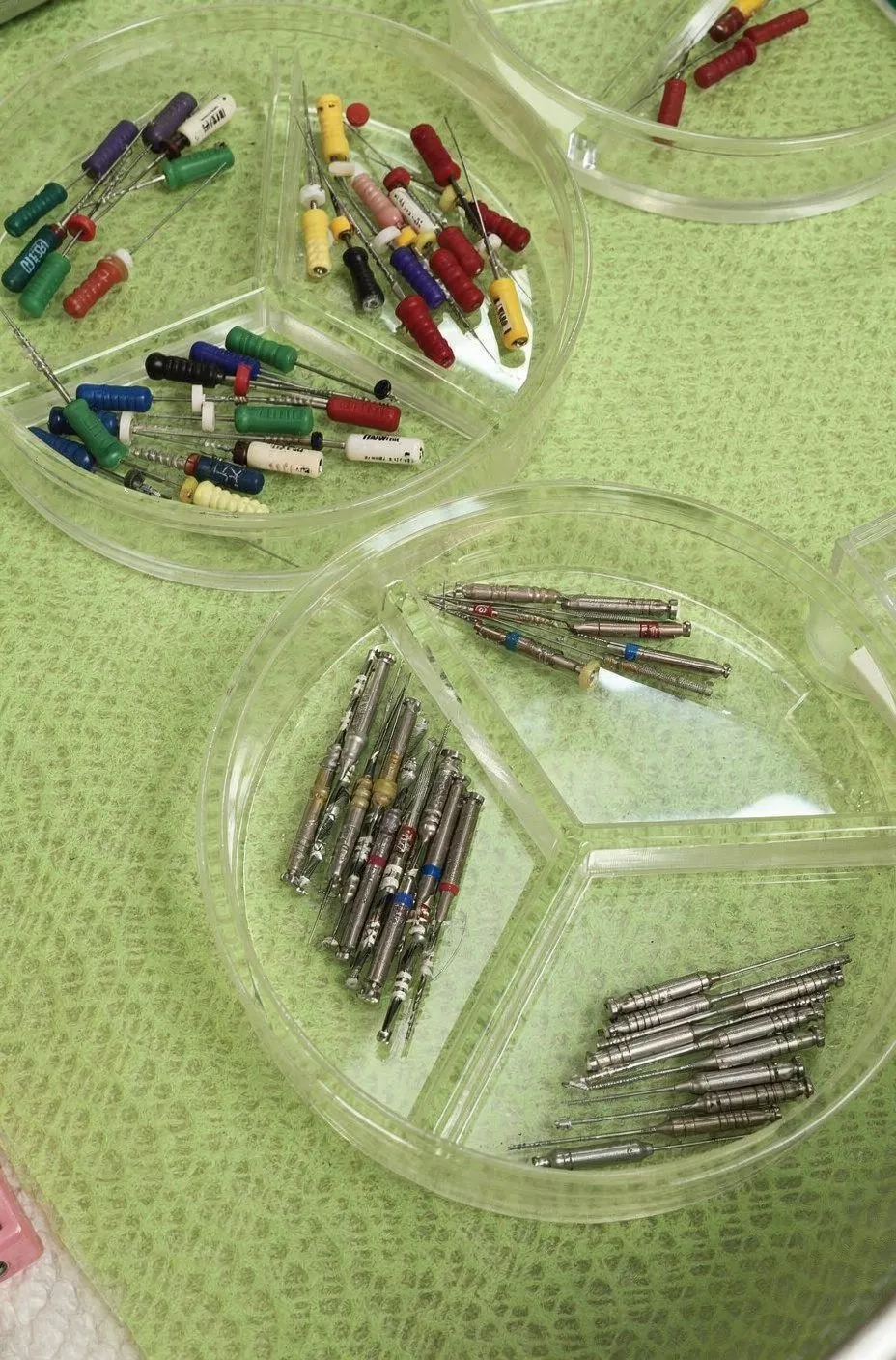
This is the core of the procedure. NiTi rotary files — flexible nickel-titanium instruments that rotate at controlled speeds — remove infected nerve tissue and shape each canal to a precise taper. An electronic apex locator helps measure the canal length, so the files reach the tip of each root without going beyond it. Copious irrigation with sodium hypochlorite flushes out debris throughout.
Step 5: Laser disinfection (3–5 minutes)
After mechanical cleaning, laser energy is delivered into each canal. The laser helps reduce bacteria in the dentinal tubules — microscopic channels that chemical irrigants may not fully reach. This step supports single-visit sealing in suitable cases.
Step 6: Obturation — permanent sealing (5–10 minutes)
The cleaned and disinfected canals are filled with gutta-percha (a biocompatible rubber-like material) and sealed with a resin-based sealer. A post-operative X-ray confirms that all canals are filled to the correct length with no gaps.
Step 7: Temporary crown or core build-up (5–10 minutes)
A composite core is built up to restore the tooth's shape, and a temporary crown is placed to protect it while your permanent crown is being fabricated. You walk out with a functional, sealed tooth.
What our single sitting RCT patients say
★★★★★ 5.0 · 477 reviews"I visited Dr Saurabh for root canal treatment . Initially I was scared but Dr Saurabh made me feel comfortable . I was satisfied with his work . Then I decided to get aligner treatment with Dr Saurabh . Recently I have completed my treatment and I am happy with the results . I am thankful to him . If any one needs to visit dentist please visit Dr Saurabh . His work is outstanding ."
Is single sitting RCT less painful than multiple visits?
Some patients who have had multi-visit root canals find the wait between appointments harder than the procedure itself. Here is what a single sitting changes:
- Single anaesthesia session — you receive one round of injections instead of one at each visit, so there is less repeat injection soreness and anxiety.
- No temporary filling leaks — temporary fillings can crack, loosen, or wash out between visits, exposing the sensitive opened tooth to hot and cold foods, saliva bacteria, and air. A single sitting avoids this gap.
- No in-between period — in multi-visit RCT, the partially treated tooth can flare up between appointments. Completing the treatment in one sitting removes that period, although the Cochrane review found no clear overall difference in swelling or flare-up between the two approaches.
- Canals sealed in the same appointment — once the canals are sealed with gutta-percha, healing can begin straight away. There is no “waiting period” where the opened tooth is vulnerable.
After the procedure, mild soreness near the treated tooth is normal for 2–3 days and responds well to over-the-counter pain medication. Cleveland Clinic notes that most people recover in less than a week, and many patients find this soreness milder than the toothache that brought them in.
If you are anxious about dental procedures in general, our painless dental treatment page explains the sedation and anxiety management options available at Smile Gallery.
Do I still need a crown after single sitting RCT?
Why the tooth becomes brittle: During root canal treatment, the nerve and blood supply are removed from inside the tooth. Without this internal nourishment, the tooth gradually dehydrates and becomes more prone to cracking — similar to how a dead tree branch snaps more easily than a living one.
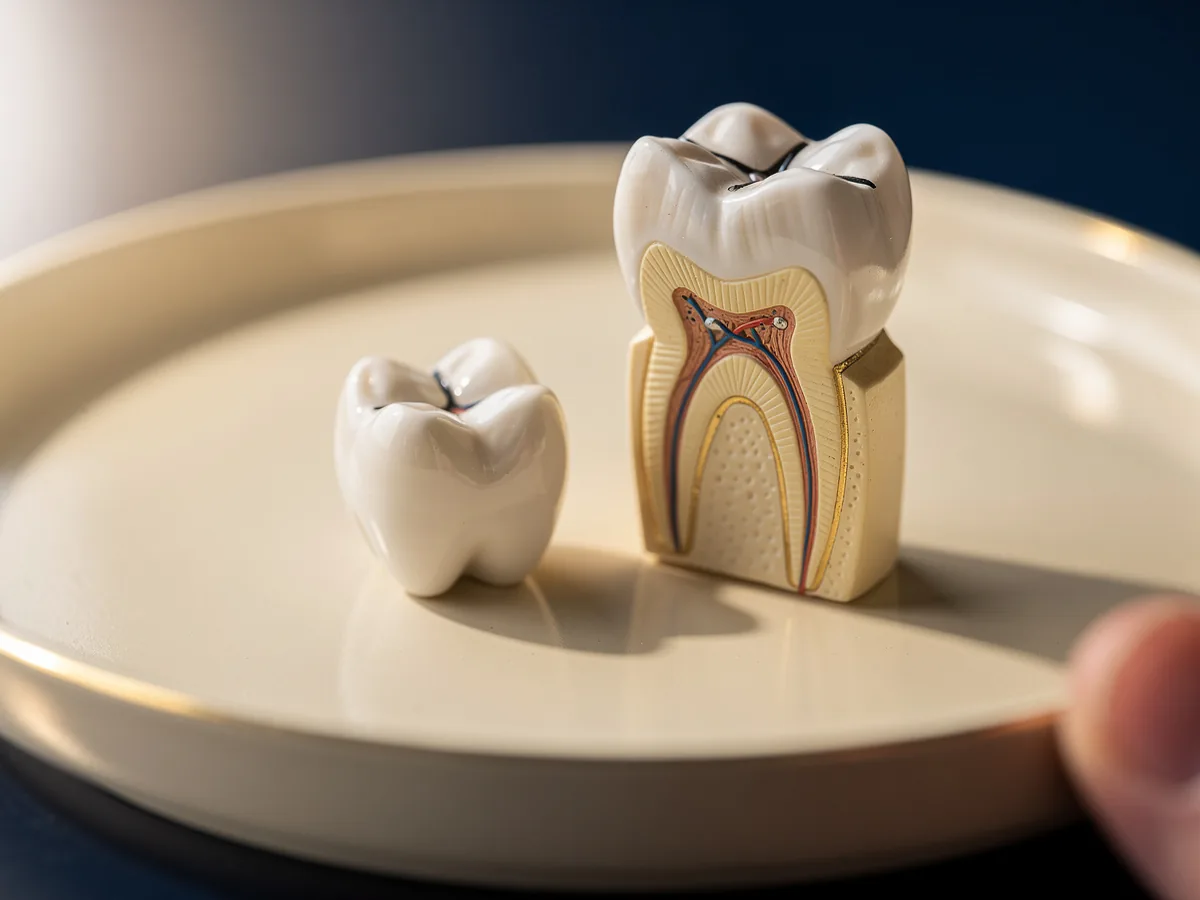
Crown timing after single sitting RCT:
- Ideal — get your permanent crown within 2–4 weeks after the RCT
- Acceptable — within 3 months, though every week of delay increases fracture risk
- Risky — waiting beyond 3 months significantly increases the chance of a vertical root fracture that would require extraction
What happens if you delay the crown: The composite core placed during your single sitting RCT protects the tooth temporarily, but it is not designed to withstand long-term chewing forces. A tooth left without a crown for long is more likely to fracture than one that is crowned in good time.
At Smile Gallery, Dr. Saurabh plans the crown during the same appointment as your RCT. As a prosthodontist (crown and bridge specialist), he ensures the crown fits precisely and matches your natural teeth. Learn more about our crown options on the dental crown treatment page.
Why choose a prosthodontist for your single sitting RCT in Bhopal?
Most dental clinics treat the root canal as one procedure and the crown as another, often with different doctors. At Smile Gallery, Dr. Saurabh Shrivastava — an MDS Prosthodontist — handles both. This integrated approach offers several advantages:
- Structural integrity planning — before starting the RCT, Dr. Saurabh assesses how much healthy tooth structure remains and plans the access opening to preserve maximum tooth for the future crown
- Advanced diagnostics — digital X-rays, electronic apex locators, and dental loupes ensure precise canal length measurement and complete debridement at every step
- Seamless RCT-to-crown workflow — crown impressions can be taken at the same appointment as the RCT, eliminating an extra visit and reducing the window where the tooth is vulnerable
- Single-doctor continuity — no referrals, no handoffs, no miscommunication between an endodontist and a different restorative dentist
Equipment at Smile Gallery for single sitting RCT:
- NiTi rotary file system — flexible nickel-titanium instruments that clean canals faster and more uniformly than manual steel files
- Electronic apex locator — real-time canal length measurement, reducing the need for multiple X-rays during the procedure
- Dental loupes — magnification for visualising canal orifices and micro-fractures invisible to the naked eye
- Laser-assisted disinfection — helps reduce bacteria in dentinal tubules that chemical irrigants may not fully reach
- Digital radiography — instant X-rays with lower radiation than traditional film
If you are experiencing a dental emergency with severe pain, visit our emergency dental care page to know how to reach us when you are in severe pain.
Treated before and it still hurts? See our second opinion and re-treatment page.
Questions, answered
Frequently Asked Questions
Straight answers to what patients ask us. Anything else, message us on WhatsApp.
Is single sitting root canal treatment safe?
Yes, for suitable teeth. A Cochrane systematic review of 47 studies found no clear difference in X-ray failure between single-visit and multi-visit root canals, and neither approach prevents all pain and complications in the first year. At Smile Gallery, Dr. Saurabh checks with digital X-rays that your tooth suits one visit, then cleans the canals with NiTi rotary files and laser disinfection.
How long does a single sitting root canal take?
A single sitting root canal typically takes 45 to 90 minutes depending on the tooth type. Front teeth (single canal) take around 45 minutes, while molars (3-4 canals) may take up to 90 minutes. The entire procedure is completed in one appointment.
Can every tooth be treated in a single sitting?
Not every case qualifies. Teeth with active abscesses (pus drainage), severe curved canals, or cases needing calcium hydroxide medicament may require multiple visits. Dr. Saurabh evaluates each case with digital X-rays to determine if single-visit completion is safe.
What is the success rate of single sitting RCT?
A Cochrane systematic review of 47 studies (5,805 participants) found no clear difference in X-ray failure between single-visit and multi-visit root canals, with moderate-certainty evidence. Success depends on proper case selection, complete canal disinfection, and timely crown placement.
Do I need to take time off work after single sitting RCT?
Most patients return to normal activities within a day. Mild soreness near the treated tooth is common for 2-3 days and responds well to over-the-counter pain medication. Since there are no follow-up visits for canal treatment, you save additional time off compared to multi-visit protocols.
Do you offer EMI for dental treatment in Bhopal?
Yes — Smile Gallery offers a zero-interest EMI option on eligible treatments, arranged in-house, so you can spread the cost into monthly instalments with no extra interest charged by the clinic. Availability and tenure depend on the treatment plan and are confirmed during your consultation, along with a clear written estimate before treatment begins — with no hidden charges.
अक्सर पूछे जाने वाले सवाल (Hindi FAQs)
Single sitting RCT sabhi patients ke liye possible hai kya?
Nahi, sabhi cases single sitting mein complete nahi ho sakte. Agar aapke tooth mein irreversible pulpitis hai bina kisi active abscess ke, to aap achhe candidate hain. Lekin agar active abscess ho pus ke saath, canals bahut curved ya calcified hon, ya bade periapical lesion ho, to Dr. Saurabh digital X-ray se evaluate karke multiple visits recommend kar sakte hain.
क्या सिंगल सिटिंग आरसीटी सभी मरीज़ों के लिए संभव है?
नहीं, सभी मामले सिंगल सिटिंग में पूरे नहीं हो सकते। अगर आपके दांत में एक्टिव फोड़ा (एब्सेस) के बिना इर्रीवर्सिबल पल्पाइटिस है, तो आप एक अच्छे उम्मीदवार हैं। लेकिन अगर पस के साथ एक्टिव इन्फेक्शन हो, नलिकाएं बहुत टेढ़ी या कैल्सीफाइड हों, या बड़ा पेरीएपिकल घाव हो, तो डॉ. सौरभ डिजिटल एक्स-रे से जांच करके कई विज़िट्स की सलाह दे सकते हैं।
Kya single sitting RCT mein multi-visit se kam dard hota hai?
Zaroori nahi. Cochrane review (2022) mein pehle hafte ke andar dard single-visit mein zyada logon ne report kiya, jabki pehle 72 ghante ke dard mein koi clear fark nahi tha. Single sitting mein sirf ek baar anaesthesia lagta hai aur temporary filling ka gap nahi hota. Procedure ke baad 2-3 din halka soreness ho sakta hai, jo over-the-counter dawa se theek ho jaata hai.
क्या सिंगल सिटिंग आरसीटी में मल्टी-विज़िट से कम दर्द होता है?
ज़रूरी नहीं। कोक्रेन रिव्यू (2022) में पहले हफ़्ते के भीतर दर्द सिंगल-विज़िट में ज़्यादा लोगों ने बताया, जबकि पहले 72 घंटों के दर्द में कोई साफ़ फ़र्क नहीं था। सिंगल सिटिंग में केवल एक बार एनेस्थीसिया दिया जाता है और टेम्पररी फिलिंग का अंतराल नहीं होता। प्रक्रिया के बाद 2-3 दिन हल्की पीड़ा हो सकती है, जो सामान्य दर्द निवारक दवा से ठीक हो जाती है।
Single sitting RCT mein kitna time lagta hai aur kitni baar aana padta hai?
Single sitting root canal treatment sirf ek hi appointment mein complete ho jaata hai — front teeth (single canal) ke liye lagbhag 45 minute, aur molars (3-4 canals) ke liye 90 minute tak lag sakte hain, tooth type par depend karta hai. Traditional multi-visit RCT ki tarah 2-3 baar aane ki zaroorat nahi hoti.
सिंगल सिटिंग आरसीटी में कितना समय लगता है और कितनी बार आना पड़ता है?
सिंगल सिटिंग रूट कैनाल ट्रीटमेंट केवल एक अपॉइंटमेंट में पूरा हो जाता है — आगे के दांतों (सिंगल कैनाल) के लिए लगभग 45 मिनट, और दाढ़ों (3-4 कैनाल) के लिए दांत के प्रकार अनुसार 90 मिनट तक लग सकते हैं। पारंपरिक मल्टी-विज़िट आरसीटी की तरह 2-3 बार आने की ज़रूरत नहीं होती।
Sources
- Cochrane Database of Systematic Reviews (2022): Single versus multiple visits for endodontic treatment of permanent teeth — 47 studies; no clear difference in X-ray failure; more pain within one week after a single visit.
- Cleveland Clinic: Root canal — the area is numbed, you may feel pressure, most root canals take about 60–90 minutes, most people recover in under a week, and a crown protects the treated tooth.
- American Association of Endodontists: Root canal treatment — the pulp is removed, and the canals are cleaned, disinfected, shaped, filled and sealed.
Who treats you
Book a visit
Get Your Root Canal Done in One Visit
Where your tooth suits it: no repeat appointments and no temporary-filling gap. Dr. Saurabh checks first, so you know before we start.
Send a photo of your teeth on WhatsApp. A real person from the clinic, not a bot, replies honestly. Darr lag raha hai? Pehle sirf baat kar lijiye.
Calls & WhatsApp 10 am–9 pmSmile Gallery Dental Wellness Centre
E-4/205, Main Rd 3, near Flower Market,
E-4, Arera Colony, Bhopal 462016
One last step: tap Send in WhatsApp so we know it’s really you.
Open WhatsAppCalls & WhatsApp 10 am–9 pm