

Missing Tooth Treatment in Bhopal
Compare implants, bridges and dentures with Dr. Saurabh Shrivastava (MDS Prosthodontist)
You can replace a missing tooth with a dental implant, a dental bridge or dentures. At Smile Gallery Dental Wellness Centre in Arera Colony, Bhopal, Dr. Saurabh Shrivastava, an MDS Prosthodontist, examines your mouth and recommends the option that suits your teeth, bone and needs. Book your missing tooth consultation.
- What are the options to replace a missing tooth?
- Dental implant: when is it the right choice?
- Dental bridge: when does it suit?
- Dentures: for several or all missing teeth
- How do I choose between them?
- What happens if I do not replace the tooth?
- What if many teeth are missing or worn?
- What happens at the consultation?
If you have a gap, you probably know the habits by now. You smile with your lips closed in photos. You chew on the other side. You put a hand over your mouth when you laugh. Many people live like this for years, because they think treatment will hurt or because they feel they have waited too long.
We see this often, and nobody here will judge your gap. A missing tooth, whether it went to decay, gum disease or an injury, changes more than how you look. It changes how you chew, how your other teeth sit and how your jawbone is supported. Replacing it gives you your smile and your bite back, and helps protect the neighbouring teeth and the bone underneath.
This page is a guide to help you decide. It explains in plain words what each option involves and who it suits, then sends you to the full page for each one. Whichever way you go, the plan is made for your mouth after an examination:
- One tooth missing. An implant or a bridge is usually compared first.
- Several teeth missing. A bridge, implants or a partial denture may be discussed, depending on where the gaps are and how healthy the remaining teeth are.
- All teeth in a jaw missing. Complete dentures, implant-supported dentures or a full-mouth plan are considered.
What are the options to replace a missing tooth?
The three main options are a dental implant, a dental bridge and dentures. An implant replaces the tooth root and stands on its own. A bridge is supported by the teeth on either side of the gap. Dentures are removable and suit several or all missing teeth.
| Option | How it works | Suited to | Neighbouring teeth and bone | Time frame |
|---|---|---|---|---|
| Dental implant | A titanium post is placed in the jawbone, then topped with a custom crown. | One or more missing teeth, with enough jawbone and healthy gums. | Stands on its own without touching neighbouring teeth; helps preserve the jawbone. | Placement is done in one visit; the bone then fuses over three to nine months. The full process typically takes three to four months. |
| Dental bridge | A false tooth is joined to crowns on the teeth on either side of the gap. | Gaps with healthy, strong teeth on both sides. | The two supporting teeth must be reshaped; does not stop the bone loss that follows tooth loss. | No bone-healing wait, because no implant is placed. Made in a dental laboratory from a digital scan. |
| Dentures | A removable set of teeth that rests on the gums and clasps onto natural teeth where they remain. | Several or all teeth missing, or when an implant is not advisable. | Rests on the gums; the jawbone can still shrink over time, so the fit needs checking. | Follow-up adjustment visits in the first month; tongue and cheeks usually adapt in about a month. |
Source: ADA MouthHealthy
Source: Cleveland Clinic
Source: Cleveland Clinic
Not sure which of these sounds like you? That is normal. Almost everyone arrives with the same question, and the answer depends on where the tooth is missing, how many are missing, the health of your gums and bone, and what you want from the result. In some cases we may also talk about braces or veneers for particular gaps, once we have examined you.
Dental implant: when is it the right choice?
For most patients missing a single tooth, an implant is the better long-term choice. It stands on its own without touching neighbouring teeth, and it helps preserve the jawbone underneath.
An implant is the closest thing to getting your own tooth back. It is the option people ask about most, so here is how it works in plain terms.
- How it works. A titanium post goes into the jawbone to stand in for the tooth root. Over three to nine months the bone fuses with it, and we then fix a custom crown on top.
- Who it suits. Most healthy adults with enough jawbone and healthy gums. If the bone has thinned after years without the tooth, a bone graft can rebuild the site before or during placement.
- How it is planned. Dr. Saurabh plans implant cases with digitally guided surgery and CBCT-based 3D imaging, so placement is precise and matched to your bone and bite.
- The visit itself. The post is usually placed in a single visit under local anaesthesia, and our visiting oral surgeon joins the team where surgery is needed. In selected cases with good bone density, a temporary crown can be fitted on the day, so you are not left with a visible gap while the healing completes.
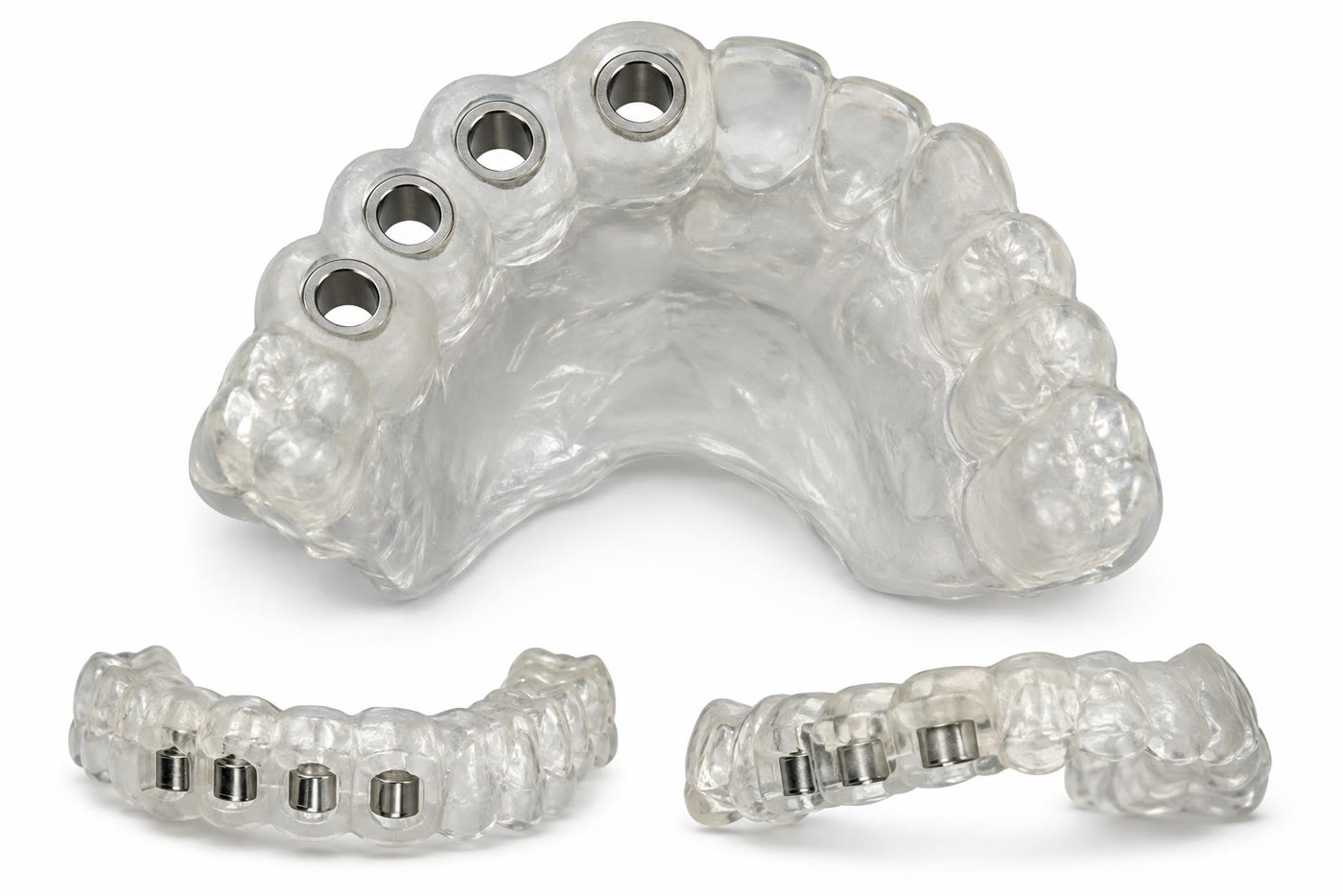
The full guide, including candidacy, healing and aftercare, is on our dental implant treatment page.
Dental bridge: when does it suit?
A bridge replaces a missing tooth with a false tooth that is joined to crowns on the teeth either side of the gap. It suits gaps where the neighbouring teeth are healthy and strong enough to carry the load.
If an implant does not suit you, or you would rather not have surgery, a bridge is the other common way to fill a single gap. It is worth knowing the trade-off before you choose.
- How it works. We prepare and crown the teeth on either side of the gap, and the replacement tooth is carried between them as a single laboratory-made piece.
- What to weigh up. A bridge requires grinding down two healthy teeth for support, and it does not prevent the bone loss that naturally follows tooth extraction.
- When it makes sense. When the neighbouring teeth already need crowns, or when a surgical option is not suitable for you.
- Precision. Crowns and bridges at Smile Gallery are made from digital scans taken with an intraoral scanner, so there are no messy putty impressions.
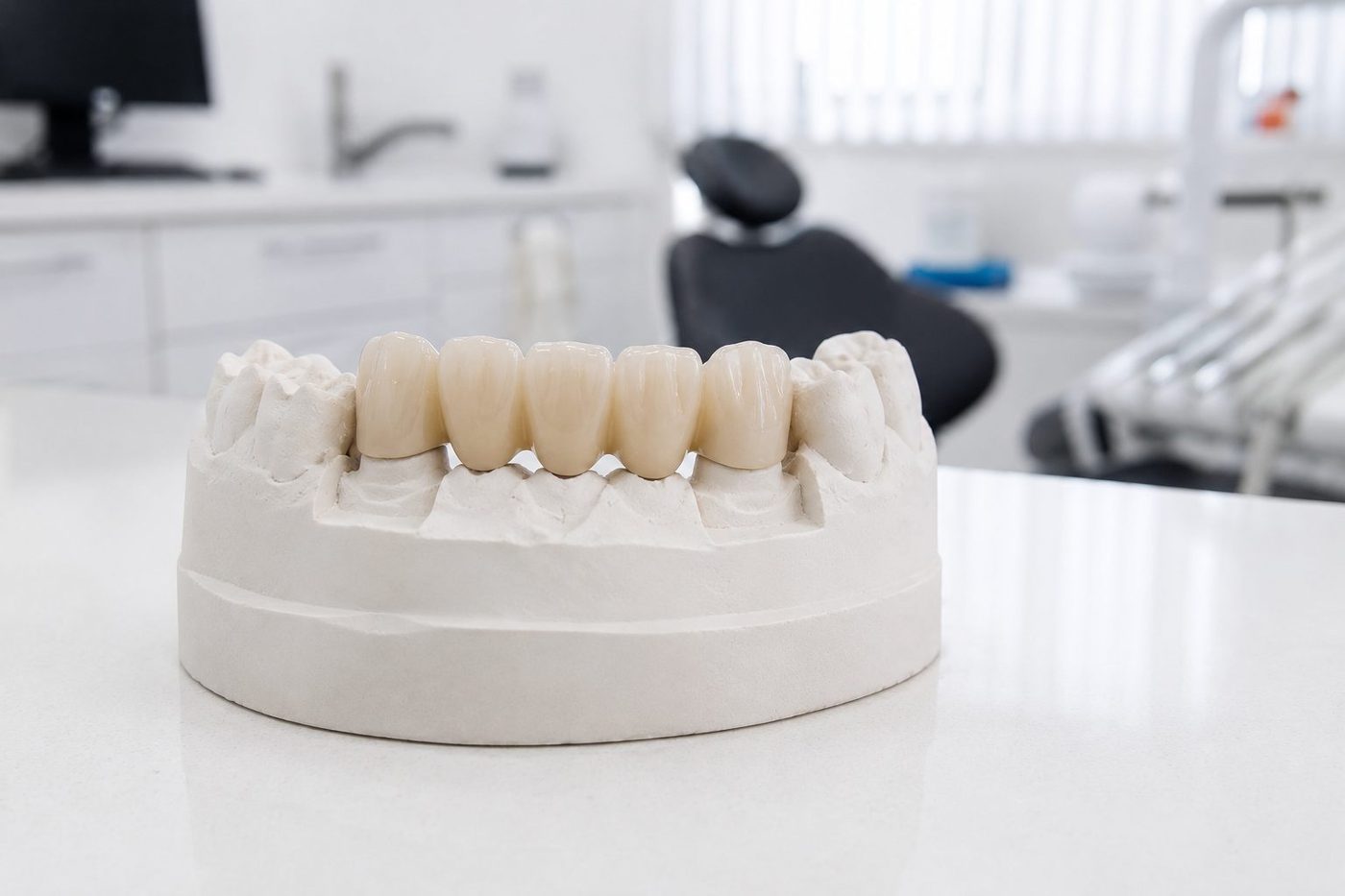
Materials, visits and care are on our dental crown and bridge page.
What our patients say about replacing missing teeth
★★★★★ 5.0 · 500 reviews"Smile gallery is the place where you get your smile back. For a long time I had missing teeth in lower front region. I was using a denture . I came to know about dental implants and searched online. I came to smile gallery dental clinic and there I was not my 3 dental implants and also suggested me temporary solutions for missing area. The teeth look so natural and also the entire team works genuinely for you and are really hard working . Highly recommend to everyone"
"Mu smile gallery was incredibly good & got my full mouth implant done. I was facing difficulty in chewing food for a long time. I was introduced to dr saurabh by my relative who got his implants done. The discussion for the entire procedure was very nice and transparent. The surgery was very well planned and was done using 3D technology. The follow ups were well planned. The staff was good and the entire dental procedures were done under complete hygiene. Congratulations to entire team for helping me with such result."
Dentures: for several or all missing teeth
Dentures are removable replacement teeth made to fit your gums. They suit several or all missing teeth, and they can also be anchored on dental implants for a firmer fit.
Dentures have a reputation for slipping and looking false. A well-made set that fits your gums is a different thing, and a denture anchored on implants holds more firmly still. Which kind you need depends on how many teeth you have lost.
- Partial dentures. Replace a few missing teeth and clasp discreetly onto your remaining natural teeth.
- Complete dentures. Replace every tooth in the upper or lower jaw and rest directly on the gums.
- Implant-supported dentures. The denture snaps onto dental implants placed in the jaw, which reduces slipping.
- When they are chosen. When many teeth are missing, or when medical conditions or limited jawbone make implants impractical at this time.
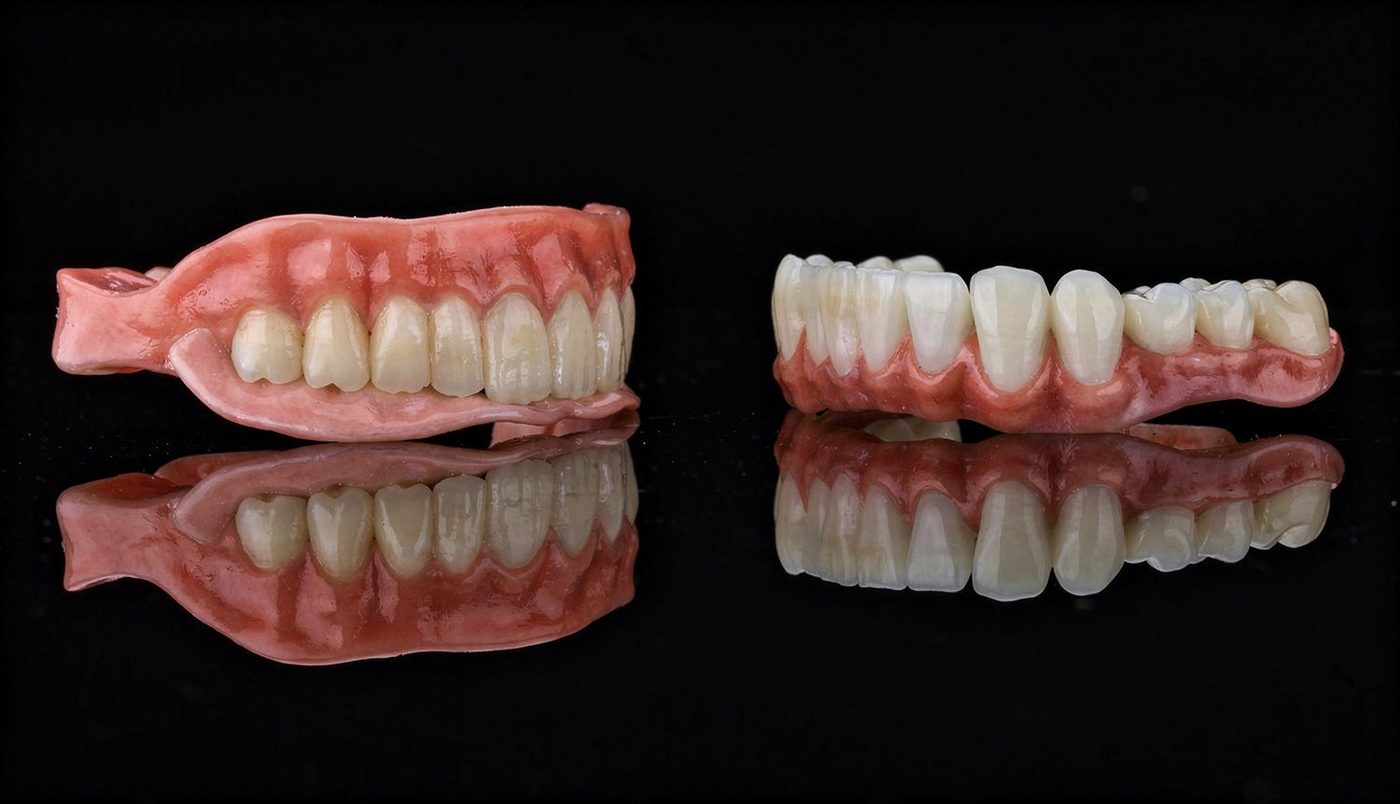
Types, materials, care and what to expect when wearing them are on our dentures page.
How do I choose between them?
Choose by looking at four things: how many teeth are missing, the condition of the neighbouring teeth, the amount of jawbone, and your general health. Your dentist confirms the most suitable option after an examination.
You do not have to work this out alone. Here is how the choice usually falls.
- One tooth, healthy neighbours. An implant keeps the neighbouring teeth untouched. A bridge is the alternative when an implant is not suitable.
- One tooth, neighbours already heavily filled or crowned. A bridge can make good use of teeth that need crowns anyway.
- Several teeth in a row. Implants, a longer bridge or a partial denture, depending on the bone and the teeth that remain.
- Little jawbone. A bone graft may allow an implant. Otherwise a bridge or denture may be the sounder route.
- All teeth missing. Complete dentures, implant-supported dentures or a fixed full-arch plan.

Cost depends on the option, the number of teeth and the materials. We do not publish figures on this page, because the right plan differs for each mouth. At the consultation, Dr. Saurabh explains the plan and the estimate in writing before treatment begins, so you know where you stand before you decide anything.
What happens if I do not replace the tooth?
A gap left untreated can let neighbouring teeth drift into it, make chewing harder and, over time, lead to jawbone loss. Replacing the tooth early helps avoid these problems.
Putting it off is very human, and one gap does not feel urgent. It is still worth knowing what can happen quietly in the background.
- Shifting teeth. The teeth beside the gap tilt or move into the space, which leads to misalignment and bite problems.
- Decay and gum disease. Shifted teeth are harder to clean, which raises the risk of gum disease and decay in the surrounding teeth.
- Jawbone loss. Chewing and biting stimulate the cells that create new bone. When a tooth is lost, this stimulation falls and the bone can shrink.
- Facial support. Teeth support the facial muscles and jaw. Where many teeth are lost, the loss of support can give a sunken look, hollow cheeks and an uneven appearance.
- Chewing difficulty. Chewing becomes harder, which can in turn affect digestion.
If you have waited years, you can still come in. We will look at what your bone and teeth allow today, and a bone graft can rebuild the site where an implant needs it.
Had an implant or bridge that failed? Treated before and it still hurts? See our second opinion and re-treatment page.
What if many teeth are missing or worn?
When many teeth are missing, damaged or worn, a single replacement is not enough. A planned full mouth rehabilitation rebuilds the bite step by step, combining implants, crowns and bridges as needed.
If it is more than one tooth, the worry is usually bigger too. The work is planned in phases, so it feels manageable.
- Who it is for. Patients with several missing teeth alongside failing crowns, bridges or fillings, or a bite that has collapsed.
- How it is done. A custom plan in phases, with temporary teeth fitted so you are not left without a smile during treatment.
Learn more on our full mouth rehabilitation page.
What happens at the consultation?
Your dentist examines your teeth, gums and bite and, based on that examination, builds a personalised treatment plan. You then choose the option that suits you.
The first visit is a conversation. You tell us what bothers you, we look, and we explain. Nothing starts until you have chosen.
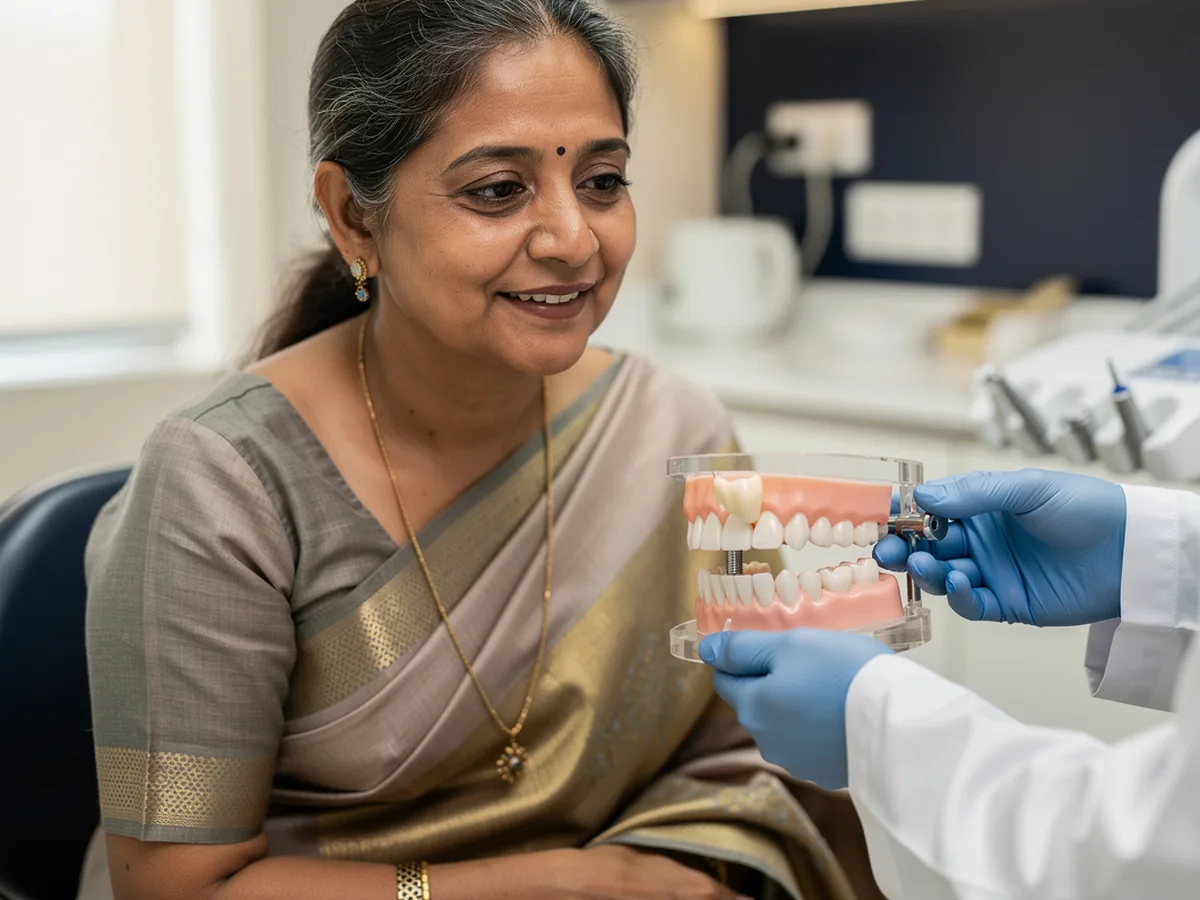
- Examination. We assess your gums, the neighbouring teeth, your bite and, where an implant is being considered, your bone. Implant cases are planned with CBCT-based 3D imaging.
- Options explained. We explain the implant, bridge and denture routes that apply to your case, with the benefits and trade-offs of each.
- Written plan. You receive the plan and estimate in writing before treatment begins.
Questions, answered
Frequently Asked Questions
Straight answers to what patients ask us. Anything else, message us on WhatsApp.
Can a lost tooth be replaced?
Yes. A lost tooth can be replaced with a dental implant, a bridge or dentures, and sometimes with other approaches such as veneers or braces. The right choice depends on where the tooth is missing, how many are missing and the health of your teeth and gums.
Does a missing tooth affect the face?
It can. Teeth support the facial muscles and jawbones. When teeth are missing, that support is lost, which can lead to a sunken look, hollow cheeks and an uneven appearance. This is most noticeable when many teeth are missing.
Can tooth loss cause bone loss?
Yes. Chewing and biting stimulate the cells that create new bone. When a tooth is lost, that stimulation drops and the jawbone can shrink. An implant helps preserve the bone. A bridge does not prevent this loss.
What happens if you do not replace a missing tooth?
The remaining teeth may tilt or shift into the empty space and throw your bite out. The jawbone can also shrink, because the missing tooth no longer stimulates it. Chewing gets harder, which can affect digestion.
Is an implant better than a bridge for one missing tooth?
For most patients missing a single tooth, an implant is the better long-term choice. It stands on its own without touching neighbouring teeth, while a bridge means grinding down two healthy teeth for support. Your dentist confirms which one suits you after an examination.
Can a missing tooth be replaced in one day?
The implant post is usually placed in a single visit, but the full process takes several months while the bone fuses with the post. In selected cases with good bone density, a temporary crown can be fitted on the day of surgery. Dr. Saurabh assesses your case and tells you plainly whether this suits you.
Are dentures the only option if several teeth are missing?
No. Depending on where the gaps are and how much bone you have, a bridge or dental implants may also be possible. Dentures can also be anchored on implants. The right route is decided after an examination.
How do I book a missing tooth consultation in Bhopal?
Call +91 92007 00750 or message us on WhatsApp. Smile Gallery Dental Wellness Centre is in Arera Colony, Bhopal, and is open Monday to Saturday.
अक्सर पूछे जाने वाले सवाल (Hindi FAQs)
Missing tooth ko replace karne ke kaun se options hain?
Missing tooth ko dental implant, bridge ya dentures se replace kiya ja sakta hai. Sahi option missing teeth ki location aur sankhya, aapke gums aur jawbone ki sthiti par depend karta hai. Dr. Saurabh examination ke baad aapke liye sahi option batate hain.
खोए हुए दांत को बदलने के कौन से विकल्प हैं?
खोए हुए दांत को डेंटल इम्प्लांट, ब्रिज या डेंचर्स से बदला जा सकता है। सही विकल्प दांतों की जगह और संख्या, आपके मसूड़ों और जबड़े की हड्डी की स्थिति पर निर्भर करता है। डॉ. सौरभ जांच के बाद आपके लिए सही विकल्प बताते हैं।
Agar missing tooth replace na karein to kya hota hai?
Aas-paas ke dant khaali jagah mein khisak sakte hain, jisse bite mein dikkat aati hai. Jawbone bhi dheere-dheere kamzor ho sakti hai aur chabane mein takleef badh sakti hai. Isliye dant jaldi replace karwana behtar hai.
अगर खोया हुआ दांत न बदलें तो क्या होता है?
आसपास के दांत खाली जगह में खिसक सकते हैं, जिससे बाइट में दिक्कत आती है। जबड़े की हड्डी भी धीरे-धीरे कमज़ोर हो सकती है और चबाने में तकलीफ़ बढ़ सकती है। इसलिए दांत जल्दी बदलवाना बेहतर है।
Who treats you
Book a visit
Ready for a Consultation?
Send a photo of your teeth on WhatsApp. A real person from the clinic, not a bot, replies honestly. Darr lag raha hai? Pehle sirf baat kar lijiye.
Calls & WhatsApp 10 am–9 pmSmile Gallery Dental Wellness Centre
E-4/205, Main Rd 3, near Flower Market,
E-4, Arera Colony, Bhopal 462016
One last step: tap Send in WhatsApp so we know it’s really you.
Open WhatsAppCalls & WhatsApp 10 am–9 pm