

You can stop cavities from getting worse — and avoid the need for a cavity filling — by reducing sugar exposure, brushing twice with fluoride toothpaste, flossing daily, and seeing a dentist promptly so the cavity can be cleaned and filled before it reaches the pulp.
Medically reviewed by Dr. Saurabh Shrivastava, BDS MDS Prosthodontist, Certified Digital Smile Designer (DSD) (DCI: A-04860). Last updated: May 2026.
You can stop cavities and tooth decay from getting worse with four straightforward steps — reduce sugar exposure, brush twice daily with fluoride toothpaste, floss or use interdental brushes daily, and see a dentist promptly so the cavity can be cleaned and filled before decay reaches the pulp — an approach Dr. Saurabh Shrivastava, BDS MDS Prosthodontist (DCI: A-04860) at Smile Gallery Dental Wellness Centre, Arera Colony, applies for patients from MP Nagar, including parents asking about kids dental care for cavities in baby teeth. When decay does reach the pulp, root canal therapy still saves the tooth with a 95% success rate over 10 years; preventing it is simpler.
How do you stop cavities from getting worse?
A cavity cannot heal once it has broken through the enamel, but you can slow it down. Brush twice a day with fluoride toothpaste, cut sugary snacks and drinks between meals, and clean between your teeth daily. Then see a dentist soon. At Smile Gallery, Bhopal, a small cavity is usually fixed with one filling, before it reaches the nerve.
How a Cavity Progresses and When a Cavity Filling Is Needed
A cavity begins when acid produced by plaque bacteria leaches minerals out of the enamel. At the very early stage, the surface looks chalky white but is intact — at this point it can still be remineralised. Once the enamel breaks down, a small hole forms; from there decay moves into the softer dentin underneath, then towards the pulp at the centre of the tooth. Each stage progresses faster than the last, which is why early action is so effective.
Step 1 — Reduce Sugar Exposure
The total amount of sugar matters less than how often it touches the teeth. Three biscuits eaten in one go cause one acid attack; the same three biscuits spread across an afternoon cause three. Limit sweet foods to mealtimes, finish them in one sitting, and follow with water. Sticky candies, sweetened drinks sipped slowly, and sugared lozenges are particularly damaging.
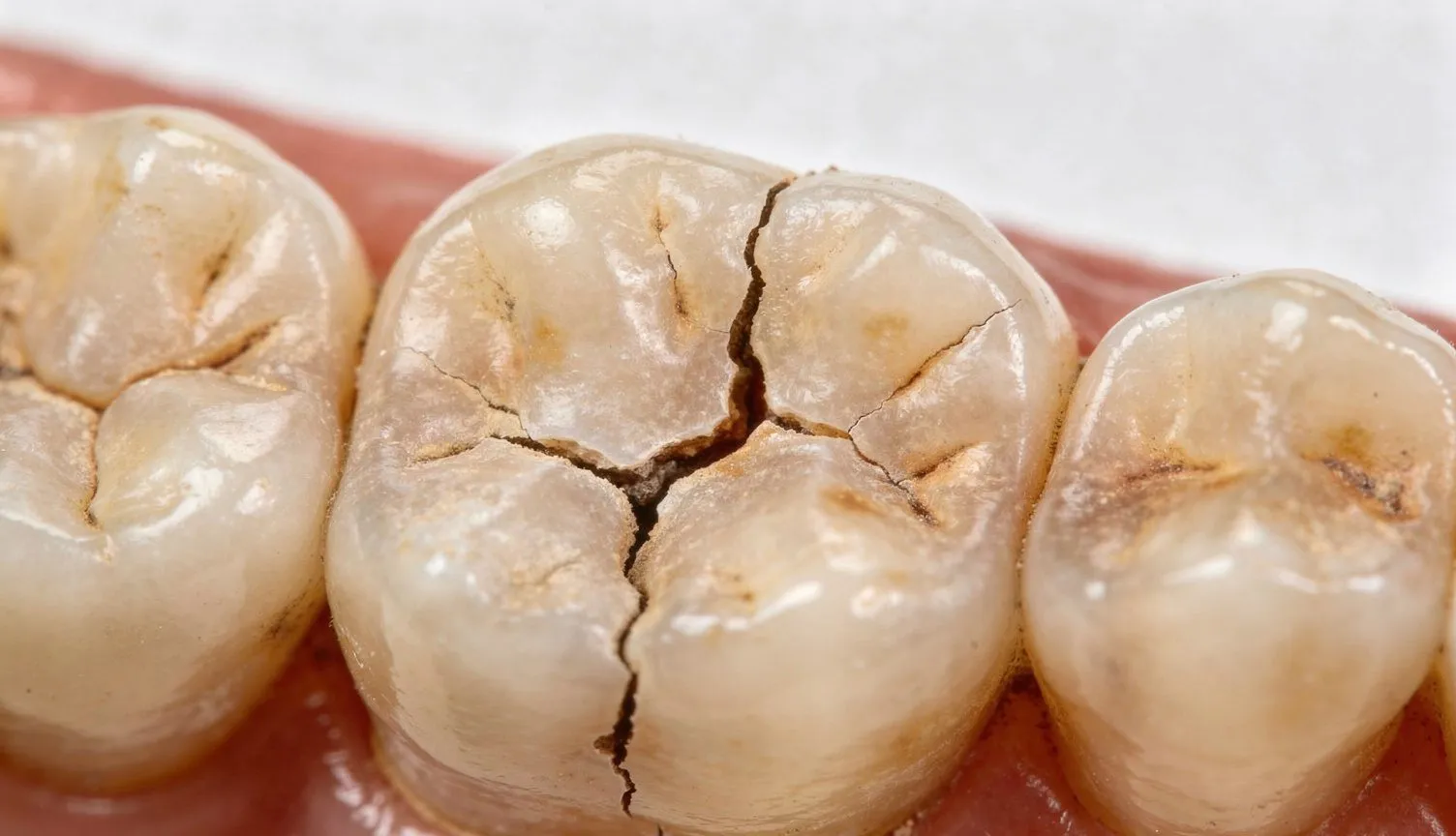
According to Dr. Saurabh Shrivastava, MDS Prosthodontist: "A cavity in the enamel stage is still reversible with fluoride — once it crosses into dentin, the tooth needs a filling because dentin has tubules that carry acid directly towards the pulp, and no amount of brushing can arrest that progression without professional intervention."
Step 2 — Brush Properly with Fluoride Toothpaste
Brush twice a day for two minutes with a soft-bristled brush and fluoride toothpaste, using gentle circular strokes at the gum line. Fluoride strengthens enamel and helps reverse very early decay. After brushing, spit out the foam but do not rinse heavily — leaving a thin film of fluoride on the teeth gives it longer to work.
"A cavity filling done early takes twenty minutes and one visit. The same tooth left for eighteen months may need a root canal, a post, and a crown — three visits, six times the cost, and a tooth that is structurally weaker for the rest of the patient's life. Early action is not just simpler; it is categorically a different outcome."
Dr. Saurabh Shrivastava · BDS, MDS Prosthodontist, DCI A-04860
Step 3 — Floss or Use Interdental Brushes Daily
Brushing cleans only three of the five surfaces of each tooth. Cavities most commonly form between teeth, where bristles cannot reach. Floss or interdental brushes lift plaque from these areas before the bacteria can produce decay-causing acid.
According to Dr. Saurabh Shrivastava, MDS Prosthodontist: "The patients I see with the most advanced decay are not those who eat the most sugar — they are the ones who sip sweetened chai or cold drinks slowly through the afternoon, creating a sustained acid environment that attacks enamel for four to five hours instead of twenty minutes."
Step 4 — See a Dentist Promptly
A small early cavity, caught and filled, takes 20 to 30 minutes and a single visit. The same cavity left to grow for a year or two may need a larger filling, an inlay, a crown, or root canal therapy. The earlier you visit, the simpler — and less expensive — the treatment.
- No fasting is needed — eat normally before your appointment. If you tend to gag during examination, avoid a very heavy meal in the hour before you arrive.
- Local anaesthesia makes the procedure painless — the injection is the most uncomfortable part for most patients, and it takes effect within two minutes. The drilling is felt only as vibration, not pain.
- Composite fillings match your tooth shade — white composite resin is the standard material for visible teeth. It bonds directly to the tooth structure, so less healthy tooth needs to be removed compared to older amalgam restorations.
- Mild cold sensitivity after filling is normal — this settles within three to seven days as the tooth adjusts. If sensitivity to cold lasts beyond two weeks or is severe, contact the clinic so the bite can be checked and adjusted.
- Small cavities between teeth are common and invisible — you may not feel or see an interproximal cavity until it is moderate in size, which is exactly why six-monthly check-ups with X-rays catch decay that patients do not know they have.
- Baby teeth fillings matter — a cavity in a primary tooth can progress to abscess quickly due to thinner enamel and dentin. Treating it preserves the space for the permanent tooth erupting beneath it.
Special Notes for Children’s Cavities
Baby teeth are not throwaway teeth. They guide the permanent teeth into place and are essential for chewing and speech development. Cavities in baby teeth can progress quickly because the enamel is thinner. Bring your child to the dentist as soon as you notice any white, brown, or chalky spots; early intervention with fluoride or a small filling is far easier on a child than waiting for pain.
When Home Steps Are Not Enough
If a tooth is already sensitive to cold, sweet, or pressure, or if you can see a hole or a dark spot on the chewing surface, the cavity has likely passed the stage where home care alone will help. Book an appointment promptly so the dentist can clean and fill the area before deeper damage occurs.
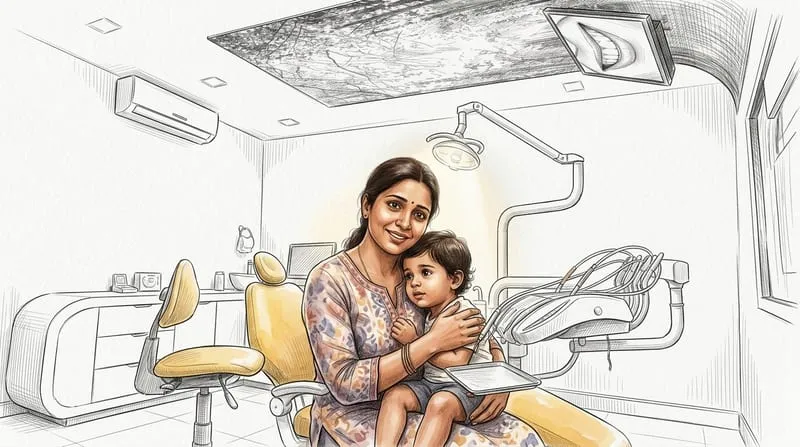
The clinical case and outcome are from Dr. Saurabh Shrivastava's practice.
Priya walked in on a Saturday morning in March with her 5-year-old son in tow. She was 32, a schoolteacher from MP Nagar, and she had come primarily for her son's check-up. But when I asked routinely whether she herself had any concerns, she paused.
"I have had a dull ache in my lower left for about two months. I kept thinking it would go away."
I examined the child first — healthy primary dentition, one early chalky spot on the upper right molar that we treated with fluoride varnish and flagged for monitoring. Then I turned to Priya. The lower left first molar told a clear story: a moderate interproximal cavity that had been invisible from the outside but showed clearly on the bitewing X-ray as a darkened triangle reaching the dentin. The dull ache was coming from the dentin, not the pulp — we were still on the right side of the line.
When I explained what the X-ray showed, her first question was about pain. "Will it hurt?"
"The anaesthesia takes effect within two minutes," I told her. "After that you will feel vibration, pressure, maybe the scent of the composite material. No pain. The whole procedure will take about 25 minutes."
Her son watched with wide eyes from the adjacent chair as I administered the local block, waited for it to take effect, and then excavated the decay. The cavity was class II — it had extended slightly below the contact point — so the restoration required a matrix band and a wedge to rebuild the interproximal wall cleanly. The composite was placed in layers, cured, and polished. The bite was checked and confirmed before she left.
On her way out, Priya asked what she had done wrong. I told her that the cavity filling was not a punishment for negligence — she was brushing twice daily and limiting sweets. But she was drinking 3 cups of tea with sugar through the afternoon, never flossing, and had not had a check-up in 4 years. The cavity had formed slowly in a blind spot. "Now you know where the gap was," I said. "Interdental brush every evening, and we see you again in six months."
At her 6-month review, the filling was intact and the bite was comfortable. The chalky spot on her son's molar had remineralised — it was no longer visible clinically. Both of them have continued on a six-monthly schedule. The ache Priya had ignored for two months has not returned.
BDS, MDS Prosthodontist · DCI A-04860 · Smile Gallery, Bhopal
| Follow-up | 6 months post-filling |
| Composite filling | Intact, no secondary decay at margins |
| Tooth sensitivity | Resolved within 5 days of treatment |
| Adjacent dentin spot | Remineralised — no filling required |
| Ongoing care | 6-monthly check-up + bitewing X-rays annually |
Frequently Asked Questions
What does cavity treatment involve?
Removal of the decayed part of the tooth and placement of a filling (composite, inlay, or onlay) to restore shape and function. Larger cavities may need a crown.
Is cavity treatment available at Smile Gallery in Bhopal?
Yes. Smile Gallery, in Arera Colony, treats cavities in adults and children, with paediatric care under Dr. Kirti Shrivastava (DCI: A-01281).
How long does a filling take?
About 20 to 30 minutes per tooth for a routine filling.
What should I expect after a filling?
Mild sensitivity to cold for a day or two. The bite is checked and adjusted at the same visit if needed.
How do I book an appointment at Smile Gallery, Arera Colony?
Call +91 9200700750.
Ready for a consultation?
Visit Smile Gallery Dental Wellness Centre, E-4/205, Main Rd 3, near Flower Market, E-4, Arera Colony, Bhopal.
Open Monday to Saturday 10am–2pm and 5–9pm.