


Teeth sensitivity happens when enamel wears thin or gums recede, exposing the dentin and tiny nerve channels inside. Common causes are aggressive brushing, acidic food and drinks, grinding, and gum recession. Treatment ranges from desensitising toothpaste to fluoride application or restorations.
Medically reviewed by Dr. Saurabh Shrivastava, BDS MDS Prosthodontist, Certified Digital Smile Designer (DSD) (DCI: A-04860). Last updated: May 2026.
Teeth sensitivity happens when the protective enamel becomes thin or the gum recedes, exposing the softer dentin layer and the tiny nerve channels inside it — a condition Dr. Saurabh Shrivastava, BDS MDS Prosthodontist (DCI: A-04860) at Smile Gallery Dental Wellness Centre, Arera Colony, treats with a graded approach: identify the cause, change the habit, and apply targeted root canal treatment in Bhopal when needed. Catching sensitivity early prevents the deeper decay that may eventually require root canal therapy — which, while having a 95% success rate over 10 years, is far better avoided.
How Sensitivity Actually Happens
A healthy tooth has a thick enamel layer protecting the dentin underneath. Dentin is full of microscopic channels that lead to the nerve in the centre of the tooth. When enamel wears away or the gum recedes and exposes the dentin near the gum line, hot, cold, sweet, or even cold air can reach those channels and trigger that sharp, brief pain.
The Common Causes
Brushing too hard with a hard-bristled brush wears enamel and pushes the gum line back. Acidic food and drink — soda, citrus juice, sports drinks, vinegar-based dressings — soften enamel; brushing immediately afterwards rubs the softened enamel away. Grinding or clenching cracks enamel and stresses the gum line. Untreated gum disease causes recession. Whitening overuse can cause temporary sensitivity. Cracked teeth or leaking old fillings expose dentin from the side.
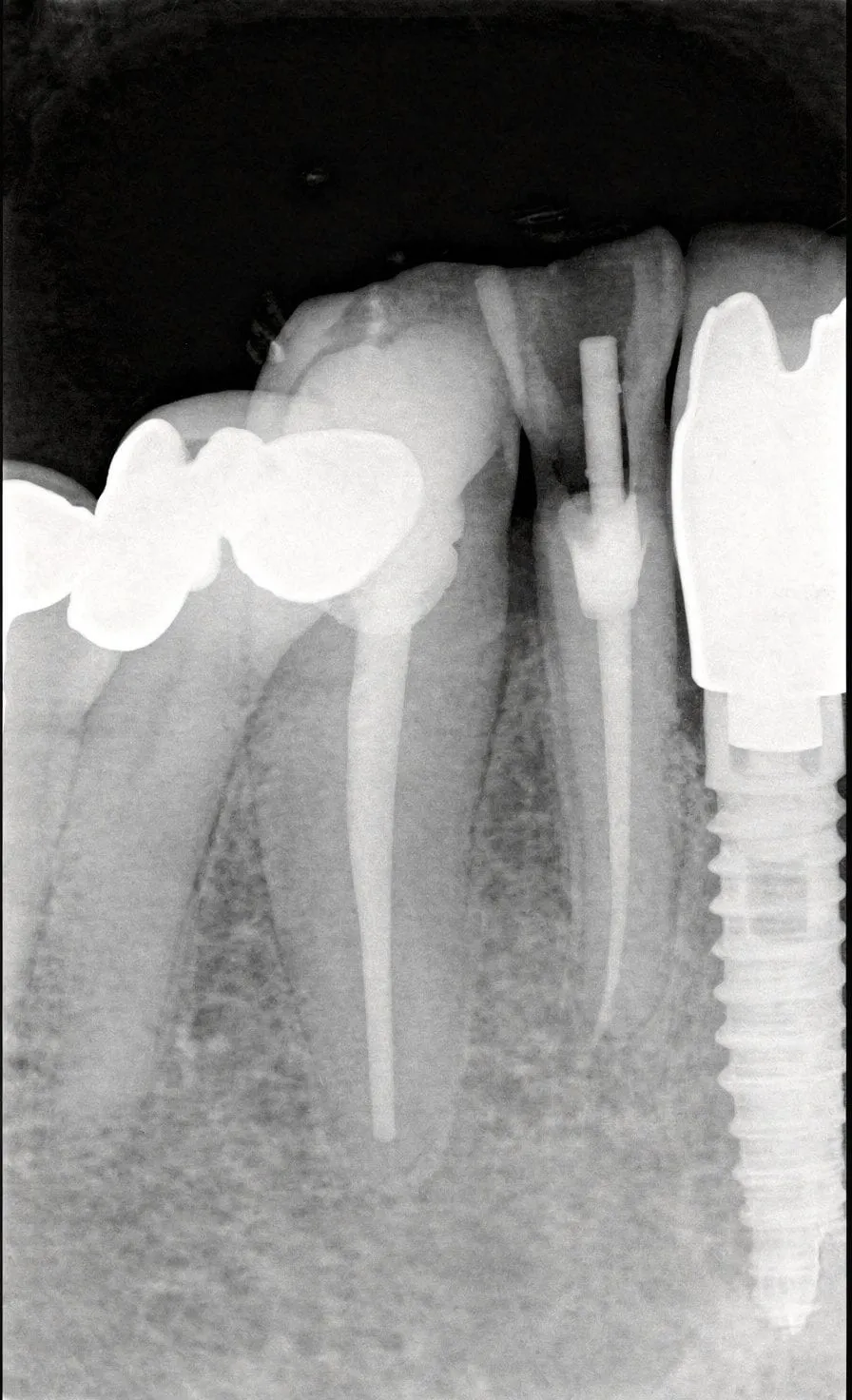
According to Dr. Saurabh Shrivastava, MDS Prosthodontist: "The single most reversible cause of teeth sensitivity in my Bhopal patients is brushing technique — a medium or hard brush used with horizontal scrubbing causes measurable gum recession and enamel abrasion within 2 to 3 years, and switching to a soft brush with gentle circular strokes reduces sensitivity in most cases within 4 weeks without any further treatment."
How to Prevent Sensitivity
Switch to a soft-bristled brush and gentle circular strokes. Wait 30 minutes after acidic food or drink before brushing. Use a desensitising toothpaste with potassium nitrate or stannous fluoride for at least four weeks before judging the result. If you grind at night, ask the dentist about a custom night guard. Treat gum disease early — the gum line will not return on its own, but further recession can be stopped.
"Sensitivity is the mouth's earliest warning signal. It rarely means something catastrophic is happening right now — but it reliably means something has changed, and the sooner we identify what has changed, the simpler the fix. A single consultation often resolves months of daily discomfort."
Dr. Saurabh Shrivastava · BDS, MDS Prosthodontist, DCI A-04860
When to See a Dentist
Sensitivity that persists for more than a couple of weeks despite a switch to soft brushing and desensitising toothpaste needs a clinical exam. The dentist will look for recession, cracks, decay, leaking fillings, or grinding wear. Targeted treatment may include fluoride application, bonded fillings to cover exposed dentin, gum graft procedures for severe recession, or a night guard for grinding.
- Aggressive brushing and enamel abrasion — a hard-bristled brush used with a scrubbing motion wears down the enamel cervically and pushes the gumline back, exposing dentin. Switch to a soft-bristled brush, use gentle circular strokes, and apply a desensitising toothpaste with potassium nitrate or stannous fluoride twice daily for at least 4 weeks.
- Acidic food and drink — cola, citrus juice, sports drinks, and vinegar-based dressings temporarily soften enamel. Brushing within 30 minutes of these drinks abrades the softened surface. Wait 30 minutes before brushing, rinse with plain water immediately after acidic food or drink, and limit frequency rather than quantity.
- Gum recession exposing the root — once the root surface is exposed, dentin is directly in contact with temperature changes and sweet triggers. Fluoride varnish applied in-clinic reduces sensitivity within 1 to 2 sessions. Significant recession at a single tooth may need a glass ionomer cement (GIC) restoration to seal the exposed root surface.
- Night grinding (bruxism) — clenching and grinding cracks enamel, stresses the gumline, and creates microfractures that allow temperature changes to reach the pulp. A custom night guard prevents further damage; it does not reverse existing sensitivity but stops it from worsening. Existing cracks may need composite bonding or a crown depending on depth.
- Cracked tooth or leaking filling — an old composite or amalgam filling that has begun to leak at the margin, or a crack in the tooth itself, exposes dentin from the side. This pattern of sensitivity is usually localised to one tooth and often triggered by biting pressure in addition to temperature. Clinical examination and a bite-test confirm the diagnosis; treatment is a new bonded filling or a crown over the cracked tooth.
When Sensitivity Means Something More Serious
A deep, lingering ache that persists after the trigger is removed — especially one that wakes you at night — is no longer simple sensitivity. That pattern usually means the pulp inside the tooth is inflamed, and root canal treatment may be needed to save the tooth. The earlier this is evaluated, the simpler and more predictable the outcome.
According to Dr. Saurabh Shrivastava, MDS Prosthodontist: "Sensitivity that persists beyond 2 weeks despite a desensitising toothpaste needs a clinical examination — not because it is always serious, but because exposed root surface from recession, a cracked tooth, and a leaking old filling each require a different treatment. Diagnosing the cause correctly on the first visit saves weeks of unnecessary home remedies."
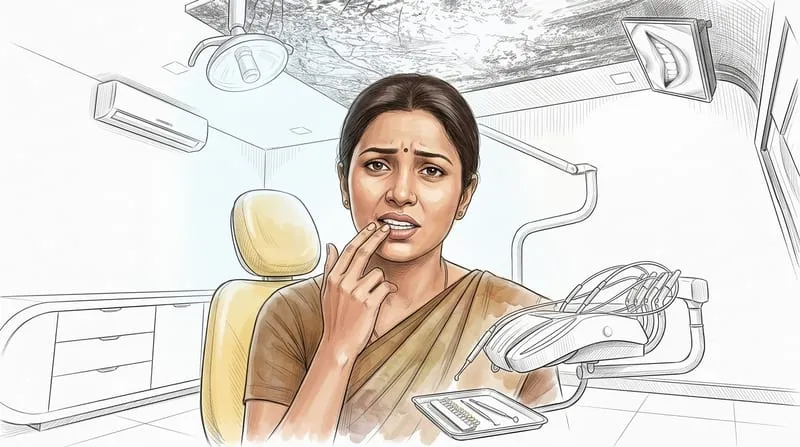
The clinical case and outcome are from Dr. Saurabh Shrivastava's practice.
Priya came in on a Saturday morning in September, her first dental visit in over 4 years. She was 34, a school teacher from Shahpura, and she described the problem as simply as possible: "Almost every tooth hurts when I eat or drink something cold. It has been getting worse for the past 6 months. Even cold air hitting my teeth when I step outside bothers me now."
The examination was systematic. I charted sensitivity with a cold stimulus at each tooth and probed the gumline carefully. The picture that emerged was multi-factorial. The upper and lower front teeth showed visible notching at the gumline — classic abrasion from a hard-bristled brush used with horizontal strokes. The upper right canine had 3 mm of root exposure from recession. The lower-left first premolar had a crack running vertically from the biting surface, which lit up under the fibre-optic transilluminator. And an old composite filling on the upper-left first molar was showing a visible grey margin — a sign of micro-leakage.
I laid out the findings on paper for her. 4 separate causes, 4 separate fixes. "Your teeth sensitivity is not one problem — it is four. The good news is that three of them are completely reversible, and the fourth is manageable. But we need to address each one correctly, or the sensitivity will keep coming back."
We started the same visit with a fluoride varnish application across all exposed root surfaces — 5 ml of sodium fluoride varnish, held in place for the recommended contact time. I replaced the leaking upper molar filling with a new bonded composite, which took 25 minutes. For the cracked premolar, a thorough bite-test showed the crack was not extending to the pulp — I placed a full-coverage composite onlay to stop the crack from propagating. I gave her a new soft-bristled brush and demonstrated the modified Bass technique.
"I have been using the same medium brush for years because I thought harder was better," she admitted. "No one ever told me the brush was causing the problem."
At her 4-week review, the generalised cold sensitivity had reduced markedly. She rated it 2 out of 10 versus 8 out of 10 on the first visit. The canine with exposed root still showed some sensitivity to cold air — a second fluoride varnish application was done, and I placed a small GIC restoration to seal the 3 mm exposed root surface. The cracked premolar was asymptomatic to biting. The new molar filling was intact with no sensitivity.
At 3 months she returned for a routine check-up. The abrasion notching had not worsened — the brushing technique change had arrested it. The canine root exposure was sealed and comfortable. She had switched to a fluoride toothpaste and was waiting the recommended 30 minutes after her morning chai before brushing.
"I used to avoid eating ice cream entirely," she told me at that visit. "I had my first bowl last week without any pain. It sounds small but it means a lot."
BDS, MDS Prosthodontist · DCI A-04860 · Smile Gallery, Bhopal
| Follow-up | 3 months (2 review visits) |
| Generalised sensitivity | Reduced from 8/10 to 1/10 by week 4 |
| Exposed root (canine) | Sealed with GIC; asymptomatic at 3-month check |
| Cracked premolar | Onlay placed; no further crack propagation, no sensitivity |
| Ongoing care | 6-monthly fluoride varnish + soft brush technique reinforcement |
Frequently Asked Questions
What does sensitivity treatment involve?
A clinical exam, identification of the cause, a change in habits, and targeted treatment such as desensitising toothpaste, fluoride application, fillings, or a night guard.
Is this treatment available at Smile Gallery in Bhopal?
Yes. Smile Gallery, in Arera Colony, manages sensitivity from simple causes all the way to cases needing root canal therapy.
How long does treatment take?
Mild cases improve within four weeks of switching brushing technique and using desensitising toothpaste. More involved cases — fillings, night guards, or fluoride courses — are completed in one to three visits.
What should I expect after treatment?
Gradual reduction of sensitivity over two to four weeks. Cold sensitivity usually resolves first; sweet-triggered sensitivity may take a little longer.
How do I book an appointment at Smile Gallery, Arera Colony?
Call +91 9200700750 to schedule a sensitivity assessment.
Ready for a consultation?
Visit Smile Gallery Dental Wellness Centre, E-4/205, Main Rd 3, near Flower Market, E-4, Arera Colony, Bhopal.
Open Monday to Saturday 10am–2pm and 5–9pm.
