

Yes — your dental health affects your digestive system. Chewing is the first step of digestion, and gum disease releases inflammatory bacteria into the gut. Missing teeth, painful gums, and chronic infection all impair digestion until the underlying dental issue is treated.
Medically reviewed by Dr. Saurabh Shrivastava, BDS MDS Prosthodontist, Certified Digital Smile Designer (DSD) (DCI: A-04860). Last updated: May 2026.
Yes — your dental health directly affects your digestive system, because chewing is the first stage of digestion and chronic oral infection releases inflammatory bacteria that travel down the gut, an interaction Dr. Saurabh Shrivastava, BDS MDS Prosthodontist (DCI: A-04860) at Smile Gallery Dental Wellness Centre, Arera Colony, regularly explains to patients from Hoshangabad Road who arrive with both dental and digestive concerns. Timely gum treatment in Bhopal for cavities, gum infection, and missing teeth makes a real difference; even when a tooth needs root canal therapy, the procedure has a 95% success rate over 10 years and is preferable to leaving the infection in place.
Why the Mouth Is the Start of the Digestive Tract
Digestion begins the moment food enters your mouth. Teeth break food into small pieces while saliva mixes in enzymes that start digesting starches. Food that is poorly chewed enters the stomach as larger fragments, forcing the stomach and small intestine to work harder and longer. Over time this can show up as bloating, indigestion, reflux, or simply feeling heavy after meals.
Common Dental Problems That Disrupt Digestion
Missing teeth force people to swallow food in larger pieces. Painful cavities or sensitive teeth lead to chewing on one side, which strains the jaw and means food on the other side gets less broken down. Loose-fitting dentures further reduce chewing efficiency. Each of these issues is fixable with the right combination of restorations, gum care, and prosthetic work.
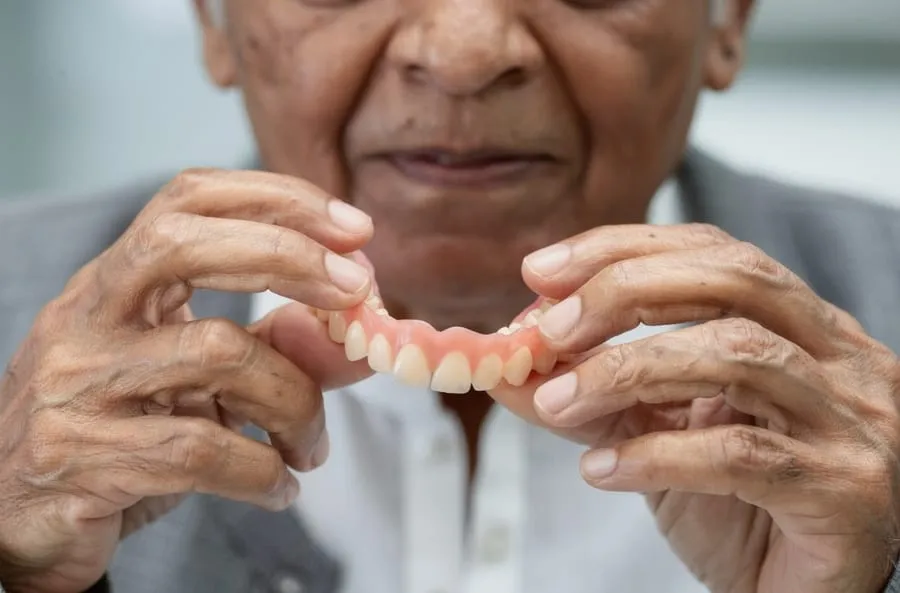
According to Dr. Saurabh Shrivastava, MDS Prosthodontist: "Digestion starts in the mouth — not in the stomach. When a patient has missing teeth or painful cavities and avoids chewing on one side, their stomach receives larger, poorly broken-down food fragments with every meal. Over months and years, this shows up as bloating, indigestion, and a feeling of heaviness after eating that no gastric medicine fully resolves."
Gum Disease and Systemic Inflammation
Chronic gum disease (periodontitis) is essentially a low-grade infection that does not stay confined to the mouth. The bacteria and the inflammatory chemicals they release reach the bloodstream and the gut. Research links untreated gum disease with poorer diabetic control, higher cardiovascular risk, and disruption of the gut microbiome. Treating bleeding gums is therefore not a cosmetic decision — it is a basic step in protecting overall health.
"The gut microbiome research of the last decade has made it impossible to treat the mouth as a separate system. Chronic periodontitis is a sustained bacterial infection with systemic reach — it affects blood sugar control, cardiovascular markers, and gut flora. A six-monthly dental check-up is no longer just a dental recommendation; it is a health maintenance step."
Dr. Saurabh Shrivastava · BDS, MDS Prosthodontist, DCI A-04860
Bad Breath, Acid, and Reflux
Persistent bad breath that does not improve with brushing can come from gum infection, decayed teeth, or — sometimes — gastric reflux washing acid into the mouth. Stomach acid in the mouth softens enamel from the inside, causing erosion that the dentist can spot before the patient suspects there is a digestive issue at all. In such cases, dental and medical care work together.
- Inadequate chewing from missing teeth — missing posterior teeth reduce chewing surface area significantly. Food enters the oesophagus in larger pieces, increasing the burden on stomach acid and small intestine enzymes. Implants, bridges, or well-fitting dentures restore chewing efficiency close to normal.
- One-sided chewing from painful teeth — a single sensitive or decayed tooth causes patients to chew exclusively on the opposite side. The jaw muscles fatigue unevenly, and food on the avoided side is swallowed barely processed. Treating the painful tooth resolves the compensation pattern within days.
- Bacterial spread from gum disease — the bacteria responsible for periodontitis, including Porphyromonas gingivalis, have been found in the gut of patients with inflammatory bowel conditions. Treating gum disease reduces the bacterial load reaching the digestive tract.
- Acid reflux and enamel erosion — stomach acid washing into the mouth softens enamel from the palatal surfaces of upper teeth. The dentist spots this pattern before the patient suspects a digestive cause. Identifying it early allows joint dental and medical management.
- Reduced saliva from dental neglect — healthy saliva contains enzymes that begin starch digestion in the mouth. Chronic dehydration, certain medications, and mouth-breathing (sometimes a consequence of dental issues) reduce saliva flow and impair this first digestive step.
What You Can Do
Treat dental problems promptly, brush twice daily and floss once a day, drink plenty of water, chew slowly and on both sides, and book a six-monthly dental check-up. Where teeth are missing, restore them — implants, bridges, or well-fitting dentures all bring chewing efficiency back close to normal and remove the workaround your stomach has been doing.
According to Dr. Saurabh Shrivastava, MDS Prosthodontist: "I regularly see patients referred from physicians in Bhopal who have been investigated for digestive complaints without a clear cause. When we examine them, we find untreated gum disease, multiple missing teeth, or enamel erosion from acid reflux — conditions that were quietly affecting both their mouth and their gut for years. Treating the dental problem often improves the digestive symptoms in ways that medication alone did not."
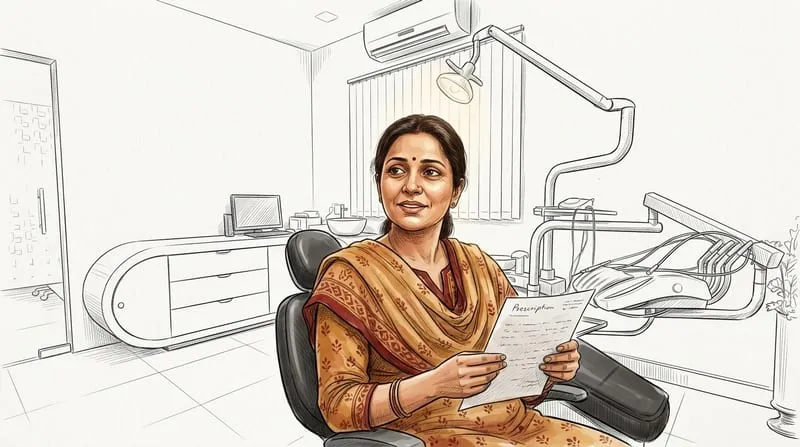
The clinical case and outcome are from Dr. Saurabh Shrivastava's practice.
Meera came in carrying a gastroenterologist's prescription and a look of mild frustration. She was 42, a homemaker from Govindpura, and had been investigated for bloating and indigestion for the past 8 months. An endoscopy had found mild gastritis. She had been on antacids, a probiotic, and a bland diet. Nothing had resolved it consistently. Her gastroenterologist had eventually suggested she see a dentist.
"He said check your teeth," she told me. "I thought that was strange. How can my teeth cause stomach problems?"
The examination answered that quickly. She had 2 missing lower molars on the left side — extracted 6 years ago and never replaced. The upper left premolar had a large cavity that she described as sensitive to sweet and cold for over a year; she had been avoiding chewing on that side entirely. There was generalised moderate gingivitis with bleeding on probing at 10 of 12 sites. The palatal surfaces of her upper front teeth showed early enamel erosion — a pattern consistent with occasional acid reflux, which she confirmed happened a few times a week.
I explained the connection in plain terms. "You have been chewing only on your right side for 6 years because there are no teeth on the left to chew with, and the upper premolar is painful. Every meal you eat, the food on the left side goes down barely chewed. Your stomach has been compensating for this the whole time. The gum disease adds a bacterial load your gut has to deal with on top of that."
Meera paused. "Nobody told me missing teeth could do that," she said quietly.
The treatment sequence was practical. Full-mouth scaling first — 35 minutes — to address the gum infection. The painful premolar cavity was a large Class II that required a composite restoration under rubber dam isolation. We placed fluoride varnish on the eroded palatal surfaces. For the missing lower molars, we discussed options: 2 implants, a bridge, or removable partial dentures. Meera chose implants as a long-term solution and we scheduled the first surgical appointment for the following month, beginning with a CBCT scan to assess the bone.
Within 3 weeks of the scaling and cavity filling, she reported that she was chewing on both sides for the first time in years. The bloating had reduced noticeably. "I didn't expect it to make such a fast difference," she said. Her dental health had been affecting her digestion far more directly than she had realised.
The implant-supported crowns for the 2 lower molars were placed over the following 5 months. At her 6-month check-up after crown delivery, all gum probing sites were within normal limits, both implants were stable, and she had returned to her gastroenterologist who had reduced her antacid prescription by half. The digestive symptoms had not disappeared entirely — the underlying gastritis was still being managed medically — but the dental contribution had been removed.
"My husband keeps telling everyone that his wife's stomach problem was solved by a dentist," she said at her next review, smiling. "I tell him it was only half solved. But it was the half nobody had thought to check."
BDS, MDS Prosthodontist · DCI A-04860 · Smile Gallery, Bhopal
| Follow-up | 6 months post-implant crown delivery |
| Gum disease | Resolved — all probing sites within normal limits |
| Missing molars | 2 implant-supported crowns placed and functional |
| Digestive symptoms | Bloating significantly reduced; antacid dose halved |
| Ongoing care | 6-monthly scaling + annual implant review |
Frequently Asked Questions
Can poor dental health really cause digestion problems?
Yes. Poor chewing from missing or painful teeth and chronic gum infection both contribute to digestive symptoms.
Are these issues treatable at Smile Gallery in Bhopal?
Yes. The Arera Colony clinic offers gum treatment, restorations, and tooth replacement options to restore chewing function.
How long does treatment for gum disease take?
Initial deep cleaning is usually completed in one to two visits. Follow-up reviews happen at three and six months to confirm gum health is restored.
What should I expect after gum treatment?
Mild gum tenderness and brief sensitivity to cold for a few days, which settle quickly. Bleeding usually reduces within two weeks.
How do I book an appointment at Smile Gallery, Arera Colony?
Call +91 9200700750 to schedule a dental and gum assessment.
Ready for a consultation?
Visit Smile Gallery Dental Wellness Centre, E-4/205, Main Rd 3, near Flower Market, E-4, Arera Colony, Bhopal.
Open Monday to Saturday 10am–2pm and 5–9pm.