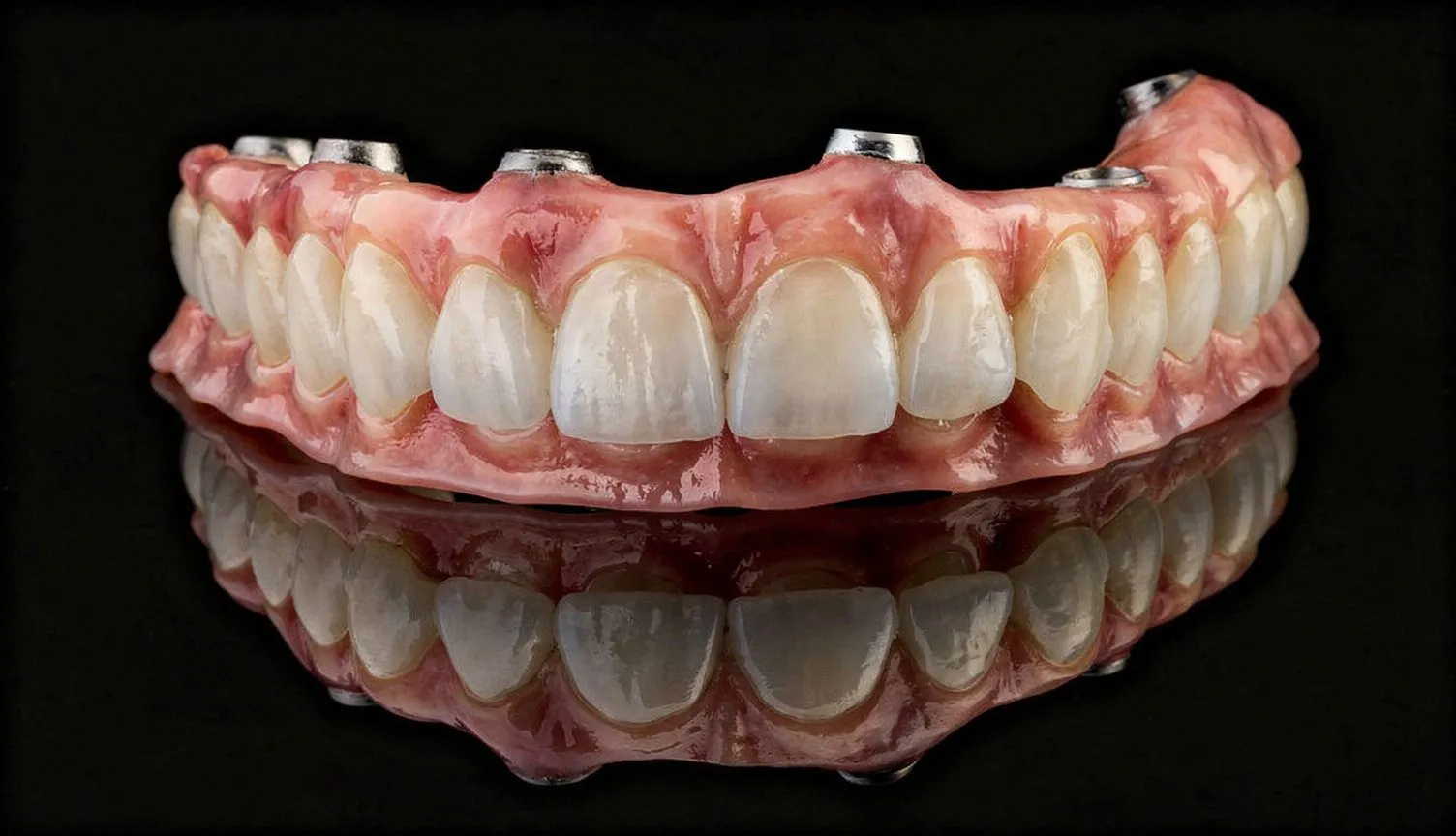
Dental implants have a 98% survival rate at 5 years, and many last 20 years or longer with proper care. Longevity depends on bone health, oral hygiene, regular check-ups, avoiding smoking, and managing conditions like diabetes that affect healing.
Medically reviewed by Dr. Saurabh Shrivastava, BDS MDS Prosthodontist, Certified Digital Smile Designer (DSD) (DCI: A-04860). Last updated: May 2026.
- What Determines How Long an Implant Lasts
- The Three Parts of an Implant — and How Each Ages
- Why Implants Last Longer than Bridges and Dentures
- What Patients Can Do to Extend Implant Life
- What Could Go Wrong — and What to Do
- Are Implants Really Forever?
- When an Implant Might Not Be Right
- Frequently Asked Questions
Dental implants have a 98% survival rate at 5 years, and many last 20 years or longer with appropriate care — longevity that depends on bone health at placement, daily oral hygiene around the implant, regular six-monthly check-ups, avoiding smoking, and managing systemic conditions such as diabetes that affect healing — an outcome Dr. Saurabh Shrivastava, BDS MDS Prosthodontist (DCI: A-04860), Certified Digital Smile Designer at Smile Gallery Dental Wellness Centre, Arera Colony, plans for digitally for patients from BHEL and across Bhopal. Choosing dental implants in Bhopal with a careful plan and quality materials is what turns a five-year survival statistic into a multi-decade result.
How Long Do Dental Implants Last — What Determines It
How long do dental implants last? In practice it comes down to three things — precise surgical placement, a well-designed crown, and daily maintenance with six-monthly check-ups. Get these right and a dental implant routinely lasts 20 years or more. A 2024 meta-analysis of long-term studies found roughly nine in ten implants (around 88–92%) were still functioning at the 20-year mark.
Three things matter most: surgical placement (position, angle, depth), the design of the final crown (load distribution, bite contacts), and ongoing maintenance (oral hygiene, six-monthly check-ups, no smoking). Get these right at every stage and an implant routinely serves for two decades or more. Compromise on any one and the lifespan shortens.
The Three Parts of an Implant — and How Each Ages
The titanium implant fixture, once integrated with bone, is generally stable for life — failures here are uncommon and usually relate to peri-implantitis (infection around the implant) or extreme overload. The abutment, the connector between implant and crown, can be replaced if needed without disturbing the implant. The crown, the visible top, may chip or wear over many years and can be replaced individually — much like replacing a worn-out shoe sole rather than the whole shoe.
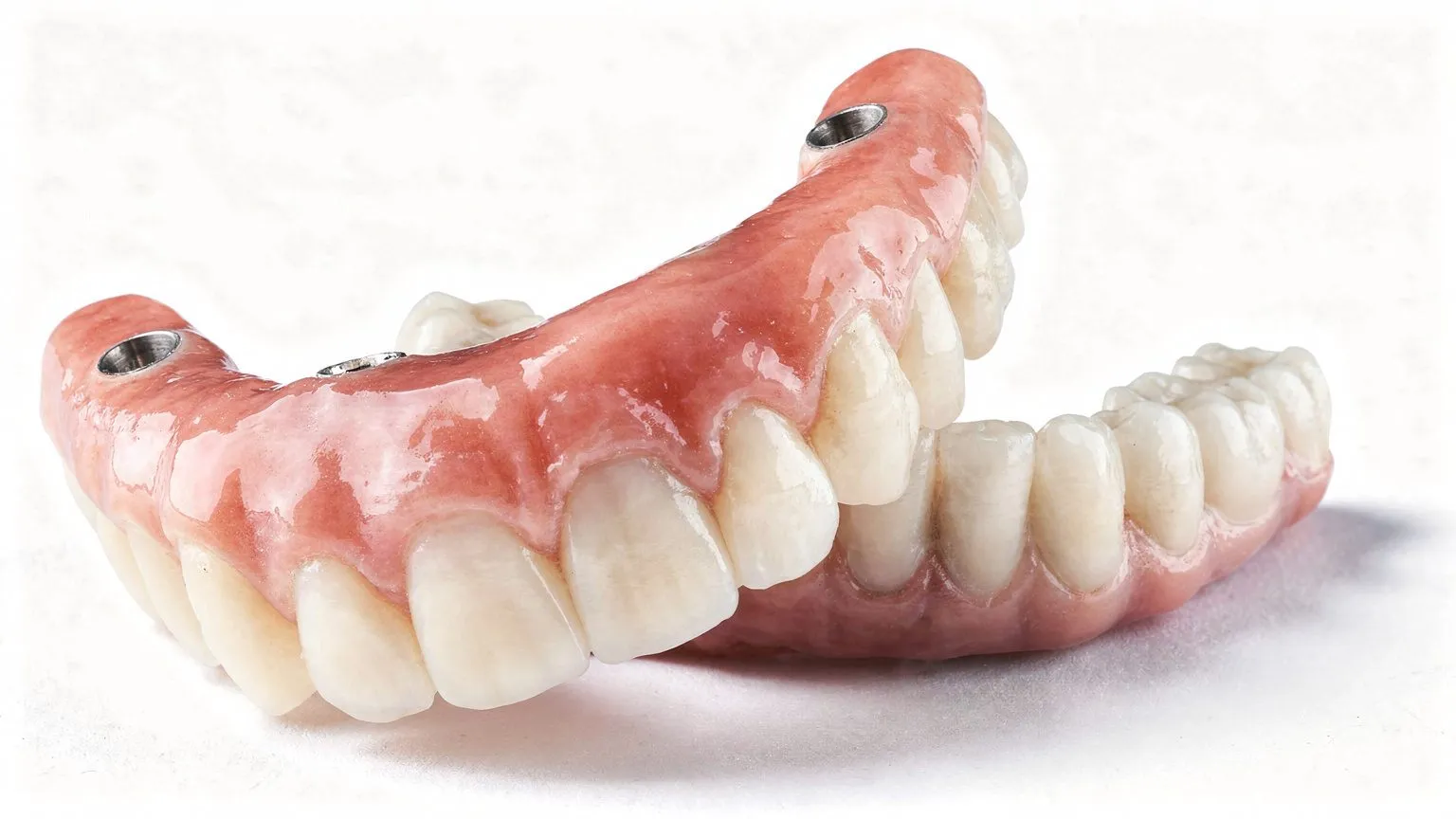
According to Dr. Saurabh Shrivastava, MDS Prosthodontist: "The titanium fixture, once it has fully integrated with the jaw bone, does not decay and does not need root canal treatment — the only component that ages like a natural tooth is the crown on top, which can be replaced independently without touching the implant. That is why a well-placed implant is genuinely a lifetime investment."
Why Implants Last Longer than Bridges and Dentures
A traditional bridge typically lasts 10 to 15 years and requires grinding down healthy adjacent teeth. Dentures need relining every few years and replacement every 5 to 8 years. Implants do not depend on adjacent teeth, do not slip during chewing, and the titanium fixture does not decay. The crown is the only routinely replaceable component.
"A bridge will last 10 to 15 years and costs you the enamel of two healthy adjacent teeth. An implant leaves those teeth untouched, does not slip during meals, and the titanium fixture can outlast everything else in the mouth. The question is not whether implants are worth it — it is whether the patient is ready to maintain them properly."
Dr. Saurabh Shrivastava · BDS, MDS Prosthodontist, DCI A-04860
What Patients Can Do to Extend Implant Life
Brush twice daily with a soft brush, paying special attention to the gum line around the implant. Use interdental brushes daily — they reach the spaces around an implant collar far better than floss. Attend a professional cleaning every six months. Quit smoking; it is the single biggest modifiable risk factor for late implant failure. Manage diabetes well — uncontrolled blood sugar slows healing and increases infection risk. Avoid using teeth as tools (opening packets, biting fingernails).
According to Dr. Saurabh Shrivastava, MDS Prosthodontist: "Peri-implantitis — infection in the gum and bone around an implant — is the leading cause of late implant failure, but it is both preventable and treatable when caught early. The patients I see with implants that are still functioning perfectly at 15 to 20 years are the ones who never missed a six-monthly check-up."
What Could Go Wrong — and What to Do
Peri-implantitis (gum infection around the implant) is the most common late issue and is treatable when caught early. Mechanical complications — a loose abutment screw, a chipped crown — are usually addressed in a single visit. Bone loss around an implant is monitored with X-rays at six-monthly check-ups. Material quality matters: implants from established manufacturers have decades of long-term data behind them.
- Surgical placement precision — the angle, depth, and position of the implant fixture determines how forces from chewing are distributed. An off-axis implant placed without a CBCT-guided plan wears the crown unevenly and stresses the bone at the collar, shortening lifespan by years.
- Crown design and bite contacts — a crown that takes too much force in the wrong direction is the hidden cause of many implant complications. Digital planning ensures the final crown fits the bite correctly before it is ever placed in the mouth.
- Daily interdental cleaning around the implant — floss slides past the collar of an implant without cleaning the concave neck surface. Interdental brushes sized to fit reach that surface and prevent the plaque buildup that causes peri-implantitis.
- Not smoking — smoking is the single largest modifiable risk factor for implant failure. It reduces blood supply to the healing bone, impairs immune response, and significantly increases the risk of peri-implantitis at every stage of implant life.
- Six-monthly professional monitoring — bone levels around an implant are checked by X-ray at check-ups. A bone loss of 1 mm per year is a warning sign; left unaddressed, it progresses silently. Caught early, it is managed conservatively.
Are Implants Really Forever?
In short: the titanium fixture can last a lifetime, while the crown on top is refreshed once or twice over the years — so when patients ask how long do dental implants last, the honest answer is that a well-maintained implant can be a lifetime solution.
The honest answer: the titanium fixture, when well placed and well maintained, has the potential to serve for life. The crown sitting on top of it may need replacement once or twice over a lifetime — the same as a natural tooth crown. So yes, an implant tooth replacement can be a lifetime solution, with the understanding that the visible part may be refreshed at intervals.
When an Implant Might Not Be Right
Patients with uncontrolled diabetes, heavy smokers, those with active gum disease, those with limited bone height where bone grafting is not feasible, and those undergoing certain medical treatments may need a different option. The choice is made jointly during the consultation after a clinical exam and CBCT scan.
The clinical case and outcome are from Dr. Saurabh Shrivastava's practice.
Rajesh arrived at the clinic on a Tuesday in March, referred by a colleague who had received implant treatment 3 years earlier. He was 44, a senior engineer at BHEL Colony, and had been missing his upper right first molar for 6 years following a failed root canal at another clinic. He had been wearing a removable partial denture and hating every meal because of it.
"My colleague says his implant feels exactly like a tooth," Rajesh said. "I just want to eat normally again. But I need to understand — will this last? I don't want to go through this twice."
The CBCT scan showed adequate bone volume at the implant site — 11 mm of available height and 7 mm of width, sufficient for a standard-diameter implant without grafting. He was a non-smoker, his HbA1c was normal, and his remaining teeth were in good condition with no active gum disease. The digital implant plan placed the fixture at a precise axis that would allow a screw-retained crown — easily retrievable if ever the crown needed replacing.
I walked him through the timeline. "We place the implant today under local anaesthetic. You leave with a temporary prosthetic that lets you eat normally within a week. In 3 to 4 months, once the bone has integrated with the titanium, we fit the final crown. After that, your maintenance is exactly what I would ask of any patient — twice daily brushing, interdental brushes every evening, and a six-monthly check-up."
The placement went smoothly — 35 minutes from anaesthetic to suture. Rajesh was slightly surprised by how little he felt. At the 10-week mark, the implant had integrated well on the follow-up X-ray. We fitted the final zirconia crown in a single appointment, torqued the abutment screw to the correct specification, and checked the bite carefully with articulating paper.
"It feels like my own tooth," he said, biting down on a piece of gauze we use to test load. "I expected it to feel different somehow."
We reviewed the maintenance protocol in detail. Interdental brush size 0.7 mm for the implant collar, used every evening before the second brush of the day. Soft-bristled toothbrush, no hard pressure over the implant crown. Six-monthly check-up with a periapical X-ray at alternating visits to monitor bone levels. The dental implants longevity data from his implant manufacturer showed a 98% survival rate at 5 years in non-smoking patients with controlled systemic health — exactly his profile.
At 18 months post-placement, the implant was stable, bone levels unchanged from the day of placement, and the zirconia crown was unmarked. Rajesh had stopped using the partial denture permanently and had not thought about his tooth once between appointments — which is exactly the outcome a well-placed implant should produce.
"My wife wants one now," he said at the last check-up. "She says I chew on that side more than the other."
BDS, MDS Prosthodontist · DCI A-04860 · Smile Gallery, Bhopal
| Follow-up | 18 months post-placement |
| Osseointegration | Confirmed at 10 weeks, no mobility |
| Bone levels | Unchanged from day of placement at all check-ups |
| Crown | Zirconia intact, no chips or bite adjustments needed |
| Ongoing care | 6-monthly check-up with alternating periapical X-ray |
Frequently Asked Questions
How long do implants typically last?
Implants have a 98% survival rate at 5 years and frequently last 20 years or more with good care.
Are implants available at Smile Gallery in Bhopal?
Yes. Smile Gallery, in Arera Colony, offers single-tooth, multi-tooth, and full-arch implants under Dr. Saurabh Shrivastava (DCI: A-04860), Certified Digital Smile Designer.
How long does the implant treatment take?
Three to six months from placement to final crown for most cases.
What should I expect during long-term maintenance?
Twice-daily brushing, daily interdental cleaning, and a six-monthly check-up to monitor the gum seal and crown.
How do I book an implant consultation at Smile Gallery, Arera Colony?
Call +91 9200700750.
Ready for a consultation?
Visit Smile Gallery Dental Wellness Centre, E-4/205, Main Rd 3, near Flower Market, E-4, Arera Colony, Bhopal.
Open Monday to Saturday 10am–2pm and 5–9pm.