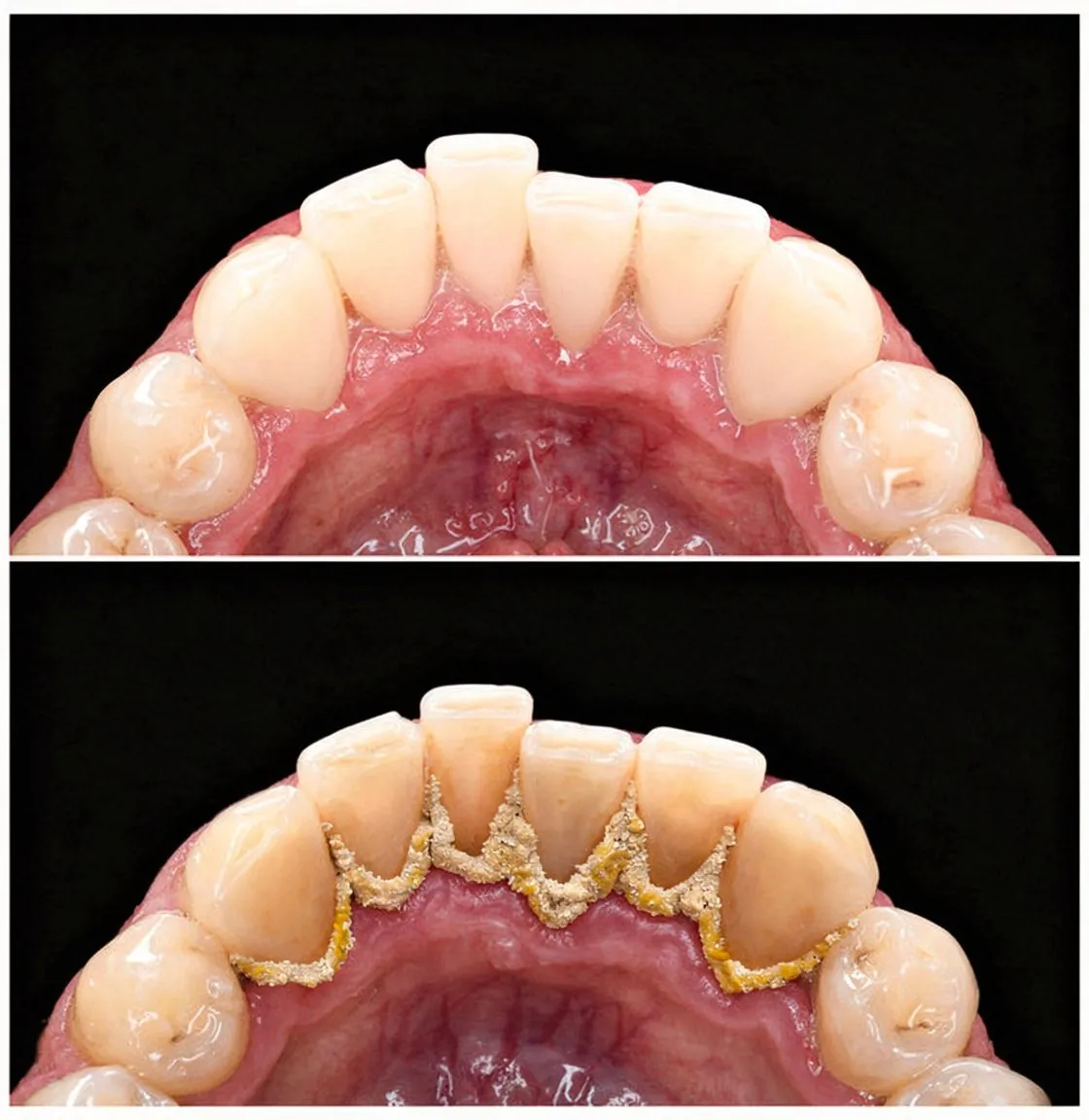
Recent innovations in plaque and tartar treatment include guided biofilm therapy, ultrasonic and air-polishing systems, diode-laser bacterial decontamination, and electric or sonic toothbrushes paired with smart apps. Together they make professional cleaning more comfortable and home care more effective.
Medically reviewed by Dr. Saurabh Shrivastava, BDS MDS Prosthodontist, Certified Digital Smile Designer (DSD) (DCI: A-04860). Last updated: May 2026.
Recent innovations against plaque and tartar — guided biofilm therapy in clinic, ultrasonic and air-polishing devices, diode-laser bacterial decontamination, and smart electric or sonic toothbrushes for home use — have together made professional teeth cleaning for routine cleaning more comfortable and home maintenance more effective. Dr. Saurabh Shrivastava, BDS MDS Prosthodontist (DCI: A-04860) at Smile Gallery Dental Wellness Centre, Arera Colony, applies these tools alongside traditional scaling for patients from Awadhpuri and across Bhopal. Catching plaque and tartar before they cause infection is far simpler than treating the cavities or root canal cases (which have a 95% success rate over 10 years) that follow neglected hygiene.
Guided Biofilm Therapy: Plaque and Tartar Treatment in Clinic
Guided biofilm therapy uses a specialised disclosing solution to reveal exactly where plaque is hiding, then removes it gently with warm water, fine air-polishing powder, and ultrasonic instruments calibrated for minimal sensitivity. The result is a thorough, comfortable cleaning that targets the actual problem area instead of scrubbing every surface uniformly. Patients with sensitive gums often find this approach far easier than older techniques.
Ultrasonic Scaling and Air Polishing
Modern ultrasonic scalers vibrate at fine frequencies that break up tartar at the gum line without rough mechanical scraping. Air-polishing systems then remove residual stain and biofilm using a fine spray of water, air, and erythritol or glycine powder — all gentle on enamel and exposed dentin. Together they have largely replaced the heavy hand scaling of an earlier generation.
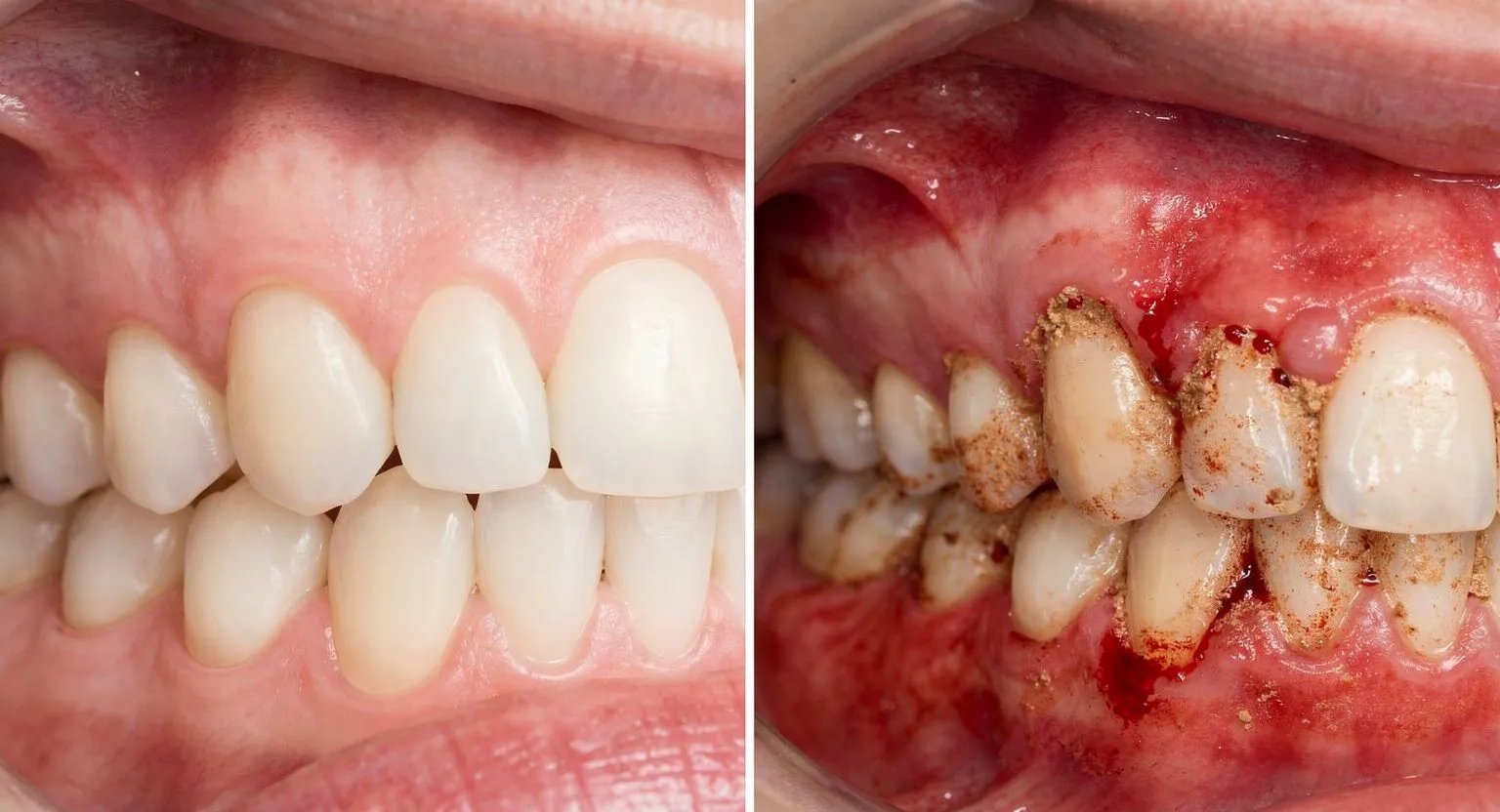
According to Dr. Saurabh Shrivastava, MDS Prosthodontist: "Tartar cannot be removed by brushing — once plaque mineralises into calculus, typically within 48 hours on unbrushed surfaces, only a professional instrument can remove it. The innovation in guided biofilm therapy is that we first reveal exactly where the biofilm is hiding, then remove it precisely, rather than cleaning every surface uniformly regardless of need."
Laser-Assisted Decontamination
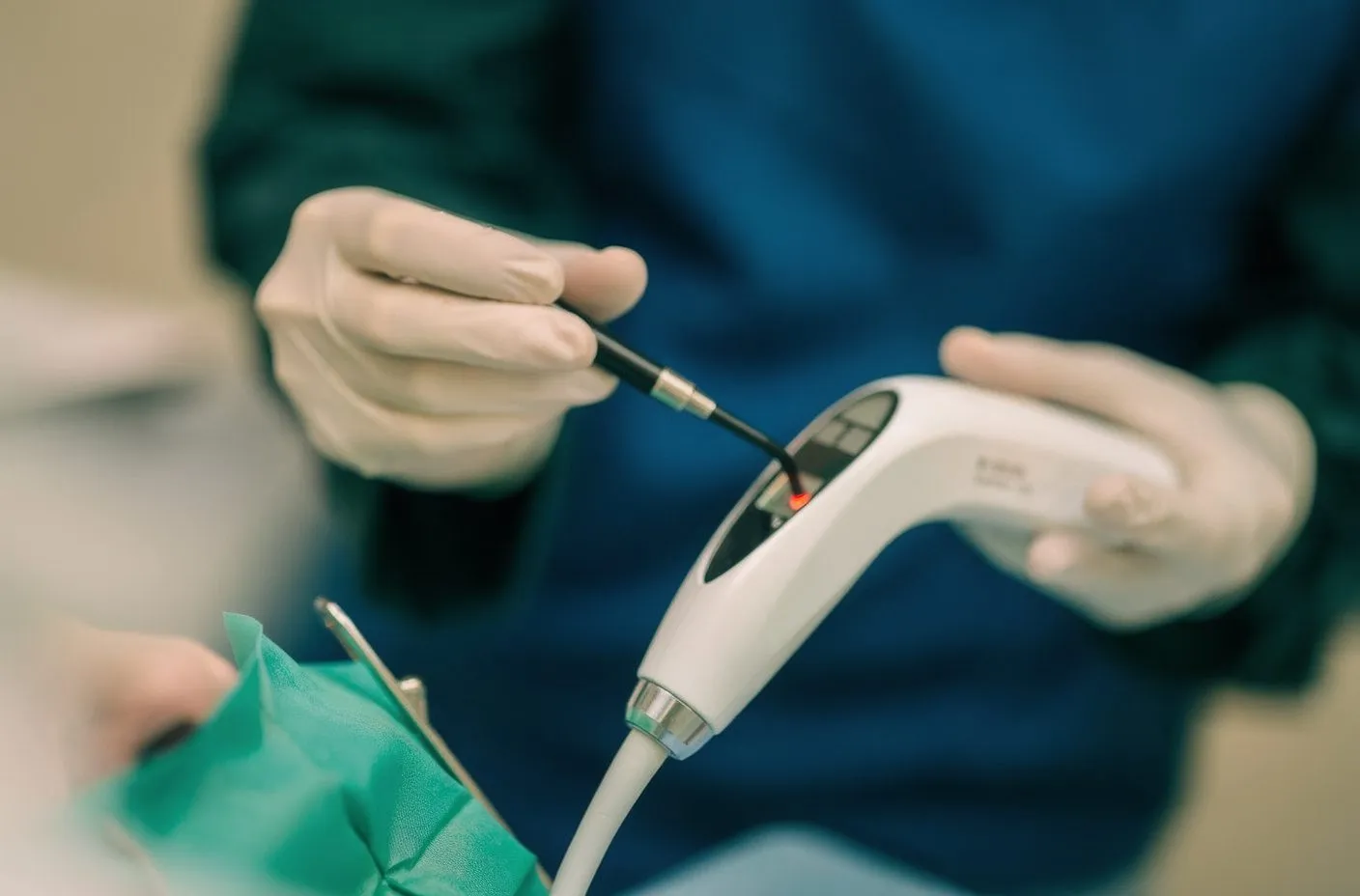
Diode lasers are used in selected cases to disinfect periodontal pockets after cleaning. The laser energy targets the bacteria within the pocket while leaving healthy gum tissue largely undisturbed. For patients with persistent pockets despite good home care, this adjunct can help re-establish the seal between gum and tooth.
"None of the innovations in professional cleaning change the fundamental equation: brush twice, clean between teeth daily, and come in every six months. What they change is the experience — visits are more comfortable, problem areas are identified precisely, and the result lasts longer when patients are shown exactly where their home care is missing."
Dr. Saurabh Shrivastava · BDS, MDS Prosthodontist, DCI A-04860
Smart Electric and Sonic Toothbrushes
Sonic and oscillating-rotating electric brushes outperform manual brushing for plaque removal in most studies. Newer models pair with phone apps that track coverage, detect over-pressure, and gently nudge brushing duration to two minutes. The technique still matters, but the equipment helps.
- Guided biofilm therapy finds what brushing misses — a disclosing solution reveals the exact location of biofilm before any instrument is used, so the cleaning is targeted rather than uniform. Patients can see the problem areas themselves, which directly improves home care between visits.
- Ultrasonic scalers break up tartar, not enamel — the vibration frequency targets calculus at the gum line specifically. Enamel is not damaged by the scaler; the concern about cleaning damaging teeth comes from older, aggressive hand-scaling technique.
- Air polishing replaces abrasive paste for most patients — a fine spray of water, air, and erythritol or glycine powder removes stain and residual biofilm gently. It is particularly effective around implants and orthodontic brackets where traditional polishing is difficult.
- Diode laser is used selectively, not routinely — laser-assisted decontamination of periodontal pockets is reserved for cases with persistent pockets after standard scaling, not every cleaning appointment. It is an adjunct, not a replacement.
- Smart toothbrush data supplements professional assessment — newer electric brush apps show which teeth zones are under-cleaned over time. Sharing this data at a check-up helps the clinician give targeted home-care advice rather than generic reminders.
- The six-monthly schedule still holds — no home device removes calculus once it has formed. Professional cleaning every six months remains the baseline, regardless of which tools the patient uses at home.
Interdental Cleaning Tools That Actually Get Used
The ideal interdental tool is the one a patient will use daily. Floss works for tight contacts. Interdental brushes (in graded sizes) reach larger gaps and are far easier to use under bridges, around implants, and between teeth with gum recession. Water flossers complement — but do not replace — these tools, especially for those in orthodontic treatment.
What This Means for Your Six-Monthly Visit
None of these innovations replaces the basic schedule: brush twice a day, clean between teeth daily, and a professional cleaning every six months. What they change is the experience — visits are more comfortable, problems are spotted earlier, and home care between visits is more effective. The combined effect, sustained over years, is fewer fillings and far fewer emergencies.
According to Dr. Saurabh Shrivastava, MDS Prosthodontist: "The patients who benefit most from modern ultrasonic and air-polishing technology are those who have been avoiding cleaning appointments because of sensitivity during older hand-scaling sessions. The newer equipment is significantly more comfortable — I see many patients who come in braced for discomfort and are visibly surprised when the visit is over."
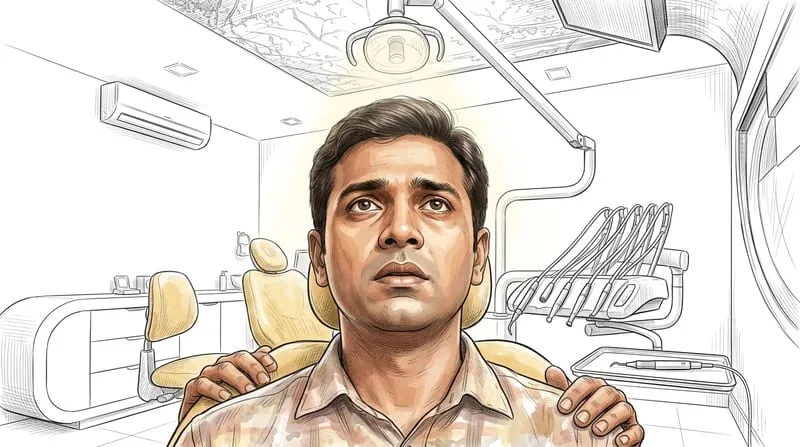
The clinical case and outcome are from Dr. Saurabh Shrivastava's practice.
Manish came in for a cleaning in January, a bank manager from Habibganj, 38 years old, who had not had a professional cleaning in 4 years. He booked only after his wife insisted, and he made his reluctance clear within the first minute.
"The last time I had a cleaning it was painful and my teeth ached for a week," he said. "The dentist scraped hard with metal instruments and I could feel every tooth being vibrated. I have been avoiding it since."
His clinical picture reflected the gap. Heavy subgingival calculus on the lower anteriors and upper molars, staining across the labial surfaces of the upper front teeth from regular chai consumption, and generalised marginal gingivitis with bleeding on probing at 8 of 12 sites. No cavities. The gums were red and puffy but the underlying bone was unaffected — this was reversible plaque and tartar treatment territory, not periodontitis.
I applied the biofilm disclosing solution first and showed him the result on the intra-oral camera: fluorescent pink staining at the gum line of every posterior tooth and between the lower front teeth. "That is the biofilm your brush is missing. I am going to start with the ultrasonic scaler — it vibrates at a frequency that breaks up the calculus without the scraping pressure you remember. Then I will use the air-polishing spray to remove the tea stain. If you feel anything uncomfortable, raise your left hand."
The full-mouth session took 38 minutes. He raised his hand once — during the lower anterior region where the calculus was thickest — and I adjusted the scaler tip angle. The air-polishing phase lifted the stain from the upper front teeth visibly in about 6 minutes.
"That was nothing like I expected," he said afterward, running his tongue across the lower teeth. "My teeth feel smooth. I can actually feel the difference."
At his follow-up 3 weeks later, gum bleeding had resolved at 7 of 8 sites. He had switched to an electric toothbrush and was using it for the full 2 minutes. The remaining site resolved after targeted interdental brushing coaching. He booked his next cleaning before leaving.
At his 6-month check-up, calculus accumulation was minimal — a fraction of what had been present in January — and the staining was light enough to remove with the air-polishing alone, without the ultrasonic scaler on the anterior teeth.
BDS, MDS Prosthodontist · DCI A-04860 · Smile Gallery, Bhopal
| Follow-up | 6 months |
| Gum bleeding | Resolved at 7 of 8 sites by week 3; all sites clear by week 6 |
| Calculus at 6 months | Minimal — anterior region managed with air polishing only |
| Stain removal | Chai staining cleared from upper anteriors at initial session |
| Ongoing care | 6-monthly cleaning — patient now self-scheduling |
Frequently Asked Questions
What does a modern professional cleaning involve?
Plaque disclosing, ultrasonic scaling, air polishing, and where indicated laser decontamination — all within a comfortable 30 to 45 minute visit.
Are these technologies available at Smile Gallery in Bhopal?
Yes. Smile Gallery, in Arera Colony, uses ultrasonic scaling and air polishing routinely, with diode-laser support where indicated.
How long does a cleaning session take?
30 to 45 minutes for a routine cleaning. Deeper cleanings for advanced gum disease are spread across one to two visits.
What should I expect after a modern cleaning?
Smoother teeth, brighter shade where staining has been removed, and mild gum tenderness for a day if there has been long-standing tartar.
How do I book a cleaning at Smile Gallery, Arera Colony?
Call +91 9200700750.
Ready for a consultation?
Visit Smile Gallery Dental Wellness Centre, E-4/205, Main Rd 3, near Flower Market, E-4, Arera Colony, Bhopal.
Open Monday to Saturday 10am–2pm and 5–9pm.