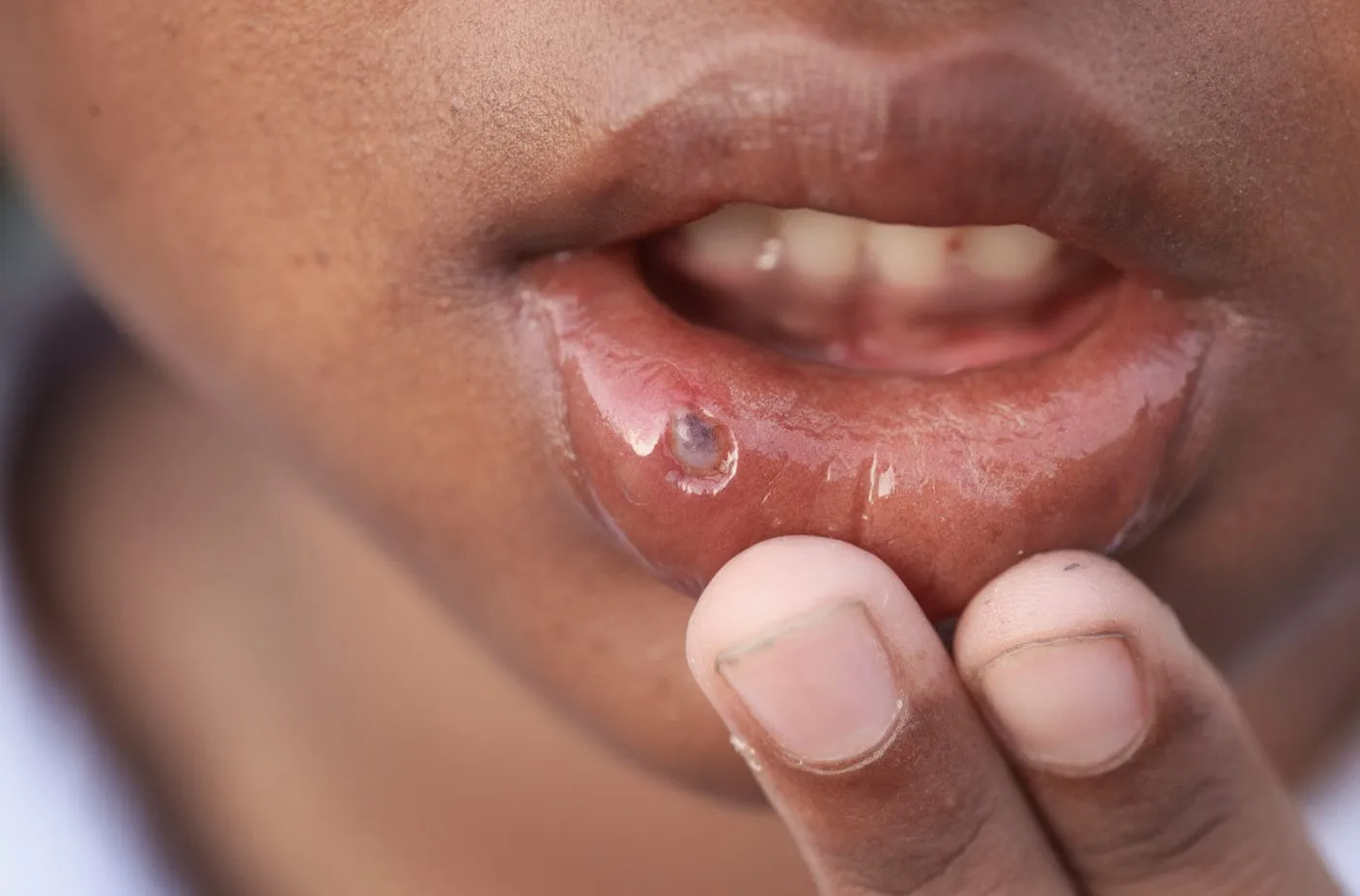
Mouth ulcers usually heal on their own in 7-14 days. To get relief: rinse with warm salt water, avoid spicy or acidic foods, apply a topical numbing gel, address vitamin and iron deficiencies, manage stress, and see a dentist for any ulcer lasting more than two weeks.
Medically reviewed by Dr. Kirti Shrivastava, BDS MDS, PhD Prosthodontist (DCI: A-01281). Last updated: May 2026.
Mouth ulcers typically heal on their own within 7 to 14 days, and relief comes from a few simple steps: warm salt water rinses, avoiding spicy or acidic foods, applying a topical numbing gel, addressing nutritional deficiencies, managing stress, and seeing a dentist for any ulcer lasting more than two weeks. Dr. Saurabh Shrivastava, BDS MDS Prosthodontist (DCI: A-04860) at Smile Gallery Dental Wellness Centre, Arera Colony, evaluates persistent ulcers as part of routine bad breath treatment in Bhopal for patients from Hoshangabad Road and surrounding areas. When an ulcer turns out to be linked to a sharp tooth or filling, the underlying cause is treated easily; even where root canal therapy is needed for a related infection, the procedure has a 95% success rate over 10 years.
Mouth Ulcers Treatment: What It Is and When You Need It
Mouth ulcers are small, painful breaks in the lining of the mouth — on the inside of the cheek, the underside of the tongue, the soft palate, or the inner lip. They are not usually contagious and are different from cold sores, which appear on the outside of the lips. Most are minor, less than 1 cm across, and heal without scarring.
Common Causes
Common triggers include accidental biting, a sharp tooth or filling, ill-fitting dentures or braces, stress and fatigue, hormonal changes around menstruation, food sensitivities (citrus, tomatoes, pineapple), nutritional deficiencies (vitamin B12, iron, folate), and certain medications. Some people are simply prone to recurrent aphthous ulcers without an obvious trigger.
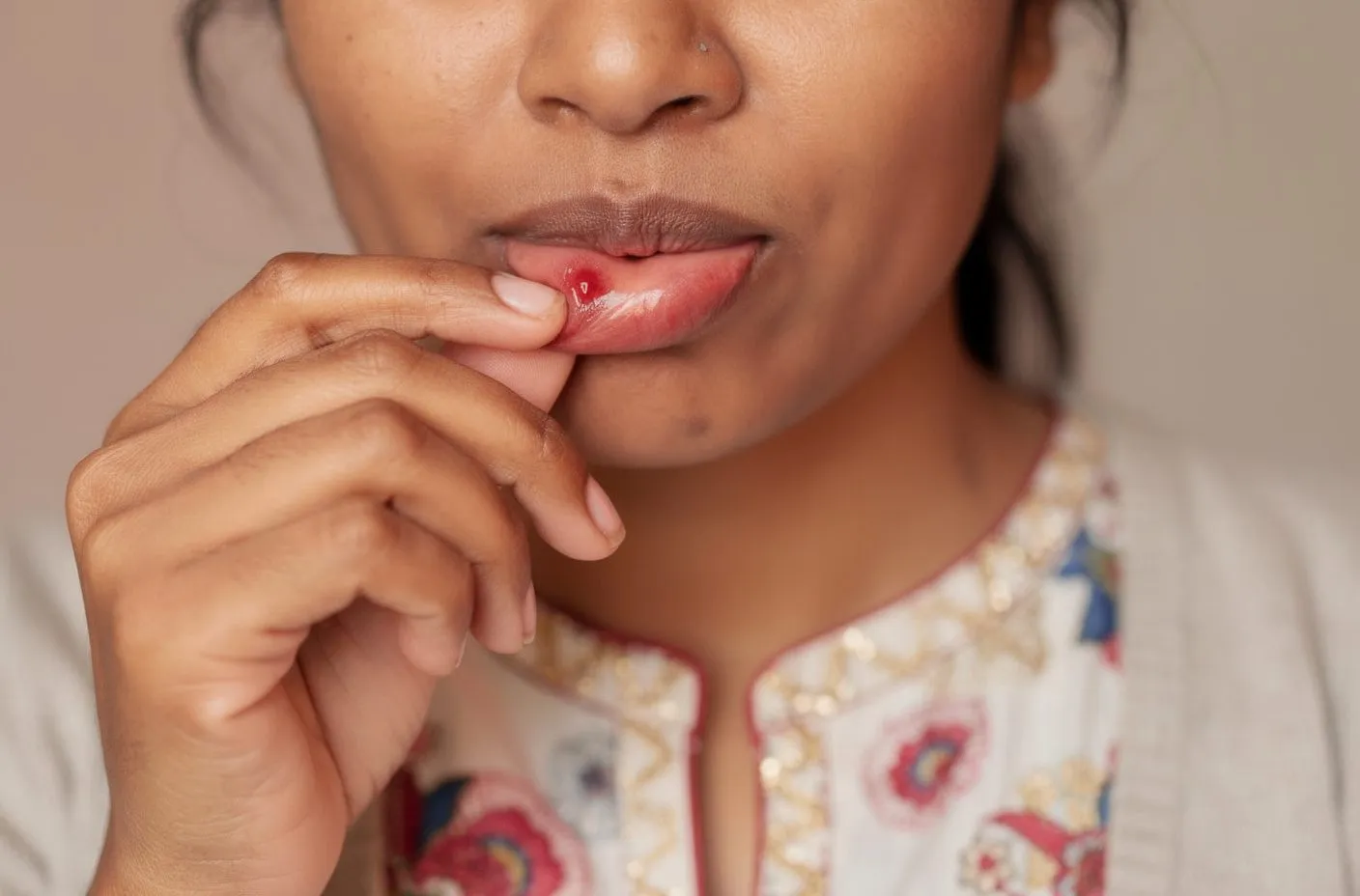
According to Dr. Kirti Shrivastava, MDS, PhD Prosthodontist: "Most mouth ulcers heal in 7 to 14 days without intervention, but the ones that concern me clinically are those that persist beyond two weeks without showing signs of shrinking — that timeline is the threshold for a formal examination, because a small subset of persistent oral lesions can indicate something that needs tissue assessment, not just topical management."
Home Remedies That Help
Rinse with warm salt water (half a teaspoon of salt in a cup of warm water) two to three times a day to keep the area clean and reduce inflammation. Apply a topical numbing gel before meals so eating is comfortable. Avoid spicy, acidic, or very hot foods until the ulcer heals. A soft-bristled brush prevents further trauma. Diluted honey or coconut oil applied locally is gentle and soothing. Avoid sodium lauryl sulphate-containing toothpaste if ulcers are recurrent.
"A mouth ulcer that heals and does not return is a nuisance. One that returns monthly for years, or one that has not healed in three weeks, is a clinical question — and answering it is always simpler than the patient fears. Most of the time the answer is a blood test and a dietary change, not a complicated procedure."
Dr. Kirti Shrivastava · BDS, MDS, PhD Prosthodontist, IPS-OL2283
Nutritional Support
Recurrent ulcers can point to a deficiency. A simple blood test can check vitamin B12, iron, folate, and zinc levels. Supplementation under guidance, plus a varied diet that includes leafy greens, lentils, eggs, dairy, and fortified foods, often reduces the frequency of recurrence noticeably over a few months.
According to Dr. Kirti Shrivastava, MDS, PhD Prosthodontist: "Recurrent aphthous ulcers — the type that keeps coming back monthly without an obvious trigger — frequently trace back to nutritional gaps, particularly vitamin B12, iron, or folate deficiency. A simple blood panel often explains years of recurrent ulcers that no topical gel has been able to prevent, and targeted supplementation under guidance reduces both frequency and severity noticeably within a few months."
When to See a Dentist
Book an appointment if an ulcer lasts more than two weeks, is unusually large, recurs frequently, is accompanied by fever or swollen lymph nodes, or appears alongside a sharp tooth or rough filling. Any ulcer that does not heal in three weeks needs evaluation, as a small proportion of long-lasting lesions can indicate something more serious.
- Warm salt water rinses — Half a teaspoon of salt in a cup of warm water, rinsed two to three times daily, keeps the ulcer surface clean, reduces inflammation, and creates an environment less hospitable to the bacteria that slow healing.
- Topical numbing gel before meals — Applying a lidocaine or benzocaine gel directly to the ulcer before eating reduces pain enough to maintain normal nutrition, which itself supports faster healing.
- Avoid the trigger foods — Citrus, tomatoes, pineapple, vinegar-based foods, and very spicy or hot dishes all irritate ulcer tissue directly. Avoiding them during an active ulcer is not restriction — it is simply not re-injuring a healing wound.
- Switch toothpaste if ulcers are recurrent — Sodium lauryl sulphate, the foaming agent in many toothpastes, is a known trigger for aphthous ulcers in susceptible individuals. An SLS-free toothpaste can reduce recurrence frequency noticeably.
- Address nutritional gaps — Vitamin B12, iron, folate, and zinc deficiencies are common drivers of recurrent ulcers. A blood test confirms whether supplementation is needed; improvement is usually visible within 6 to 8 weeks of correcting a deficiency.
- See a dentist for sharp edges — An ulcer on the side of the tongue or inner cheek that keeps recurring in the same spot often has a cause right next to it: a broken filling, a sharp tooth cusp, or an ill-fitting denture. Smoothing the cause ends the recurrence immediately.
How a Dental Visit Helps
The dentist examines the ulcer, checks for any sharp edges on teeth or restorations that may be causing trauma, smooths or repairs any rough surface, and prescribes appropriate medication. For ulcers linked to braces, the bracket or wire is adjusted. For ulcers linked to dentures, the fit is corrected. Recurrent ulcers may be referred for blood tests or further evaluation.
What to Avoid
Do not use over-the-counter steroid creams without dental guidance. Avoid alcohol-based mouthwashes during an active ulcer — they sting and slow healing. Skip very acidic drinks and aerated beverages until healing is complete. Tobacco use slows healing and is best avoided through any flare.

The clinical case and outcome are from Dr. Kirti Shrivastava's practice.
Meena had been getting mouth ulcers every few weeks for almost 2 years. She was 32, a Hindi teacher at a school in Govindpura, and had tried every home remedy she knew — honey, turmeric, salt water — plus a succession of topical gels from the pharmacy. Each ulcer healed in about 10 days. Then, reliably, another appeared somewhere else in her mouth.
"My mother says it is because I eat too many tomatoes," she said with a tired smile. "But I have cut them out completely for 3 months and nothing changed. I am teaching all day — talking is painful. I cannot keep doing this."
The examination showed an active aphthous ulcer, about 8 mm across, on the inner surface of the lower lip — classic minor aphthous morphology, well-defined yellow-grey base with an erythematous halo. There were no sharp tooth edges, no rough restorations, no dentures. The teeth were well-maintained. This was not a traumatic ulcer. The frequency and pattern — recurring every 3 to 4 weeks, healing and returning — pointed toward a systemic trigger.
I referred her for a blood panel: full blood count, serum vitamin B12, serum ferritin, and folate. "These ulcers are real, and they are being caused by something specific," I told her. "The pattern — recurring, no obvious local cause — means we need to look at what is happening systemically. Nutritional deficiencies are the most common driver of exactly this pattern."
The results came back within 5 days. Serum B12: 148 pg/mL — below the lower limit of normal. Serum ferritin: 9 ng/mL — low. She was vegetarian and had not been taking any supplements. The combination of B12 and iron deficiency in a vegetarian teacher whose diet had narrowed under a busy schedule — a very familiar picture.
I prescribed a B12 supplement and referred her to her physician for iron supplementation, given the ferritin level. For immediate mouth ulcers relief, I prescribed a short course of triamcinolone acetonide paste for the active lesion and a short-term chlorhexidine rinse to prevent secondary infection. I also advised switching to an SLS-free toothpaste.
At her follow-up 6 weeks later, the active ulcer had healed by day 7 — faster than usual, she noted. More importantly, she had not had a new ulcer in 5 weeks — already unusual for her pattern. "I had almost forgotten what it felt like to talk without thinking about my mouth," she said.
At 3 months, her B12 had risen to 312 pg/mL and her ferritin to 22 ng/mL. She had had one minor ulcer in that period — smaller, healed in 6 days. At 6 months, she reported no ulcers at all for 8 weeks running. "Two years of this," she said at that visit. "It was just a blood test."
BDS, MDS, PhD Prosthodontist · DCI A-01281 · Smile Gallery, Bhopal
| Follow-up | 6 months post-diagnosis |
| Ulcer frequency | Reduced from every 3–4 weeks to nil recurrence by month 6 |
| Vitamin B12 | Corrected from 148 to 312 pg/mL over 3 months |
| Iron (ferritin) | Corrected from 9 to 22 ng/mL; ongoing supplementation |
| Ongoing care | 6-monthly dental review + annual blood panel to monitor levels |
Frequently Asked Questions
How long do mouth ulcers usually take to heal?
Most minor ulcers heal in 7 to 14 days. Larger or recurrent ulcers may take longer and benefit from a dental review.
Is ulcer evaluation available at Smile Gallery in Bhopal?
Yes. Smile Gallery, in Arera Colony, evaluates and treats recurrent or persistent mouth ulcers under Dr. Saurabh Shrivastava (DCI: A-04860).
How long does an ulcer review appointment take?
Around 20 to 30 minutes, including exam, photographs, and any minor adjustments to teeth or restorations causing trauma.
What should I expect after the visit?
A clear plan of home care, prescribed topical medication where appropriate, and a follow-up timeline if the ulcer is not resolving.
How do I book an appointment at Smile Gallery, Arera Colony?
Call +91 9200700750.
Ready for a consultation?
Visit Smile Gallery Dental Wellness Centre, E-4/205, Main Rd 3, near Flower Market, E-4, Arera Colony, Bhopal.
Open Monday to Saturday 10am–2pm and 5–9pm.