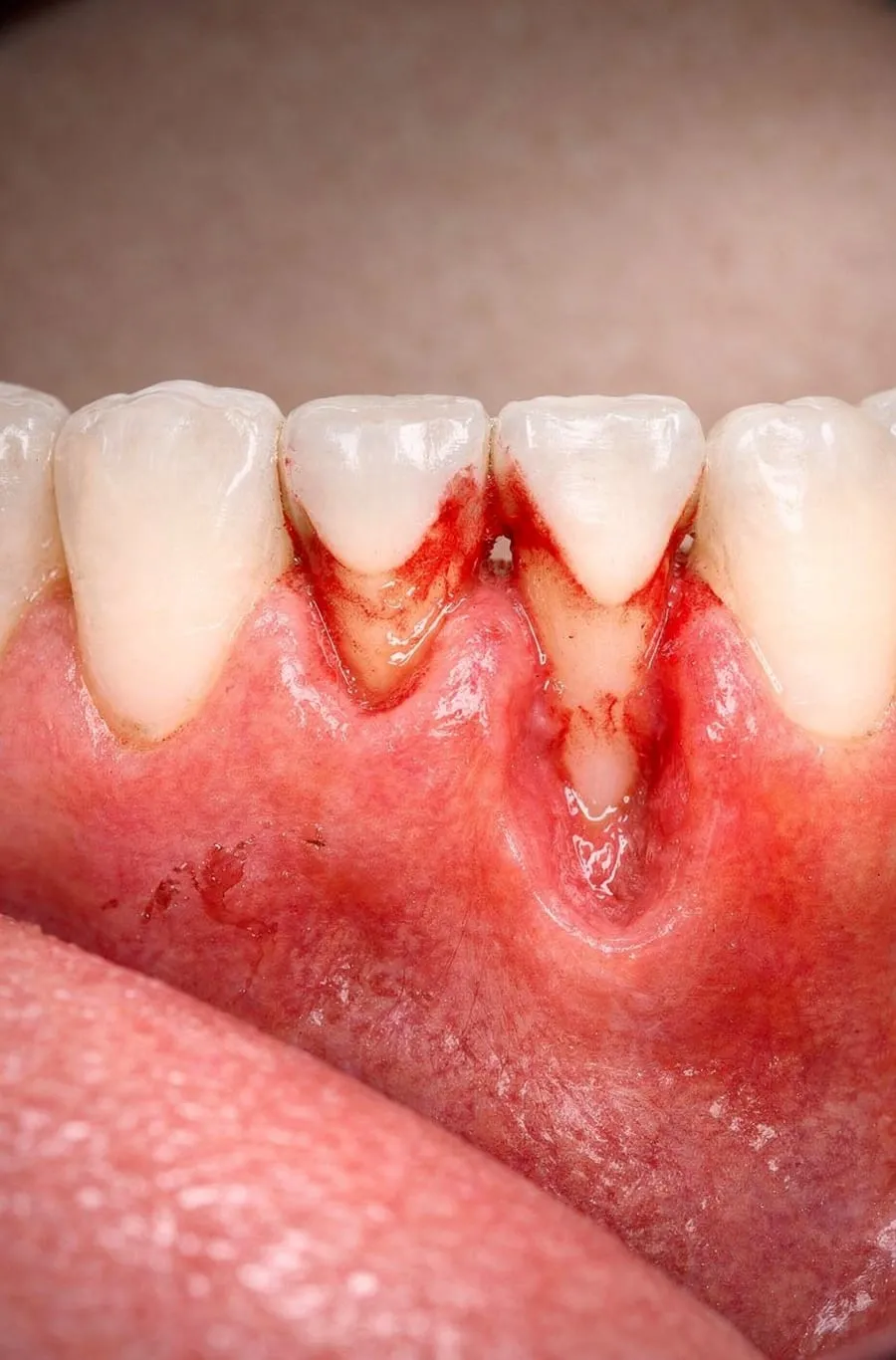
Midlife hormonal shifts during perimenopause and menopause affect oral health — dry mouth, gum sensitivity, burning mouth, taste changes, and faster bone loss are common. Manage with a soft brush, fluoride toothpaste, hydration, six-monthly cleanings, and prompt treatment of any sensitivity or bleeding.
Medically reviewed by Dr. Kirti Shrivastava, BDS MDS, PhD Prosthodontist (DCI: A-01281). Last updated: May 2026.
Midlife hormonal shifts during perimenopause and menopause affect oral health in real, measurable ways — dry mouth, gum sensitivity, burning mouth sensation, altered taste, increased risk of cavities, and accelerated bone loss in the jaw — and managing these changes well calls for a soft brush, fluoride toothpaste, regular hydration, six-monthly cleanings, and prompt treatment of any sensitivity or bleeding. Dr. Saurabh Shrivastava, BDS MDS Prosthodontist (DCI: A-04860), Certified Digital Smile Designer at Smile Gallery Dental Wellness Centre, Arera Colony, has shared this approach with midlife women patients from Shahpura and across Bhopal, including at the Dental Wellness Workshop conducted at IMSCON 2026, the All India Menopause Society national conference. Reliable professional teeth cleaning outcomes — root canal therapy at a 95% success rate over 10 years — remain just as predictable in midlife when oral changes are addressed proactively.
How Hormones Influence the Mouth
Oestrogen and progesterone affect the gum tissue, the salivary glands, the jawbone, and the way the mouth perceives touch and taste. As levels shift through perimenopause and after menopause, gum tissue becomes more sensitive, saliva flow decreases, the bone of the jaw remodels faster, and the soft tissues sometimes feel oddly dry or burning.
Dry Mouth (Xerostomia)
Reduced saliva flow is one of the most common oral changes in midlife. Saliva normally rinses food particles, neutralises acid, and supplies minerals that strengthen enamel — so a drier mouth is more vulnerable to cavities and gum inflammation. Sip water through the day, avoid alcohol-based mouthwashes, and chew sugar-free gum to stimulate flow.


According to Dr. Kirti Shrivastava, MDS, PhD Prosthodontist: "Oestrogen directly affects the collagen fibres in gum tissue — when levels drop during perimenopause, gums lose elasticity and become more vulnerable to inflammation even with the same brushing routine that worked perfectly at age 35."
Gum Sensitivity and Bleeding
Hormonal changes can make the gums tender, bleed more easily during brushing, and respond more sharply to plaque. Switch to a soft-bristled brush, use gentle circular strokes at the gum line, and add daily interdental cleaning.
"I convened the Oral Health and Hormones workshop at IMSCON 2026 because gynaecologists and dentists rarely speak to each other — but the mouth is the first place hormonal change shows up. If we catch dry mouth and gum recession at perimenopause, we prevent the cascade of cavities and bone loss that arrives five years later."
Dr. Kirti Shrivastava · BDS, MDS, PhD Prosthodontist, IPS-OL2283
Burning Mouth and Taste Changes
A burning sensation in the tongue or palate, sometimes with a metallic taste, occurs in some midlife patients. The dentist can rule out more specific causes such as oral candida, vitamin deficiencies, or medication effects.
According to Dr. Kirti Shrivastava, MDS, PhD Prosthodontist: "Post-menopausal jaw bone loss mirrors what happens in the hip and spine, but most women do not realise the jaw is affected until a tooth loosens or an implant is considered — a panoramic X-ray at the start of menopause gives us a baseline to track changes before they become irreversible."
Bone Loss in the Jaw
Post-menopausal bone loss affects the jaw alongside the rest of the skeleton. The dentist may recommend more frequent X-rays to monitor bone height.
- Dry mouth that worsens at night — reduced saliva flow means less natural rinsing and remineralisation. Sip water through the day, avoid alcohol-based mouthwashes, and consider a saliva substitute if symptoms persist.
- Gums that bleed with normal brushing — hormonal gingivitis responds to softer brushing technique, interdental cleaning, and professional scaling. Do not stop brushing the area — that makes it worse.
- Burning sensation on the tongue or palate — burning mouth syndrome can occur in midlife. Your dentist will rule out candida, vitamin B12 deficiency, and medication side effects before managing symptoms.
- Teeth that suddenly feel sensitive to cold — gum recession exposes root surfaces that were previously covered. A desensitising toothpaste and fluoride varnish application at the clinic usually resolve this within weeks.
- A metallic or altered taste — taste perception changes with hormonal shifts. This is usually temporary, but persistent changes warrant a check-up to rule out medication interactions or nutritional gaps.
Cavities — A Risk That Increases
The combination of drier mouth, more sensitive gums, and sometimes a shift toward easier-to-eat softer or sweeter foods raises cavity risk. Brush twice daily with a fluoride toothpaste and attend six-monthly check-ups.
The IMSCON 2026 Workshop
The Dental Wellness Workshop at IMSCON 2026, held at JW Marriott, Bhopal, on 27th and 28th February, brought together gynaecologists and dental professionals to discuss oral signs and symptoms in midlife women, self-care strategies, treatment options, stress management, and oral rehabilitation through laser dentistry, TENS, and dental implants.


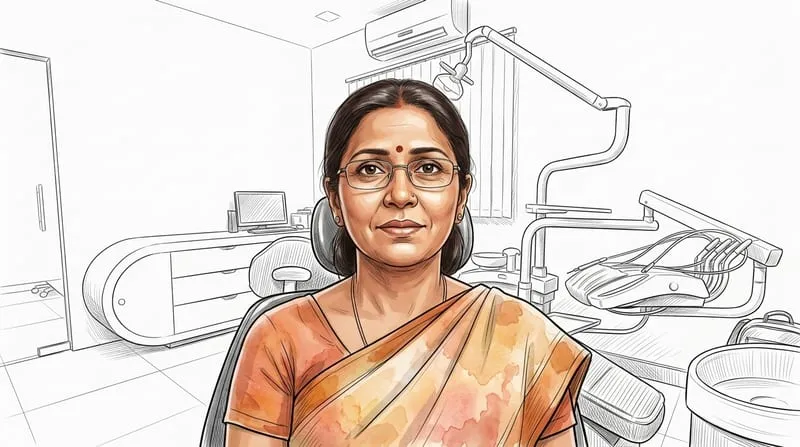
The clinical case and outcome are from Dr. Kirti Shrivastava's practice.
Sunita arrived on a Wednesday afternoon in August, still carrying the faint scent of chalk and classroom. She was 49, taught history at a school in Shahpura, and had been referred by her gynaecologist after mentioning persistent dry mouth during a routine check-up.
"My gums started bleeding about six months ago," she said, adjusting her spectacles. "I thought it was the new toothbrush. But my doctor said it might be connected to my hormones. She said I should see a dentist who understands this."
Sunita was in early perimenopause. Her gynaecologist had started her on a low-dose HRT. The clinical examination showed generalised gingival inflammation — gums that were red, slightly swollen, and bled on probing in 8 out of 12 sites tested. Salivary flow was reduced. There was moderate calculus on the lower anteriors and 2 early root-surface cavities on the upper premolars where the gums had receded slightly.
I explained the connection plainly. "Oestrogen affects the gum tissue directly. As levels fluctuate during perimenopause, gums become more reactive to the same amount of plaque that did not bother you at 40. The dry mouth makes it worse because saliva is your natural defence against both cavities and gum disease."
The treatment plan was conservative. Full-mouth scaling that afternoon — 35 minutes with the ultrasonic scaler. Fluoride varnish on the exposed root surfaces. The 2 root-surface cavities were small enough for glass ionomer fillings, which release fluoride slowly and bond well to root dentine.
"Should I change my toothpaste?" she asked.
"Stay with a fluoride toothpaste — that is non-negotiable. Switch to a soft-bristled brush, use the modified Bass technique at a 45-degree angle, and add an interdental brush for the premolar gaps. For dry mouth, sip water through the day, especially while teaching, and chew sugar-free gum after meals to stimulate saliva."
At her follow-up 3 weeks later, the bleeding had stopped at 7 of the 8 sites. The remaining site responded after a second localised scaling. Her oral health was visibly improving — gums tighter, colour shifting from red to coral pink, and she reported that keeping a water bottle on her desk had noticeably reduced the dry-mouth discomfort during long teaching periods.
I scheduled her for four-monthly reviews instead of six-monthly, given the hormonal sensitivity. At her 8-month check-up, all probing sites were within normal limits, no new cavities, and the glass ionomer fillings were intact. She had also shared the dry-mouth advice with two colleagues at her school who were experiencing similar symptoms.
BDS, MDS, PhD Prosthodontist · DCI A-01281 · Smile Gallery, Bhopal
| Follow-up | 8 months (4-monthly reviews) |
| Gum bleeding | Resolved at all probing sites by week 5 |
| Dry mouth | Managed with hydration and sugar-free gum |
| Root-surface cavities | 2 glass ionomer fillings intact |
| Ongoing care | 4-monthly scaling during perimenopause transition |
Frequently Asked Questions
What dental issues are most common in midlife women?
Dry mouth, gum sensitivity, burning mouth, taste changes, increased cavity risk, and bone loss in the jaw.
Are these issues addressed at Smile Gallery in Bhopal?
Yes. Smile Gallery, in Arera Colony, manages midlife oral health alongside cosmetic and restorative care under Dr. Saurabh Shrivastava (DCI: A-04860).
How often should midlife women visit the dentist?
Six-monthly at minimum; some patients benefit from a three or four-monthly schedule.
What should I expect after a midlife dental review?
A written plan tailored to your current symptoms, brushing recommendations, and a follow-up timeline.
How do I book an appointment at Smile Gallery, Arera Colony?
Call +91 9200700750.
Ready for a consultation?
Visit Smile Gallery Dental Wellness Centre, E-4/205, Main Rd 3, near Flower Market, E-4, Arera Colony, Bhopal.
Open Monday to Saturday 10am–2pm and 5–9pm.