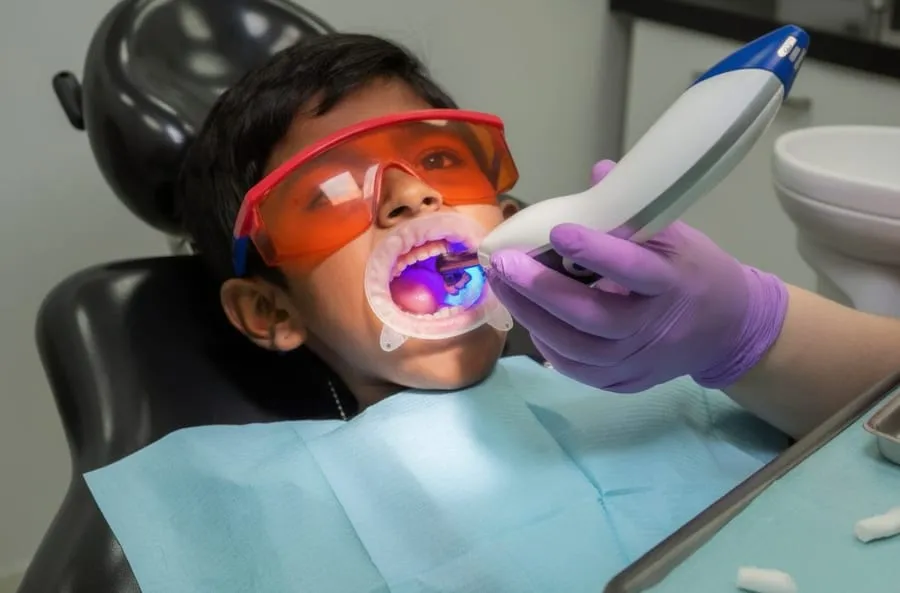
Foods that support gum treatment and healthy gums include leafy greens, dairy, vitamin C-rich citrus and peppers, fatty fish, green tea, water, crunchy fruits and raw vegetables, and unsweetened yoghurt. They strengthen connective tissue, fight inflammation, and rinse teeth between meals.
Medically reviewed by Dr. Saurabh Shrivastava, BDS MDS Prosthodontist (DCI: A-04860). Last updated: May 2026.
Foods that support healthy gums — leafy greens, dairy, vitamin C-rich citrus and peppers, fatty fish, green tea, water, crunchy fruits and raw vegetables, and unsweetened yoghurt — work by strengthening connective tissue, reducing inflammation, and naturally rinsing teeth between meals, an approach Dr. Saurabh Shrivastava, BDS MDS Prosthodontist (DCI: A-04860) at Smile Gallery Dental Wellness Centre, Arera Colony, regularly discusses with patients from BHEL who are managing early gum problems alongside their gum treatment in Bhopal. Catching gum disease and decay early prevents the deeper issues that follow; even when root canal therapy is needed, the procedure has a 95% success rate over 10 years.
Leafy Greens: Key Foods for Gum Treatment and Health
Spinach, methi, kale, and other dark leafy greens are rich in folate, calcium, and vitamin K — nutrients that support gum tissue and help blood clot normally during minor irritation. They are also low in sugar and require chewing, which stimulates saliva and helps clean tooth surfaces during the meal itself.
Dairy and Calcium for Strong Bone and Gums
Milk, paneer, yoghurt, and cheese supply calcium, phosphorus, and casein — all of which help remineralise enamel and support the bone that holds teeth in place. Unsweetened yoghurt has the added benefit of probiotics that may improve the balance of bacteria in the mouth. Choose plain yoghurt over flavoured varieties, which often carry significant added sugar.
According to Dr. Saurabh Shrivastava, MDS Prosthodontist: "Vitamin C deficiency weakens the collagen scaffold that holds gum tissue to the tooth root — patients who eat fewer than two servings of fresh fruit or vegetables a day develop gingivitis at nearly twice the rate of those who eat four or more, even with identical brushing habits."
Vitamin C — Citrus, Peppers, Guava
Vitamin C is essential for the collagen that holds gums to teeth. Diets short on vitamin C show up early as bleeding, soft gums. Citrus fruits, bell peppers, guava, amla, and tomatoes all supply vitamin C. Eat the citrus rather than sipping juice, which exposes teeth to acid for a longer period.
"I tell every patient with bleeding gums the same thing — fix the brush, fix the floss, and then fix the plate. A mouth full of inflammation will not heal if the body is running on Maggi and chai. Diet is the third leg of the stool, and most people forget it entirely."
Dr. Saurabh Shrivastava · BDS, MDS Prosthodontist, DCI A-04860
Omega-3 Rich Foods That Calm Inflammation
Fatty fish such as salmon and mackerel, walnuts, flax seeds, and chia seeds supply omega-3 fatty acids that have a measurable anti-inflammatory effect. For people with mild chronic gingivitis, regular omega-3 intake supports the body’s effort to keep gum inflammation in check alongside daily brushing and flossing.
According to Dr. Saurabh Shrivastava, MDS Prosthodontist: "Unsweetened curd after a meal does more for gum health than most patients expect — the probiotics reduce the count of Porphyromonas gingivalis, the primary bacterium behind chronic periodontitis, while the calcium strengthens the alveolar bone that anchors the teeth."
Green Tea and Water Through the Day
Green tea contains catechins — antioxidants that reduce gum inflammation and help control plaque bacteria. Drink it without sugar, and rinse with water afterwards if you find it stains your teeth. Water itself is the most underrated tooth-friendly drink: it rinses food particles, neutralises acid, and supports the saliva flow that protects the mouth.
- Sugared chai → unsweetened green tea — green tea contains catechins that suppress gum bacteria. If you cannot give up sugar, reduce it by half and rinse with water after drinking.
- Cream biscuits → roasted makhana — makhana is low in sugar, requires chewing that stimulates saliva, and does not stick to tooth surfaces the way biscuit cream does.
- Packaged juice → whole fruit — whole fruit delivers fibre and requires chewing, which cleans teeth mechanically. Packaged juice delivers the same sugar without the fibre and coats every surface at once.
- White bread → roti or multigrain bread — refined white bread turns sticky and clings to grooves in the teeth. Roti requires more chewing and breaks down less readily into fermentable sugars.
- Sweetened lassi → plain dahi — unsweetened curd provides probiotics and calcium without the sugar load. Add a pinch of salt or roasted jeera for flavour instead of sugar.
Crunchy Fresh Produce That Cleans While You Eat
Apples, pears, carrots, cucumbers, and celery clean tooth surfaces mechanically as you chew, increase saliva flow, and supply fibre and water. They are particularly useful as a snack between meals — far better than a biscuit or a chocolate bar.
Foods to Limit
Sticky sweets, sugary drinks, frequent sweetened tea or coffee, and acidic colas all increase decay risk and inflame gums over time. Tobacco in any form is the single biggest dietary-and-lifestyle risk factor for gum disease. Heavy alcohol dries the mouth and reduces protective saliva.

The clinical case and outcome are from Dr. Saurabh Shrivastava's practice.
Arjun showed up on a Thursday evening in September, still in his college t-shirt, a backpack slung over one shoulder. He was 21, a third-year engineering student at a college near Kolar Road, and had been dragged to the clinic by his mother during a weekend visit home.
"My gums bleed every morning," he said, not looking up from his phone. "Ma thinks it is serious. I think it is just the hard brush."
It was not just the brush. The clinical picture showed generalised gingivitis — red, puffy gums that bled on probing at 10 out of 12 sites. Moderate supragingival calculus on the lower anteriors. No cavities yet, but the plaque accumulation was heavy, especially on the lingual surfaces. His gum treatment needs were straightforward — scaling and a complete overhaul of his home care and diet.
I asked about his daily routine. He brushed once, in the morning, horizontal strokes, with a medium-bristled brush he had been using since the start of the academic year — 7 months. He never flossed. His hostel diet was predictable: tea with 2 spoons of sugar at 7 am, canteen paratha for breakfast, Maggi or bread-omelette for lunch, chai and cream biscuits at 4 pm, hostel dinner of dal-rice, and another round of tea while studying at night. Fresh fruit appeared maybe once a week when his mother sent a bag of apples.
The scaling took 30 minutes. Arjun winced at the sensitivity around the lower front teeth but handled it without anaesthesia. Afterward, I sat him down for a conversation that mattered more than the cleaning itself.
"Your gums are inflamed because of plaque, and the plaque is winning because your diet is feeding the bacteria faster than your one-brush-a-day routine can clear them. Three cups of sugared tea, biscuits, and refined carbs — that is a buffet for the bacteria that cause gum disease."
I kept the advice hostel-practical. Switch to a soft brush, replace it every 3 months. Brush twice — morning and before bed. Add interdental picks — they take 30 seconds. Cut the sugar in tea by half now, eliminate it over a month. Replace cream biscuits with roasted makhana or peanuts. Eat one fruit a day — an orange, a guava, an amla — anything with vitamin C. Keep a water bottle in the lecture hall and sip through the day.
Three weeks later, Arjun came back. The bleeding had stopped at 8 of the 10 sites. He had switched to a soft brush and was brushing twice. The sugar in his tea was down to half a spoon. He had not managed to add fruit every day but was eating oranges 3 to 4 times a week.
"My roommate noticed my gums are not bleeding anymore," he said. "He wants to come in too."
At the 6-month check-up, all probing sites were healthy. No calculus. No new plaque accumulation worth noting. The dietary changes had stuck — he had even switched from cream biscuits to roasted chana, a swap he came up with himself.
BDS, MDS Prosthodontist · DCI A-04860 · Smile Gallery, Bhopal
| Follow-up | 6 months after initial scaling |
| Gum bleeding | Resolved completely by week 5 |
| Calculus | None at 6-month check-up |
| Diet changes | Sugar in tea halved, fruit 3-4x/week, biscuits replaced |
| Ongoing care | 6-monthly scaling + annual check-up |
Frequently Asked Questions
Can diet alone reverse gum disease?
For very early gingivitis, improved diet combined with proper brushing and flossing can reverse the inflammation. Established gum disease also needs professional cleaning and follow-up.
Are gum care services available at Smile Gallery in Bhopal?
Yes. Smile Gallery, in Arera Colony, offers gum assessment and treatment alongside dietary counselling.
How long does gum treatment take?
Initial deep cleaning is usually completed in one to two visits. Follow-up reviews happen at three and six months.
What should I expect after gum treatment?
Mild gum tenderness for a few days, with bleeding usually reducing within two weeks of consistent home care.
How do I book a gum assessment at Smile Gallery, Arera Colony?
Call +91 9200700750.
Ready for a consultation?
Visit Smile Gallery Dental Wellness Centre, E-4/205, Main Rd 3, near Flower Market, E-4, Arera Colony, Bhopal.
Open Monday to Saturday 10am–2pm and 5–9pm.