

The five biggest teeth whitening myths are: it damages enamel, it works on every stain, results last forever, all whitening products are equal, and it must be painful. Professional whitening, done correctly, is safe and gives results that last 1 to 3 years.
Medically reviewed by Dr. Saurabh Shrivastava, BDS MDS Prosthodontist, Certified Digital Smile Designer (DSD) (DCI: A-04860). Last updated: May 2026.
The five most common teeth whitening myths — that it damages enamel, that it whitens every type of stain, that the result is permanent, that all products are equally effective, and that it must be painful — each fall apart on closer look. Professional whitening done correctly under Dr. Saurabh Shrivastava, BDS MDS Prosthodontist (DCI: A-04860) at Smile Gallery Dental Wellness Centre, Arera Colony, is safe and gives a result that lasts 1 to 3 years. Reliable in-clinic teeth whitening is one of the simplest cosmetic procedures available, and patients from MP Nagar and across Bhopal use it regularly.
Teeth Whitening Myths — Myth 1: Does Whitening Damage Enamel?
Professional whitening uses carefully formulated peroxide gels that lift stains without breaking down the enamel structure. Sensitivity during or just after the session is common and temporary; actual enamel damage from a properly conducted in-clinic treatment is not. Damage is associated with overuse of unregulated home kits, abrasive whitening pastes used aggressively, or DIY methods involving acids — none of which are professional whitening.
Myth 2 — Whitening Works on All Stains
Surface stains from coffee, tea, tobacco, and ageing respond very well to whitening. Deeper, intrinsic discolouration — from old root canal treatment, tetracycline use during tooth development, or fluorosis — responds less predictably and may need veneers or bonding instead. A clinical exam, including photographs and shade matching, helps decide what whitening alone can and cannot achieve.
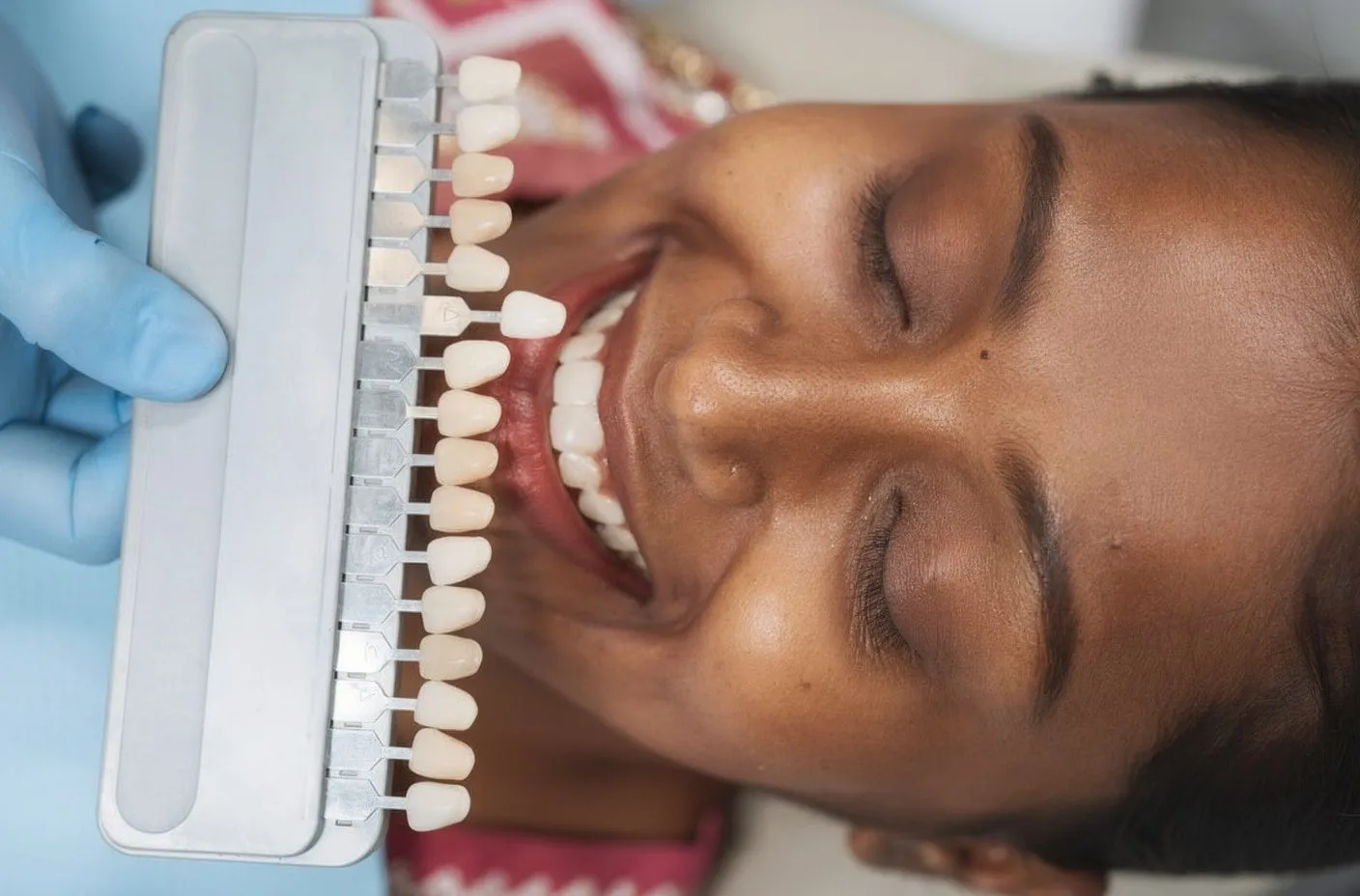
According to Dr. Saurabh Shrivastava, MDS Prosthodontist: "The most common whitening error I see in Bhopal patients is using over-the-counter charcoal or baking soda pastes daily for months — these are abrasive, not bleaching agents, and they wear the enamel surface down while removing surface stain. Professional peroxide-based whitening targets the chromogens inside the enamel without abrading the surface, which is a fundamentally different mechanism."
Myth 3 — The Results Last Forever
Whitening results last 1 to 3 years for most people. Lifestyle factors decide how long: heavy coffee, tea, red wine, and tobacco shorten the window; rinsing after staining drinks and a touch-up every couple of years extends it. Dental cleaning every six months keeps the surface free of fresh staining.
"A patient once came to me after spending six weeks with home whitening strips and getting results that were patchy and disappointing — one central incisor was three shades lighter than the other. A single in-clinic session with a custom-fitted tray resolved it. The difference is not in the chemistry — it is in the fit, the concentration, and the monitoring."
Dr. Saurabh Shrivastava · BDS, MDS Prosthodontist, DCI A-04860
Myth 4 — All Whitening Products Are the Same
Over-the-counter strips, toothpastes, and home kits use lower concentrations and one-size-fits-all designs. Professional in-clinic whitening uses higher-concentration gel under controlled conditions, custom-fitted trays for take-home phases, and the dentist’s monitoring at every step. The two are not the same product; nor are the results.
- Myth: Whitening destroys your enamel — Professional peroxide gels work by oxidising the organic pigment molecules (chromogens) trapped within the enamel lattice. The enamel structure itself is not dissolved or removed. Temporary post-treatment porosity resolves within 48 hours as minerals redeposit. Enamel damage is associated with abrasive home pastes and unregulated acid-based kits — not with correctly conducted clinical whitening.
- Myth: Whitening works on all discolouration — Surface stains from tea, coffee, tobacco, and dietary pigments respond predictably. Intrinsic staining from tetracycline antibiotics taken during childhood, fluorosis, or non-vital teeth (after root canal) responds poorly to peroxide alone and may need veneers or composite bonding. Shade mapping before treatment sets realistic expectations and avoids disappointment.
- Myth: The results are permanent — Results from a single course of in-clinic whitening typically last 1 to 3 years. Lifestyle is the biggest variable: heavy tea, coffee, red wine, and tobacco shorten the result; rinsing after staining drinks, six-monthly scaling, and periodic home tray touch-ups extend it considerably. Whitening is a maintenance procedure, not a one-time fix.
- Myth: All whitening products are equal — Over-the-counter strips and home kits use peroxide concentrations of 3% to 10% in a one-size-fits-all tray that allows gel contact with gum tissue. Professional in-clinic systems use 25% to 40% hydrogen peroxide under gum protection, with custom-fitted trays that eliminate uneven exposure. The results after a single in-clinic session typically exceed weeks of OTC strip use.
- Myth: Whitening must be painful — Mild cold sensitivity for 1 to 3 days after treatment is normal and resolves without intervention. Outright pain during whitening indicates an underlying problem — a crack, exposed dentin, or active decay — that should be treated before any whitening begins. Pre-treatment screening identifies these cases and prevents the painful experience entirely. With desensitising gel applied before the whitening session, even patients with mild pre-existing sensitivity tolerate the procedure comfortably.
Myth 5 — Whitening Has to Be Painful
Mild sensitivity to cold for one to three days after a session is common; outright pain is not. The dentist screens for cracks, exposed dentin, and active cavities before whitening, because those would cause genuine pain — and they are treated first. With desensitising agents and the right concentration, most patients describe the experience as easy.
How Long Whitening Actually Lasts
Expect 1 to 3 years from a single course of in-clinic whitening, longer if home maintenance trays are used periodically. Cut back on tobacco, rinse after dark beverages, brush twice a day with a non-abrasive toothpaste, and book a touch-up before staining accumulates. Whitening cannot lighten crowns, veneers, or composite fillings — the natural teeth and the restorations may need to be matched after whitening if they are visible together.
According to Dr. Saurabh Shrivastava, MDS Prosthodontist: "Teeth whitening does not work on crowns, veneers, or composite fillings — only on natural tooth enamel. This is something I discuss with every patient before treatment, because if you have visible restorations in your smile zone, we need to plan whether to whiten first and then match the restorations, or accept the shade difference. Getting the sequence right avoids the situation where your whitened teeth no longer match your existing crowns."
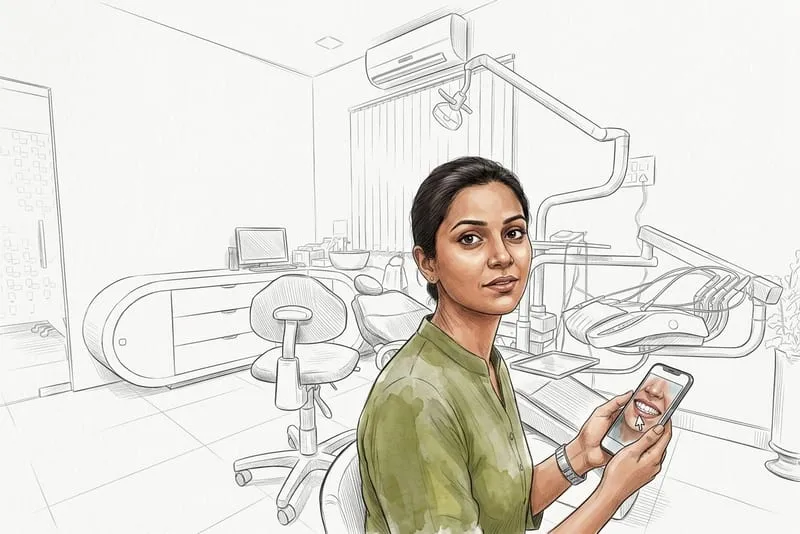
The clinical case and outcome are from Dr. Saurabh Shrivastava's practice.
Neha arrived at the clinic on a Saturday morning in November with her phone already open to a photo of her teeth. She was 29, a software engineer from MP Nagar, and she had a specific complaint before she even sat down. "I used whitening strips for 6 weeks. My teeth are patchy — this one is lighter," she said, pointing to her upper-right central incisor, "and these two are barely changed. I want to know if professional whitening will make it worse or fix it."
She was sceptical, which was reasonable. She had also read several articles online — some claiming whitening destroys enamel, some claiming it works permanently, one recommending activated charcoal as a safer alternative. She had tried the charcoal paste for 3 weeks before the strips. I told her the charcoal paste was the most damaging thing she had done to her teeth in that period, and her expression shifted from sceptical to surprised.
The clinical examination showed light-to-moderate extrinsic staining across all upper anterior teeth from tea and coffee, uneven whitening from the strips most visible at the upper central incisors, and early cervical abrasion on both canines consistent with abrasive paste use. The shade mapping gave me a baseline: she was B3 on the upper centrals, A3 on the laterals, and A2.5 on the canines — a patchwork rather than a uniform shade. No cavities, no cracks, no sensitivity on cold testing. She was a good candidate for in-clinic teeth whitening.
I walked her through the shade chart and explained the mechanism plainly. "The strip created uneven contact — it reached the central incisors well but did not conform to the curved surfaces of the laterals and canines. Professional gel in a custom-fitted tray contacts every tooth uniformly. We will see a much more even result." She asked about enamel damage. I showed her the clinical literature in plain language: "Peroxide does not dissolve enamel. It dissolves the pigment molecules inside it. The charcoal, on the other hand, is physically abrasive — it scratched the surface. That is why I want to do the scaling first and then proceed with the whitening."
We scheduled the procedure for the following Saturday. After a professional scaling and polish to remove surface deposits, I applied gum barrier gel, then the 35% hydrogen peroxide whitening gel in 3 applications of 15 minutes each. Before starting, I applied a desensitising agent containing potassium nitrate and fluoride to reduce the chance of post-treatment sensitivity. The total chair time was 70 minutes.
At the end of the session I took the post-treatment shade: B1 on the centrals, A1 on the laterals, A1 on the canines. Uniform across the arch. The patchiness from the strips had been corrected entirely. Neha looked in the mirror and was quiet for a moment. "I was expecting it to look better, but not like this. They all actually match now."
She had mild cold sensitivity for 2 days afterwards — she texted to confirm this was normal and I reassured her it would resolve, which it did. I provided custom home maintenance trays with 10% carbamide peroxide gel for a 1-week touch-up every 12 months. I also told her to stop the charcoal paste entirely and switch to a non-abrasive fluoride toothpaste.
At her 3-month check-up the shade was holding well — B1 to A1 across the anteriors, no significant relapse. She had taken before-and-after photos herself and had sent them to her mother, who called the clinic to book a consultation the following week. "She has been sceptical about whitening too," Neha said, smiling. "I told her just to come in and talk to you first."
BDS, MDS Prosthodontist · DCI A-04860 · Smile Gallery, Bhopal
| Follow-up | 3 months post-treatment |
| Shade result | B1–A1 uniform across all upper anterior teeth (from B3/A3 baseline) |
| Patchiness | Fully resolved; even shade across centrals, laterals, and canines |
| Sensitivity | Mild cold sensitivity for 2 days; fully resolved without intervention |
| Ongoing care | Annual home tray touch-up; 6-monthly scaling to maintain result |
Frequently Asked Questions
What does professional teeth whitening involve?
A clinical exam, a professional cleaning if needed, application of a peroxide gel under controlled conditions, and one or two sessions in clinic with optional home maintenance trays.
Is teeth whitening available at Smile Gallery in Bhopal?
Yes. Smile Gallery, in Arera Colony, offers in-clinic and take-home professional whitening under Dr. Saurabh Shrivastava (DCI: A-04860).
How long does the treatment take?
An in-clinic session takes 60 to 90 minutes. Take-home tray treatment runs over one to two weeks of nightly use.
What should I expect after whitening?
Mild cold sensitivity for one to three days, which settles on its own. Avoid dark-staining foods and drinks for 48 hours after the session for the best result.
How do I book a whitening consultation at Smile Gallery, Arera Colony?
Call +91 9200700750.
Ready for a consultation?
Visit Smile Gallery Dental Wellness Centre, E-4/205, Main Rd 3, near Flower Market, E-4, Arera Colony, Bhopal.
Open Monday to Saturday 10am–2pm and 5–9pm.