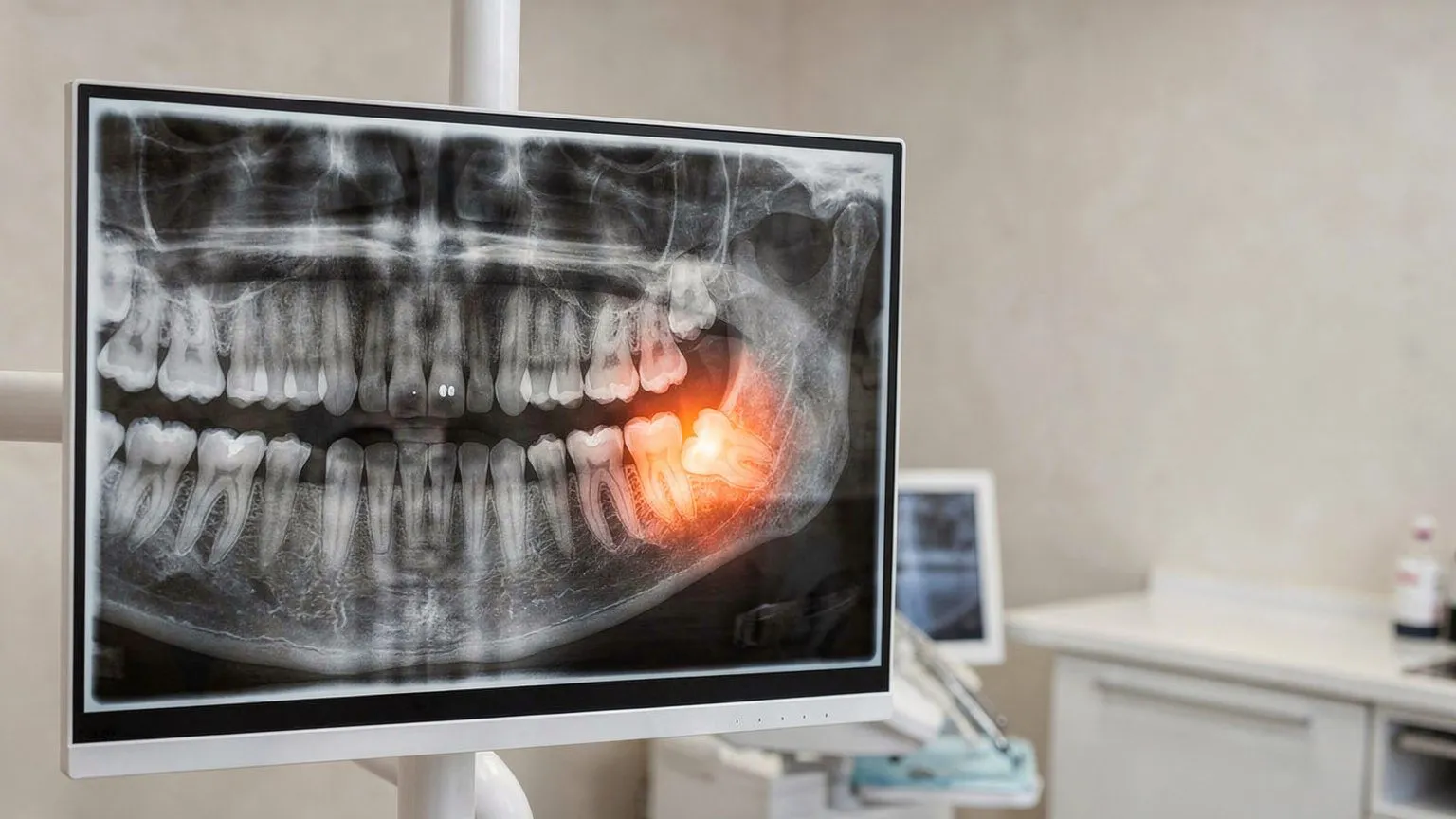
Wisdom tooth extraction removes the third molars when they are impacted, infected, or causing crowding. The procedure is done under local anaesthesia, takes 30 to 60 minutes per tooth, and most patients recover fully within 5 to 7 days.
Medically reviewed by Dr. Saurabh Shrivastava, BDS MDS Prosthodontist, Certified Digital Smile Designer (DSD) (DCI: A-04860). Last updated: May 2026.
Wisdom tooth extraction is the surgical removal of the third molars when they are impacted, infected, or threatening neighbouring teeth — a procedure performed under local anaesthesia, taking 30 to 60 minutes per tooth, with most patients recovering fully in 5 to 7 days. Dr. Saurabh Shrivastava, BDS MDS Prosthodontist (DCI: A-04860) at Smile Gallery Dental Wellness Centre, Arera Colony, performs wisdom tooth removal for patients from Kolar Road and surrounding areas, with detailed pre and post-operative guidance. Where infection from a wisdom tooth has reached the pulp of an adjacent second molar, root canal therapy on that molar still has a 95% success rate over 10 years and is often a worthwhile alternative to extracting both teeth.
When Wisdom Teeth Need Removal
Wisdom teeth — the third molars — usually erupt between the late teens and mid-twenties. Many cause no problems and need no treatment. Removal is recommended when there is recurrent gum infection around the tooth (pericoronitis), decay that cannot be reliably restored at the back of the mouth, pressure that is damaging the adjacent second molar, cysts forming around an unerupted wisdom tooth, or when the wisdom tooth is impacted in a position that will only worsen with time.
Types of Extraction — Simple vs Surgical
A wisdom tooth that has fully erupted into a normal position can usually be removed like any other tooth — a simple extraction. An impacted wisdom tooth (one that is partially or fully covered by gum or bone) requires a small surgical procedure: a precise incision in the gum, removal of a small amount of bone, sometimes sectioning of the tooth into pieces, and placement of a few dissolvable sutures. CBCT imaging helps plan the angle and the proximity to nearby nerves.
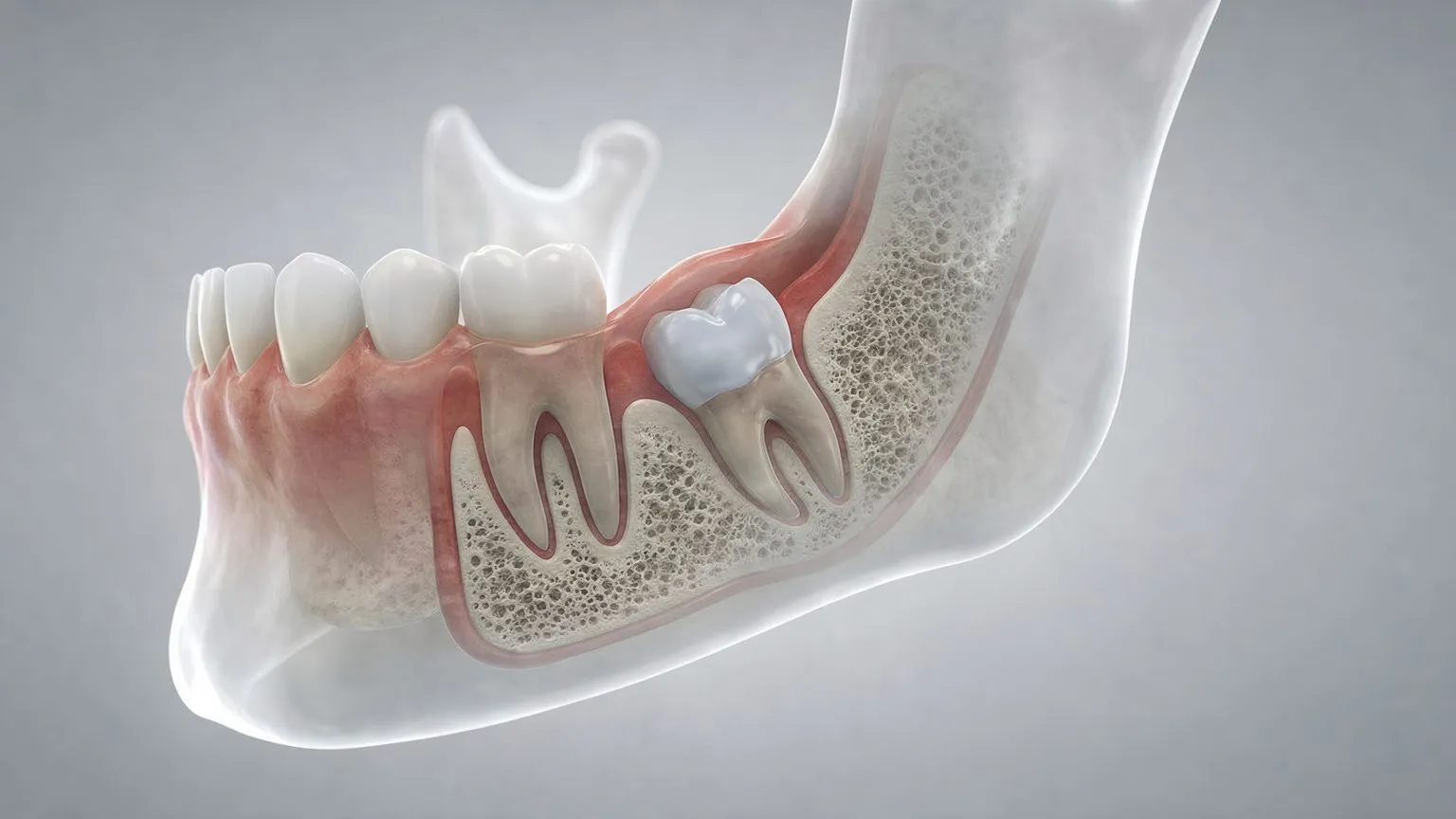
According to Dr. Saurabh Shrivastava, MDS Prosthodontist: "Impacted lower wisdom teeth are the most common extraction we perform at Smile Gallery — the lower-left third molar accounts for nearly 60% of surgical cases because the angle of eruption tends to trap food against the second molar, triggering repeated pericoronitis. Early removal at 20 to 22 years, before root formation is complete, reduces operative time and post-operative swelling significantly."
What Happens on the Day
You arrive having eaten a normal meal a couple of hours before. The dentist reviews the X-ray and the plan with you. Local anaesthesia is administered slowly and tested before any cutting. The extraction itself is usually quicker than patients expect — for a single straightforward case, often around 20 minutes from anaesthesia to suturing. You leave with written aftercare instructions, prescribed medication, and a clear emergency contact.
"An impacted wisdom tooth that causes one episode of pericoronitis will almost certainly cause another — the anatomy does not change. I would rather remove it cleanly at 22 than manage a spreading infection at 32 when the roots are fully formed and the bone is denser."
Dr. Saurabh Shrivastava · BDS, MDS Prosthodontist, DCI A-04860
Recovery — What the First Week Looks Like
The first 24 hours are the most important. Bite gently on the gauze for the first hour. Do not rinse, spit, or smoke for the first day, since these dislodge the protective blood clot. Use cold compresses on the cheek to reduce swelling. Eat soft, lukewarm foods. By day three, swelling peaks and starts settling. By day five to seven, most discomfort is gone and the surgical site is healing well. Sutures, if non-dissolvable, are removed at the seven-day review.
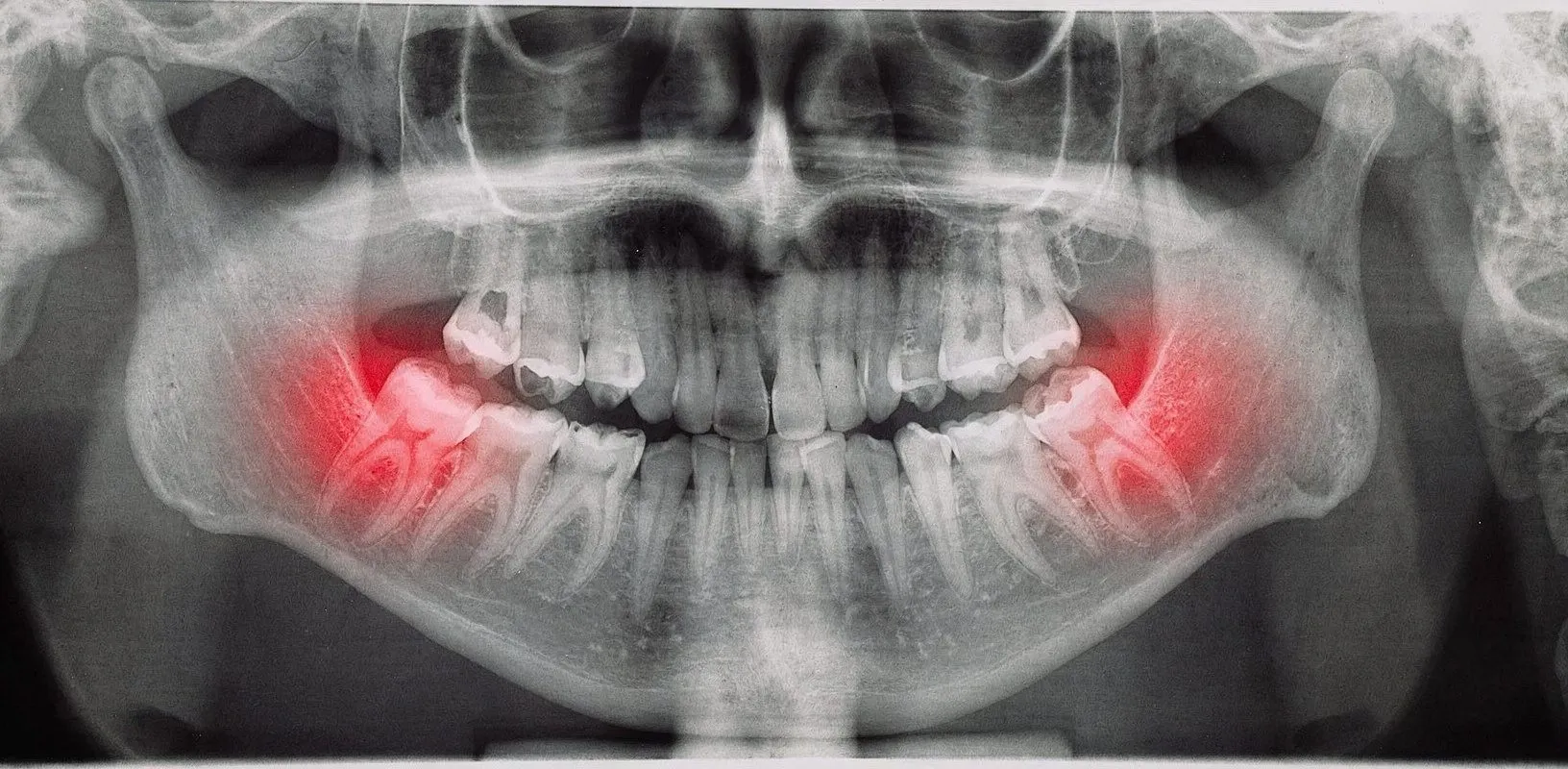
- An OPG X-ray is taken first — the panoramic X-ray shows the exact angle of impaction, root curvature, and proximity to the inferior alveolar nerve. This single image guides the entire surgical plan and avoids surprises during the procedure.
- Local anaesthesia makes the procedure painless — the injection is administered slowly and tested before any cutting begins. Patients feel pressure and vibration but not pain. If any discomfort is felt, the dentist adds more anaesthetic before continuing.
- Surgical extraction involves a small incision and sutures — a precise cut in the gum, removal of a small amount of overlying bone, and sometimes sectioning the tooth into 2 pieces for easier removal. Dissolvable sutures close the site and dissolve on their own within 7 to 10 days.
- Day 3 is typically the worst day for swelling — swelling peaks on day 3 and then begins settling. Cold compresses on the cheek for the first 24 hours reduce peak swelling. By day 5 to 7 most patients are comfortable and back to normal food.
- Dry socket is the main complication to watch for — this happens when the blood clot is dislodged before the socket heals. Avoid rinsing, spitting, smoking, and using straws for the first 24 hours. Sharp throbbing pain that worsens on day 3 or 4 — rather than improving — is the warning sign to call the clinic immediately.
- Numbness beyond the anaesthetic window is not normal — mild tingling for a few hours after the procedure is expected as the anaesthetic wears off. Persistent numbness of the lip or chin beyond that window should be reported to the dentist on the same day.
When to Call the Clinic
Some discomfort and mild bleeding is normal in the first day. Call the clinic if there is heavy bleeding that does not slow with gauze pressure, fever above 38C, sharp throbbing pain that increases on day three or four (a possible sign of dry socket), persistent numbness beyond the expected anaesthetic duration, or any concern that does not feel right.
According to Dr. Saurabh Shrivastava, MDS Prosthodontist: "The most common reason patients delay wisdom tooth extraction in Bhopal is fear of the procedure itself, but in a straightforward surgical case the actual extraction takes under 20 minutes from incision to suture — the anaesthesia and preparation take longer than the removal. Most of my patients from Kolar Road and Arera Colony are eating soft food the same evening."
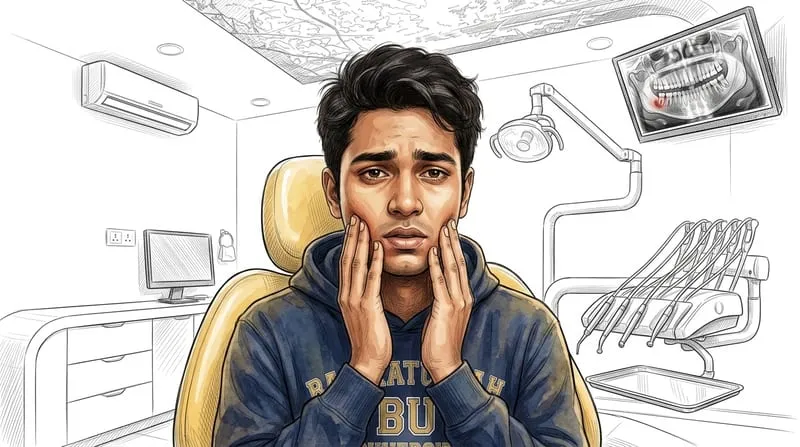
The clinical case and outcome are from Dr. Saurabh Shrivastava's practice.
Rohan walked into the clinic on a Tuesday afternoon in March, holding the right side of his jaw with the palm of his hand. He was 22, a final-year engineering student at a college in Govindpura, and he had been managing a dull ache behind his lower right molar for the past 3 weeks with over-the-counter painkillers.
"It gets worse when I eat anything hard," he said. "My gum behind the last tooth is swollen and sometimes bleeds when I brush. My exams start in 6 weeks and I cannot afford to be in pain."
The clinical examination told the story immediately. The lower-right third molar was partially erupted — the gum flap (operculum) over its distal aspect was inflamed and tender to probing, with a small pocket trapping food debris. This was a classic presentation of pericoronitis. The OPG showed the full picture: the wisdom tooth was mesio-angularly impacted at approximately 45 degrees, its mesial cusp pressing against the distal surface of the second molar. The roots were two-thirds formed — excellent timing for extraction. The second molar itself was unaffected, though the pressure would have begun causing problems within another 12 to 18 months.
I showed Rohan the OPG on the viewer and traced the angulation with my finger. "See how the tooth is lying at an angle — it has nowhere to go and it is pressing against your back molar. Every time you chew, food gets under this gum flap and bacteria multiply. That is what is causing the swelling and the pain. The tooth needs to come out."
"How long will the procedure take? And how long before I can study normally?" he asked. I told him the wisdom tooth extraction itself would take around 25 minutes from the first incision to the last suture. Recovery to comfortable study-mode would be 5 to 7 days, with the worst day being day 3. That gave him plenty of time before his exams.
We proceeded the following morning. After inferior alveolar nerve block and buccal infiltration, the area was fully numb within 4 minutes. I made a small envelope flap incision, improved a mucoperiosteal flap, removed a thin sliver of bone on the buccal side with the surgical bur, and sectioned the tooth at the CEJ to separate the crown from the root section. Both pieces came out cleanly. The socket was irrigated with saline, the flap repositioned, and closed with 3 simple interrupted sutures using 3-0 black silk. Total time from incision to suture: 22 minutes.
Rohan sat up and looked genuinely surprised. "That is it? I barely felt anything." I gave him written aftercare instructions, prescribed a 5-day course of amoxicillin and ibuprofen, and told him to call if the pain was worsening rather than improving after day 3.
He called on day 2 — not with a problem, but to report that the swelling was less than he had expected and he had managed to attend a study group that evening. He came back on day 7 for suture removal. The socket was clean, the gum healing well, and the adjacent second molar showed no damage on clinical probing. He said he had eaten rice and dal from day 3 onwards with no discomfort.
"I put this off for almost a year because I was scared," he said as I removed the last suture. "I had no idea it would be this straightforward." His exams came and went without incident. At his 6-week follow-up the extraction site had healed completely, and the pressure on the second molar was gone.
BDS, MDS Prosthodontist · DCI A-04860 · Smile Gallery, Bhopal
| Follow-up | 6 weeks post-extraction |
| Healing | Socket fully closed, no dry socket, no infection |
| Adjacent molar | No damage on probing or X-ray; pressure relieved |
| Pain resolution | Comfortable by day 5, returned to normal diet by day 7 |
| Ongoing care | Annual check-up; left lower wisdom tooth under monitoring |
Frequently Asked Questions
What does the wisdom tooth procedure involve?
A clinical exam and X-ray, local anaesthesia, the extraction itself (simple or surgical), and a written aftercare plan. CBCT imaging is used where the position is complex.
Is wisdom tooth removal available at Smile Gallery in Bhopal?
Yes. Smile Gallery, in Arera Colony, performs simple and surgical wisdom tooth removal under Dr. Saurabh Shrivastava (DCI: A-04860).
How long does the procedure take?
Typically 30 to 60 minutes per tooth, including anaesthesia and suturing.
What should I expect after the procedure?
Mild swelling and discomfort for two to three days, peaking on day three. Soft diet for a week. Most patients return to office work in two to three days.
How do I book an appointment at Smile Gallery, Arera Colony?
Call +91 9200700750.
Ready for a consultation?
Visit Smile Gallery Dental Wellness Centre, E-4/205, Main Rd 3, near Flower Market, E-4, Arera Colony, Bhopal.
Open Monday to Saturday 10am–2pm and 5–9pm.