

Dental implants in Bhopal replace missing teeth using titanium roots placed in the jawbone and topped with custom crowns. At Smile Gallery in Arera Colony, Dr. Saurabh Shrivastava (DCI: A-04860) plans each case digitally; implants show a 98% survival rate at 5 years.
Medically reviewed by Dr. Saurabh Shrivastava, BDS MDS Prosthodontist, Certified Digital Smile Designer (DSD) (DCI: A-04860). Last updated: May 2026.
Dental implants in Bhopal are a long-term tooth replacement option in which a biocompatible titanium post is surgically placed into the jawbone to support a custom-made crown — a procedure Dr. Saurabh Shrivastava, BDS MDS Prosthodontist (DCI: A-04860) and Certified Digital Smile Designer, has performed for patients from Habibganj and surrounding Bhopal localities through Smile Gallery Dental Wellness Centre, Arera Colony, for over 15 years. Modern dental implants in Bhopal have a 98% survival rate at 5 years when planning is supported by 3D imaging and placement is carried out by an experienced prosthodontist.
What Are Dental Implants in Bhopal?
A dental implant has three parts — the titanium post that acts as an artificial tooth root, the abutment that connects the post to the crown, and the crown itself. Titanium is used because human bone naturally bonds to it through a process called osseointegration. Once integrated, the implant transfers chewing forces into the jawbone exactly as a real tooth root would, which is why implants help preserve bone where dentures and bridges cannot.
When Are Implants the Right Choice?
Implants are typically recommended for adults who have lost one or more teeth due to decay, gum disease, fracture, or trauma. They are also a good alternative to traditional dentures or fixed bridges because they do not require grinding down healthy adjacent teeth. For patients missing many teeth, full-arch designs such as All-on-4 or All-on-6 replace a complete row of teeth with as few as four to six precisely positioned implants.
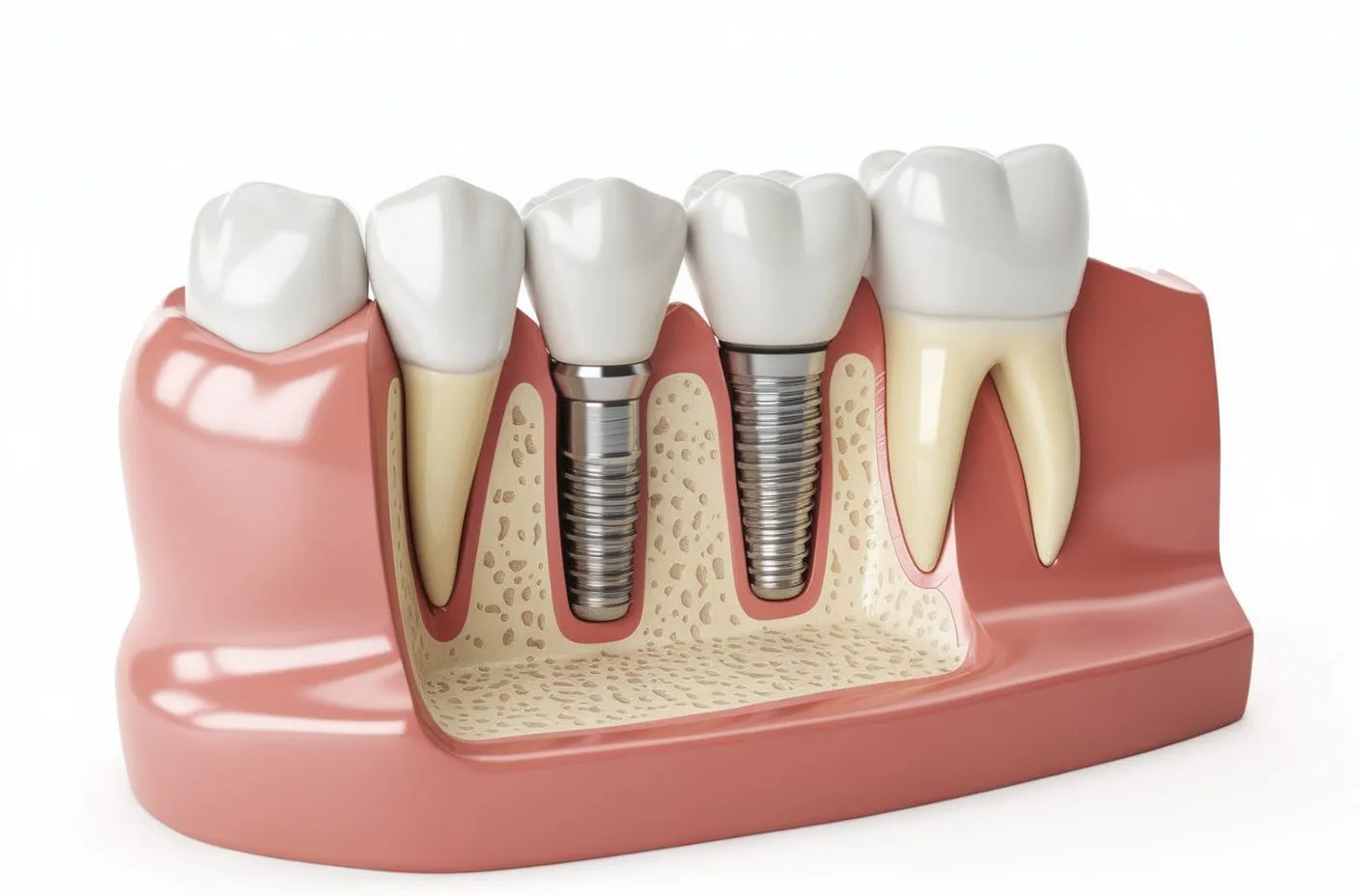
According to Dr. Saurabh Shrivastava, MDS Prosthodontist: "Dental implants in Bhopal are now as predictable as any major city because the limiting factor was never geography — it was case planning. A 3D cone beam CT scan, digital implant placement guide, and an experienced prosthodontist produce the same 98% five-year survival rate here at Smile Gallery as at any centre in Mumbai or Delhi."
The Implant Process Step by Step
At Smile Gallery, the process begins with a clinical examination, digital X-rays, and where necessary a CBCT scan to assess bone height and density. Dr. Saurabh then prepares a digital plan that maps the exact implant position, angle, and depth before surgery. The placement itself is performed under local anaesthesia and is generally less uncomfortable than patients expect — most return to routine activities the next day.
A healing period of three to six months follows so the bone can fuse with the implant. During this phase a temporary crown or removable provisional may be used. Once integration is confirmed, the abutment and final ceramic or zirconia crown are fitted to match the surrounding teeth in shape and shade.
"An implant placed well in Bhopal at age 45 can still be functional at age 70 — the titanium does not age the way a denture does, and the bone it preserves around itself means the jaw stays fuller and stronger decade after decade."
Dr. Saurabh Shrivastava · BDS, MDS Prosthodontist, DCI A-04860
Materials, Maintenance, and Long-Term Care
Quality of the implant fixture, the precision of surgical placement, and the design of the final crown together determine long-term survival. Materials, technique, and sterilisation standards are not areas to compromise on. A systematic review of long-term studies reports around 96% of implants survive to 10 years, and a 20-year meta-analysis found roughly nine in ten still functioning at two decades. After placement, implants need the same care as natural teeth — twice-daily brushing, daily flossing or interdental cleaning around the implant collar, and a professional check-up every six months to monitor the gum seal and crown contacts.
- Bone volume determines eligibility — A titanium implant needs at least 8 to 10 mm of bone height and 6 mm of width to be placed safely. If bone has been lost after extraction, a bone graft may be needed first. This is assessed with a cone beam CT scan, not a standard X-ray, because flat films underestimate bone depth by up to 30%.
- Diabetes and smoking must be controlled before surgery — Uncontrolled blood sugar (HbA1c above 7.5) impairs the bone healing that anchors the implant. Heavy smokers have a failure rate roughly 3 times higher than non-smokers. Both conditions require medical management before implant placement, not after.
- Osseointegration takes 8 to 12 weeks — After the implant is placed, bone cells gradually grow around the titanium surface in a process called osseointegration. Loading the implant with a crown before this is complete risks failure. During this period, a temporary tooth keeps the space aesthetic.
- The crown is made after integration, not before — The final ceramic crown is matched to adjacent teeth in shade and shape after healing is confirmed. At Smile Gallery, impressions are taken digitally for a precise fit. Avoid clinics that offer to fit the permanent crown immediately after surgery — this shortcut bypasses the healing window.
- If implants are not yet possible, a bridge is a reliable alternative — A fixed ceramic bridge supported on adjacent teeth replaces a missing tooth without surgery. It does not preserve bone the way an implant does, but for patients with bone loss, systemic conditions, or budget constraints, a well-made bridge provides good function for 10 to 15 years while you plan for future implant treatment.
Who Should Consider a Pre-Treatment Plan?
Patients with uncontrolled diabetes, heavy smokers, those undergoing radiation therapy to the jaw, or those with significant bone loss may need additional planning, such as bone grafting or sinus lift procedures, before implants can be placed safely. A thorough evaluation always precedes any decision, and alternatives such as bridges or removable prostheses are discussed where implants are not the right fit.
According to Dr. Saurabh Shrivastava, MDS Prosthodontist: "The most common reason implants fail in their first year is not the body rejecting titanium — it is uncontrolled smoking or unmanaged diabetes during the osseointegration period. We screen every patient before surgery and postpone placement until HbA1c is below 7.5, because bone integration cannot compete with a systemic healing deficit."
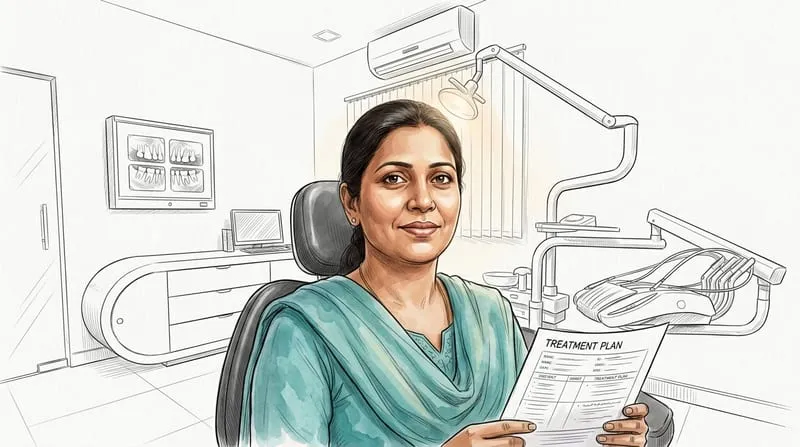
The clinical case and outcome are from Dr. Saurabh Shrivastava's practice.
Meena arrived at the clinic on a Friday morning in February, travelling from MP Nagar specifically because she had researched dental implants in Bhopal online and found Smile Gallery. She was 42, a bank manager, and she had been missing her upper left first molar for 3 years — extracted after a failed crown had fractured below the gumline.
In the years since the extraction, she had been offered dentures twice and declined both times. "I am too young for a denture," she said, which was entirely correct. She had been eating on the right side exclusively, and the opposing lower molar had already begun to over-erupt into the gap — a drift of nearly 2 mm visible on the panoramic X-ray we took at her first appointment.
The cone beam CT showed 11 mm of bone height and 7 mm of width at the implant site — excellent dimensions, helped by the fact that she had worn a temporary partial denture for the first year after extraction, which had reduced bone resorption. Her HbA1c was 5.4, she was a non-smoker, and her gum health was good. She was an ideal implant candidate.
I explained the sequence: implant placement under local anaesthesia, a healing period of 10 weeks, then impressions and crown fitting. Total chair time across 4 appointments. "Will I be without a tooth the whole time?" she asked. I showed her the temporary crown we would fix to a healing abutment — she would leave every appointment with a tooth in place.
Surgery took approximately 40 minutes. A titanium implant 4.1 mm wide and 10 mm long was placed in the prepared osteotomy under digital guidance. The gum was sutured and a temporary healing crown fitted the same day. She texted the following morning: "Much less pain than I expected. Took one painkiller at night and that was it."
At the 10-week review, stability testing confirmed full osseointegration. We took a digital impression and sent it to the laboratory. The final dental implant crown — a monolithic zirconia unit shade-matched to the adjacent molar — was cemented 12 days later. Meena bit down, moved her jaw side to side, and said nothing for a moment. Then: "It feels like a real tooth."
At her six-month check-up, peri-implant bone levels were stable, gum contour was healthy, and the opposing molar had ceased drifting. She had returned to eating on both sides without thinking about it. "I kept putting it off because I thought it would be complicated," she said. "I wish I had done it the first year." The 3 years of compensatory chewing had cost her more jaw strain than the implant procedure ever did.
BDS, MDS Prosthodontist · DCI A-04860 · Smile Gallery, Bhopal
| Follow-up | 6 months post-crown placement |
| Implant stability | Full osseointegration confirmed, peri-implant bone stable |
| Opposing tooth drift | Halted — no further over-eruption since crown placed |
| Chewing function | Bilateral chewing restored, no dietary restrictions |
| Aesthetics | Crown shade and contour indistinguishable from adjacent molar |
| Ongoing care | 6-monthly check-up + interdental brush around implant daily |
Frequently Asked Questions
What does the dental implant procedure involve?
A titanium post is placed in the jawbone under local anaesthesia, allowed to integrate with the bone over three to six months, and then restored with an abutment and a custom crown.
Are dental implants available at Smile Gallery in Bhopal?
Yes. Smile Gallery, in Arera Colony, offers single-tooth implants, multi-tooth bridges on implants, and full-arch implant rehabilitation, all planned digitally by Dr. Saurabh Shrivastava (DCI: A-04860).
How long does the entire implant treatment take?
From first consultation to final crown, most cases take three to six months. Same-day temporary teeth are sometimes possible in suitable patients.
What should I expect after the procedure?
Mild swelling and tenderness for two to three days, controlled with prescribed medication. A soft diet is advised for the first week, and detailed aftercare instructions are provided in writing.
How do I book an appointment at Smile Gallery, Arera Colony?
Call +91 9200700750 to schedule an implant consultation. Bring any previous X-rays and a list of current medications.
Ready for a consultation?
Visit Smile Gallery Dental Wellness Centre, E-4/205, Main Rd 3, near Flower Market, E-4, Arera Colony, Bhopal.
Open Monday to Saturday 10am–2pm and 5–9pm.